The head of Africa CDC thought news of a U.S. aid freeze must be ‘a joke.’ Now what?
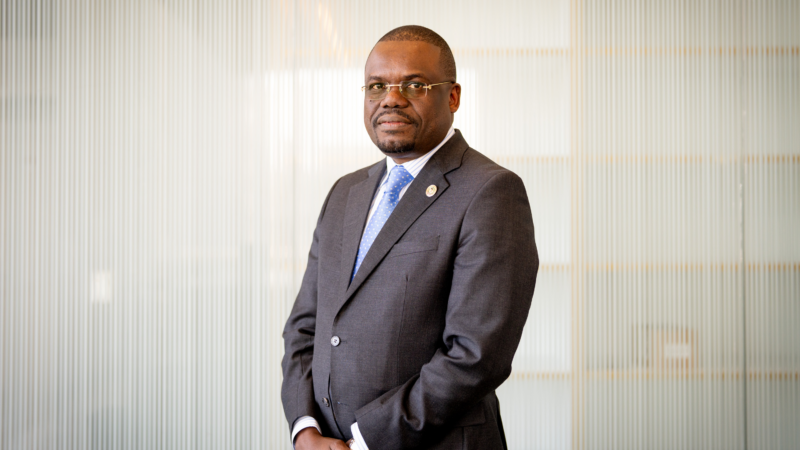
When the WhatsApp message popped up, Dr. Jean Kaseya glanced at it and dismissed it. It was late January and the message was about President Trump’s plan to freeze almost all foreign aid pending a review.
“It was a joke,” Kaseya recalls thinking to himself. He’s the director general of the Africa Centers for Disease Control and Prevention. A Congolese doctor with a specialty in epidemiology and community health, he’s served in that role since early 2023.
Soon, it became clear to Kaseya and the rest of the world that Trump’s freeze on aid was no joke — and, weeks later, the freeze culminated in a permanent termination of assistance for the bulk of programs funded by the United States Agency for International Development.
The repercussions for Africa are massive. In 2024, sub-Saharan Africa received more than $12.7 billion in foreign assistance directly from the U.S. In reality, that figure is even larger when considering U.S.-funded global health programs where African countries are a primary beneficiary.
Kaseya is now helping steer the continent through this unexpected and uncharted landscape.
He visited NPR in March — and was disappointed that he had to leave before a Tiny Desk concert. In a 30-minute conversation, he talked about his strategy going forward, his non-aid-related concerns — and how it’s all impacting his sleep and personal relationships.
Here are highlights from the conversion, which have been edited for clarity and length.
How do you explain the aid cuts to those who are most impacted?
“[African] leaders are calling me. They are asking: ‘What can we do?’
“What I have to say to them: ‘It’s like you are a child. You had a wealthy father. One day, you wake up and they say, ‘Oh, your father had an accident. He passed on.’ Then you have to survive. You have to find a way to survive.’
“And it’s not just about the U.S. The movement [to cut aid] that started in the U.S. was followed by other wealthy countries in the world, by European countries.
“So I think it’s a wake up call. What we are doing today in Africa is to say, ‘How can we take this as an opportunity?’ Yes, we are suffering — but it’s also an opportunity for us to rethink how African countries take the lead. For example, in Nigeria, the Head of State said, ‘Without money, my people will die.’ So, the [Nigerian government] provided an additional $1 billion to the health budget. We don’t say, ‘We are covering the gap.’ But we can say, ‘We are mitigating the impact of the aid cut.'”
What is your message for African countries?
“From 2021 to 2025, we are moving from $81 billion [annual] to almost $25 billion of foreign assistance in the health area in Africa. It’s a huge decrease – a 70% decrease. And when you have this kind of huge decrease, you cannot wake up one day and say, ‘I [can] cover that [cost].’ You need to work. You need to start to re-plan everything you are doing. You need to give priority to where people’s lives are at risk.
“There are some African countries that are contributing more. But, for a number of countries, they are totally dependent on external support. So, when you stop aid today, there is no mechanism for them to recover.
“But we made it clear to our leaders that foreign assistance will not continue to be like it was in the past. So while we are saying thank you [to donor countries for what has been contributed], we are also saying to [African] governments, ‘This is your responsibility to take care of your people.’
“I say to all African countries: ‘Before reaching out to partners, show how much you are contributing for your response.’ A country like the Democratic Republic of Congo – it was the first time that out of $40 million [needed] to fight mpox, they said, ‘We’ll put $10 million.’ It was the first time to see this kind of contribution.”
![Dr. Jean Kaseya, director general of Africa CDC, says the job has changed his life. He says that he and his colleagues are 'overbooked' but adds 'we are learning every day. Where I was more keen to react [before], today, I take my time.'](https://npr.brightspotcdn.com/dims3/default/strip/false/crop/3000x2000+0+0/resize/1200/quality/75/format/png/?url=http%3A%2F%2Fnpr-brightspot.s3.amazonaws.com%2F2f%2F70%2F1c6c19554e6eba02991ba1e3ed5c%2Fafrica-cdc-director-portrait-1.jpg)
What is your message to America?
“Africa will be 2.5 billion people in 2050. It will be the [continent with the] largest population in the world. And the U.S., they need that market. There are more middle class people because more Africans are [becoming] educated and they are making money.
“My message to my colleagues and my friends in the U.S.: We are open. If they are looking for friends, Africa is there.
“And in the health area, one of the major lessons we learned from COVID is no one is protected, if your neighbor is not [protected]. A country-based approach will not solve the issue. An outbreak that will start somewhere, will quickly be in other countries.”
When you think about looming health threats, what else is on your mind?
“In Africa, from 2022 to 2024, we saw an increase of 40% in terms of [infectious disease] outbreaks. We moved from 152 to more than 242 outbreaks in just two years. This is huge.
“We have an environment where, first, there’s an increase in outbreaks. Second, there’s climate change. Third, there’s insecurity. Fourth, there’s a lack of resources. We are building the foundation for another pandemic.
“The risk is huge. How do you want us to respond to all of these outbreaks if you don’t have vaccines, if you don’t have medicines, if you don’t have diagnostics, if you don’t have human resources, if you don’t have resilient health systems?”
What’s it like being the head of Africa CDC?
“When I was applying for this position, I didn’t know that my life will change like this. You don’t have your personal life. I have to sleep three or four hours per night.
“Every day you have something coming. Just to give an example, in January, we had 82 outbreaks [in Africa]. What’s that mean? It means you have almost two or three new outbreaks per day, and you must be able to respond to that. My colleagues, they are just overbooked, because every day we need to run everywhere.
“But it’s also a school of maturity. We are learning every day. Where I was more keen to react [before]. today, I take my time.”

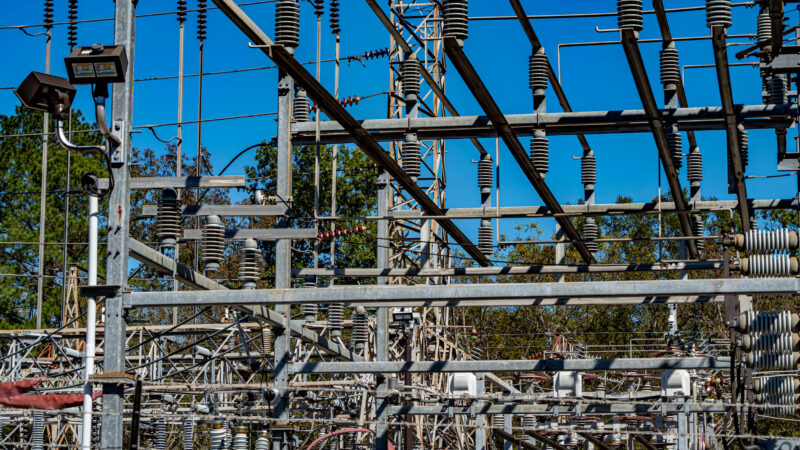
Alabama regulators approve two-year electric rate freeze and two solar projects for a Meta data center
Critics say the rate freeze will only delay financial burdens on Alabama Power customers while preserving a high profit rate for the utility.
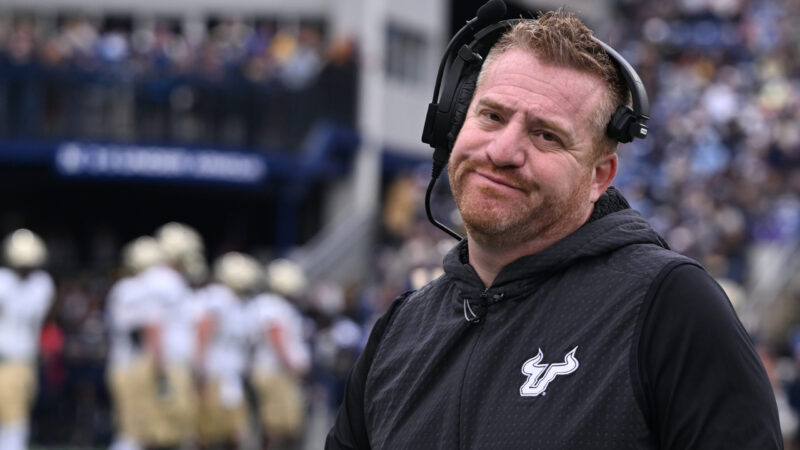
Auburn tabs USF’s Alex Golesh as its next coach, replacing Hugh Freeze on the Plains
The 41-year-old Golesh, who was born in Russia and moved to the United State at age 7, is signing a six-year contract that averages more than $7 million annually to replace Hugh Freeze. Freeze was fired in early November after failing to fix Auburn’s offensive issues in three seasons on the Plains.

Alabama Power seeks to delay rate hike for new gas plant amid outcry
The state’s largest utility has proposed delaying the rate increase from its purchase of a $622 million natural gas plant until 2028.
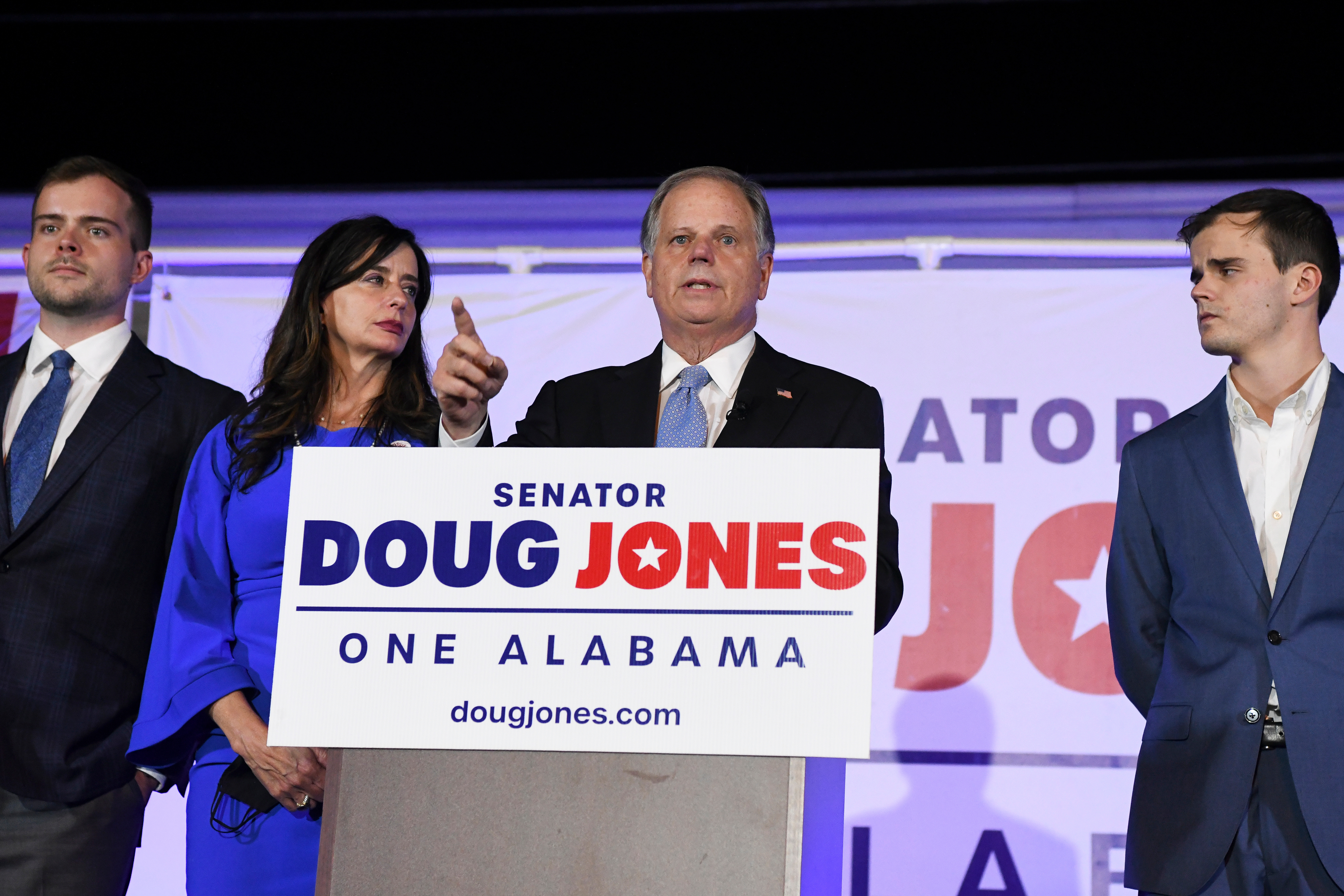
Former U.S. Sen. Doug Jones announces run for Alabama governor
Jones announced his campaign Monday afternoon, hours after filing campaign paperwork with the Secretary of State's Office. His gubernatorial bid could set up a rematch with U.S. Sen. Tommy Tuberville, the Republican who defeated Jones in 2020 and is now running for governor.

Scorching Saturdays: The rising heat threat inside football stadiums
Excessive heat and more frequent medical incidents in Southern college football stadiums could be a warning sign for universities across the country.

The Gulf States Newsroom is hiring an Audio Editor
The Gulf States Newsroom is hiring an Audio Editor to join our award-winning team covering important regional stories across Mississippi, Alabama and Louisiana.