
Teen heartthrobs named Bobby were everywhere in the ’60s — which was fine by me
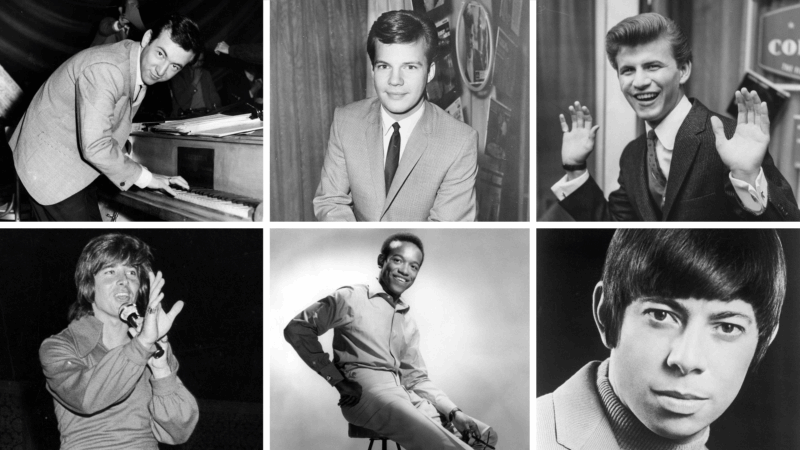
For quite a while now, I’ve been known as Bob. But back in the 1950s and early ’60s, I was Bobby.
And you know how little kids go through a period where they think the whole world revolves around them?
Well, back then, I kinda had proof.
It seemed like every time I turned on the radio, Marcie Blane was singing that she wanted to be “Bobby’s Girl.” And she wasn’t alone. Darlene Love was using Phil Spector’s famous “wall of sound” to let everyone know she was going to “Wait ’til My Bobby Gets Home.” Lesley Gore was warning me about some other girl who was out to trap me in “Run Bobby Run.”
And they were apparently all going to have to fight it out with the more formidable Etta James, who was soulfully wailing about her one true love in “Bobby Is His Name.”
A kid could get a complex, right?
Happily for my psyche, I was already too old to think any of this was actually directed at me. But there was another Bobby phenomenon back then: before some British guys named John, Paul, George and Ringo arrived on our shores, a cadre of American Bobbys had been topping the charts: Bobby Day did it with “Rockin’ Robin” and its B-side “Over and Over” in 1958, and Bobby Darin with “Splish Splash” that same year.
And before long, Bobbys were everywhere.
Bobby Vee had six top ten Billboard hits in the 1960s, including “The Night Has a Thousand Eyes,” “Take Good Care of My Baby” and that one where he hiccupped that like a “Rubber Ball, I’ll come bouncin’ back to you-ooh-ooh-hoo-ooh.”
Bobby Vee was quickly one-upped (or maybe two-upped) by Bobby Vinton, who had eight top ten hits in the ’60s including so many blue-themed songs – “Blue Velvet,” “Blue on Blue” — that if you’d asked me who sang “the blues” back then, I might well have said him.
There was also Bobby Rydell, who parlayed a bunch of top ten hits (“Volare,” “Forget Him,” “Wild One”) into an acting gig as Ann-Margret’s boyfriend Hugo in the movie musical Bye Bye Birdie (though he barely got to sing in it). And on the soul charts, Bobby Womack (“I’m Lookin’ for a Love”), Bobby Lewis (“Tossin’ and Turnin'”) Bobby Freeman (“Do You Want to Dance”), and Bobby Smith of the Spinners. Country Bobbys included Bobby Goldsboro (“Tears of a Clown”), Bobby Bare (“Detroit City”), and Bobby Sherman (“Little Woman).
All these Bobbys were teen idols, though most weren’t actually in their teens. They just appealed to bobby-soxers, who fastened their hair with bobby-pins. Some of the singer Bobbys had such thin, adenoidal voices that you had to think they couldn’t have had careers before microphones. They were a breed apart. A popular breed.
It makes sense that there would have been a lot of singers named Bobby as I was growing up, since there were a lot Bobbys back then. In the 1930s, Robert was the most popular boys name in the U.S. And in the 1940s, it was the second most popular. (Just for reference, these days it’s barely in the top hundred.) So there was nothing exceptional about Greatest Generation parents like the Darins, Rydells, Vintons, Vees, Goldsboros, Womacks and Shermans calling their little soon-to-be-crooners that. It would almost be strange if there hadn’t been a lot of teenybopper Bobbys in the 1960s.
But their time was mostly over by 1970. That was fine by me. By then I’d personally graduated to Bob, and was more likely to be listening to Bob Dylan or Bob Seger. Or maybe to that “Splish Splash” Bobby — Bobby Darin — who’d graduated to a more sophisticated sound, finding jazz and leaving teenybopper-dom behind with songs like “Mack the Knife.”
I was enough of a theater nut to know that that particular song was from an off-Broadway show called The Threepenny Opera. I’d been going to touring shows in Washington, D.C. since I was a kid — they were my music now — and in 1970 I finally traveled to New York to catch my first musical on Broadway without my folks.
Sitting down in my seat at the Alvin Theater, I felt very grown up.
Then Stephen Sondheim’s Company started, and what were the first lyrics?
“Bobby. Bobby. Bobby baby, Bobby bubbi, Robby, Robert darling….”
This piece was edited by Clare Lombardo. The broadcast version was mixed by Chloee Weiner with engineering support from Robert Rodriguez.

As the winter storm rages, here’s what to know in your state
Reporters across the NPR Network are covering the impact of the storm and how officials are responding. We've also got tips for staying safe once bad weather hits.
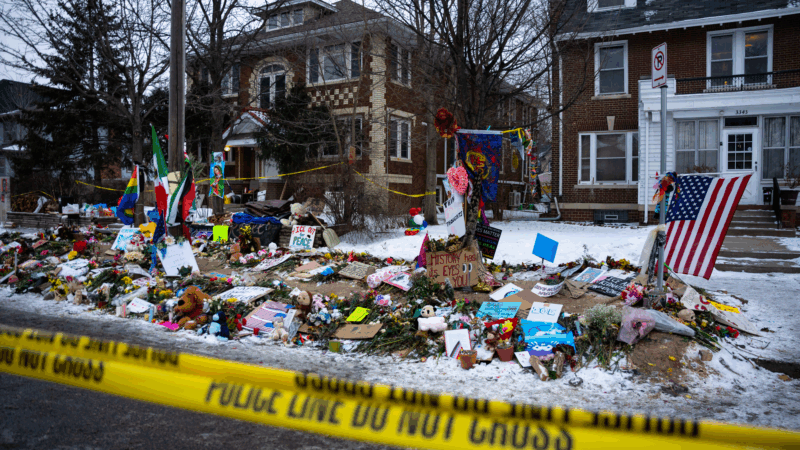
A deadly standoff in 1992 changed federal use-of-force rules. Here’s why it matters
An encounter with white separatists decades ago led to new deadly force policies for some federal law enforcement. Minneapolis is raising questions about whether it's again time to revisit the issue.
Tired of bad haircuts? 3 stylists share tips on how to get the do of your dreams
No more crying over bad haircuts. This illustrated guide has advice on how to find a great stylist and communicate what you want, even while you're sitting in the salon chair.
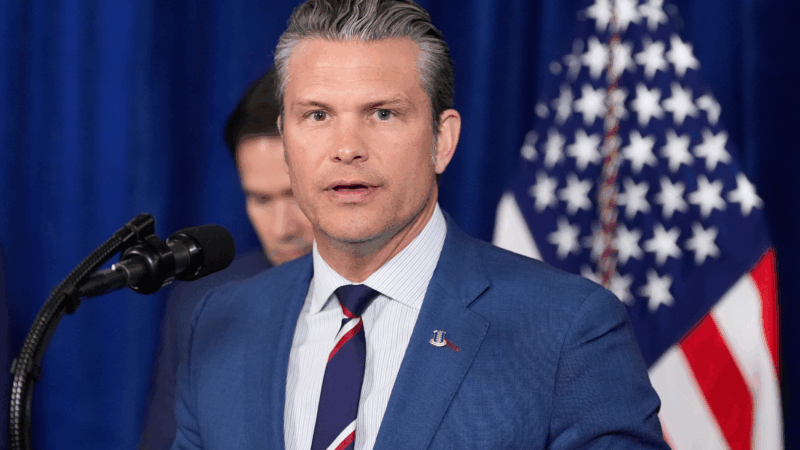
Trump administration’s defense strategy tells allies to handle their own security
The Pentagon released a priority-shifting National Defense Strategy late Friday that chastised U.S. allies to take control of their own security and reasserted the Trump administration's focus on dominance in the Western Hemisphere above a longtime goal of countering China.
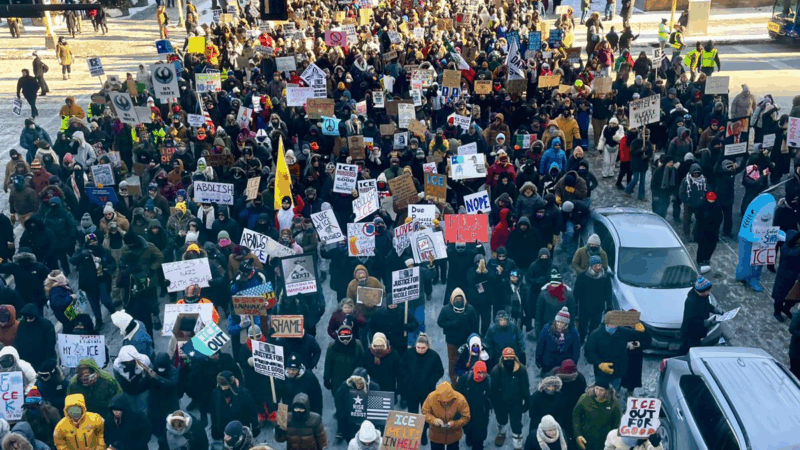
Minnesotans turn out in the frigid cold to protest Trump’s immigration crackdown
Minnesota residents took to the streets of downtown Minneapolis to protest the federal government's immigration campaign in the state, after weeks of sustained resistance in their communities. Businesses across the region closed in solidarity.
Trump expands policy banning aid to groups abroad that discuss or provide abortions
In addition to adding to the list of groups that will lose funding for providing or discussing abortion, the policy now also calls for ending aid to groups that embrace DEI.
