
Supreme Court sides with straight Ohio woman who claimed workplace discrimination

A unanimous Supreme Court sided with an Ohio woman who claimed she was discriminated at work because she is straight.
The Sixth Circuit Court of Appeals had previously sided with her employer, the Ohio Department of Youth Services.
At issue in the case was a legal standard used by some federal circuit courts that impose a higher bar to prove discrimination on people who are heterosexual, white, and/or male than on minorities.
“Congress left no room for courts to impose special requirements on majority-group plaintiffs alone,” Justice Ketanji Brown Jackson, one of the court’s three liberals, wrote in the unanimous opinion.
Brown wrote that the lower court’s higher standard was inconsistent with Title VII of the Civil Rights Act of 1964, which bars sex discrimination in the workplace.
The woman in the case, Marlean Ames, said that the Ohio Department of Youth Services, where she had worked for 20 years, passed her over for promotion — and then demoted her — because she is straight. In both instances, the jobs were given to LGBTQ+ people.
The 6th Circuit Court of Appeals, one of those federal circuits that required non-minorities to show a higher standard for discrimination, ruled against her. The Supreme Court on Thursday sided with Ames, and struck down that higher standard.
Ames now gets another chance to make her case to the lower court with the lower standard to prove discrimination.
British Columbia to make daylight saving time permanent
The Canadian province is permanently ending the biannual time shifts for more light at the day's end. But research shows daylight saving increases health risks.
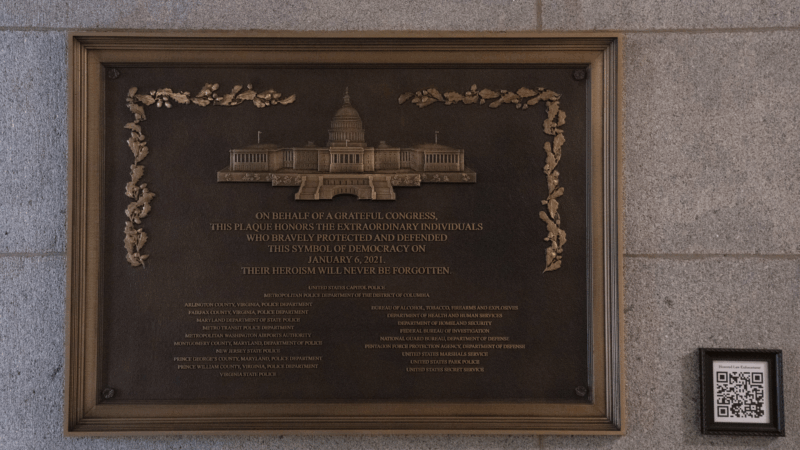
Jan. 6 plaque honoring police officers is now displayed at the Capitol after a 3-year delay
Visitors to the Capitol in Washington now have a visible reminder of the siege there on Jan. 6, 2021, and the officers who fought and were injured that day.
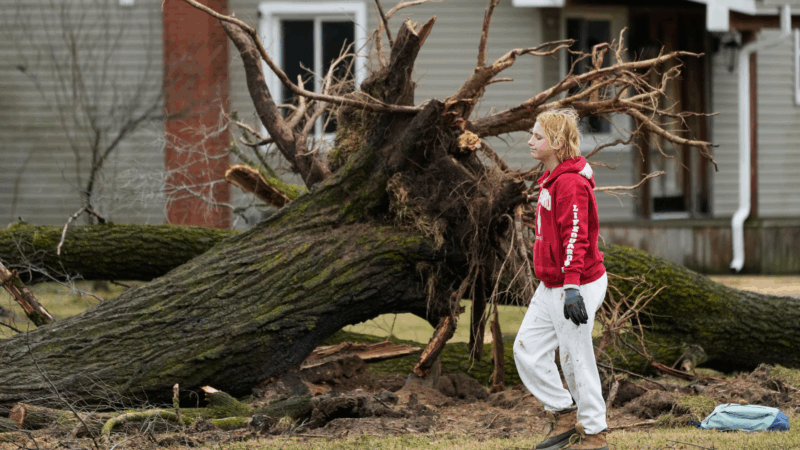
Authorities searching debris after suspected tornadoes kill 6 in Michigan, Oklahoma
A 12-year-old boy is reported to be among the dead following powerful storms that stretched across the middle of the country.

Opinion: The immorality of betting on war
Traders on prediction markets bet on nearly anything. One made more than half a million dollars betting on the U.S. strike against Iran. But should people wager on human suffering?
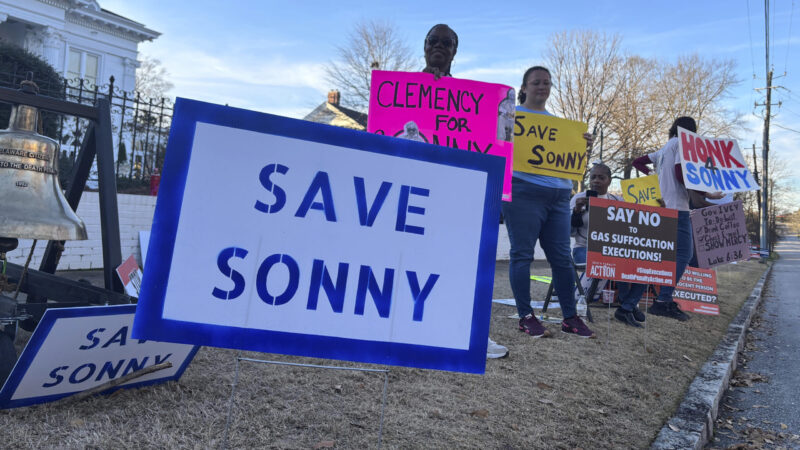
Alabama man facing execution for deadly robbery asks for clemency as he didn’t kill victim
Charles “Sonny” Burton is scheduled to be executed March 12 for his role in a 1991 robbery in which a man was fatally shot. His supporters and attorney are asking the governor for clemency, arguing that his life should be spared because Burton didn’t fire the gun or witness the killing.
One week into the Iran war, the fallout is global
The war is no longer just about the U.S., Israel and Iran. More countries are getting caught in the political crossfire or being drawn into the fighting themselves.
