
Supreme Court allows Mississippi social media law to go into effect
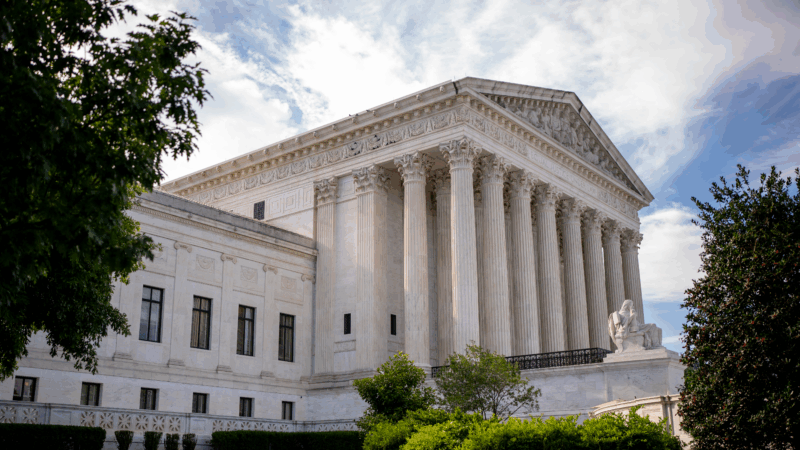
The Supreme Court on Thursday refused to intervene on a lower court decision that affirmed a Mississippi law requiring users to verify their ages before using social media sites such as Facebook, Instagram, and Snapchat.
The Mississippi law is far broader than a Supreme Court ruling just weeks ago that upheld a Texas law mandating age verification to access websites with sexually explicit material. Writing for the court’s conservative supermajority, in June, Justice Clarence Thomas held that requiring adults to verify their age prior to using sexually explicit sites did not violate the First Amendment’s Free Speech Clause because it is important to shield “children from sexually explicit content.”
In contrast, the Mississippi law requires all users to verify their ages before using common social media sites ranging from Facebook to Nextdoor, a social media site that connects people to their nearby neighbors.
In addition to the age verification rule, the Mississippi law requires social media websites to work to prevent children from accessing “harmful materials” and prohibits minors from using social media websites, such as Instagram and Youtube, without parental consent.
NetChoice, a tech industry association committed to “protecting online freedom” sued, arguing that the law unconstitutionally restricted nine of its member websites: websites mentioned above, including Facebook, Instagram, and YouTube.
Netchoice argues that the law violates the First Amendment’s guarantee of free speech without governmental interference. The “monitoring-and-censorship requirements for vague categories of speech,” Netchoice argued, limits individuals’ access to important information ranging from university professors’ online lectures, to statements from political leaders, and other creative content.
Though it is within parents’ interests to protect their children from harmful content, said NetChoice, there are other tools—such as web browser parental controls—that parents can use to regulate their children’s online use.
A district court agreed with Netchoice, temporarily stopping the Mississippi law from going into effect while proceedings continued in the lower courts. But, the conservative Fifth Circuit Court of Appeals lifted the temporary block, without addressing whether or not the law violates the First Amendment.
Justice Brett Kavanaugh, concurred with the court’s order Thursday, but wrote: “In short, under this Court’s case law as it currently stands, the Mississippi law is likely unconstitutional. Nonetheless, because NetChoice has not sufficiently demonstrated that the balance of harms and equities favors it at this time, I concur in the Court’s denial of the application for interim relief.”
The Supreme Court refused to block the Fifth Circuit’s decision, allowing at least temporarily, for the Mississippi law to go into effect.
Iran’s soccer team cannot participate in the FIFA World Cup, Iranian minister says
Iran is set to play three games in the U.S. this June. But amid the U.S.-Israel military campaign that has killed Iran's supreme leader, Iran's sports minister said the team would pull out.

Pentagon probe points to U.S. missile hitting Iranian school
A military assessment suggests a U.S. Tomahawk cruise missile was responsible for at least 165 deaths at an Iranian girls' school, according to a U.S. official who was not authorized to speak publicly.

Harrison Ford isn’t retiring: ‘I really wouldn’t know what to do with myself’
Ford struggled to find his footing in Hollywood before being cast as Han Solo in Star Wars. Now 83, he plays a therapist in the Apple TV series Shrinking: "I really do love the work," he says.
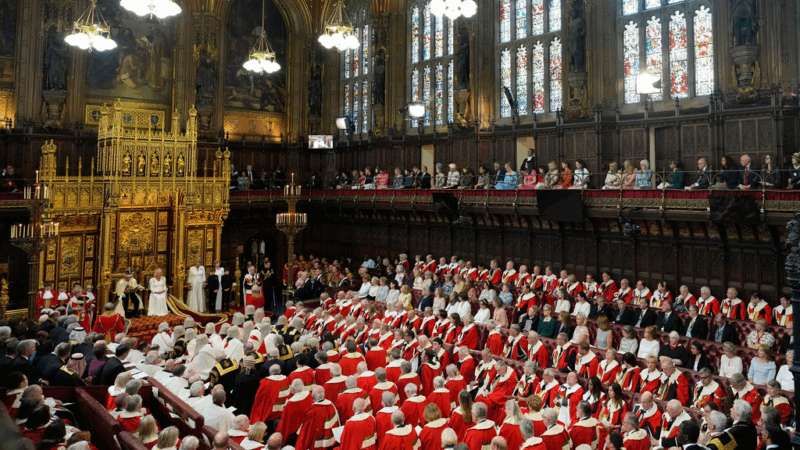
No Nobles Day: Britain’s Parliament boots its last hereditary Lords after 700 years
Government minister Nick Thomas-Symonds said the change put an end to "an archaic and undemocratic principle." The removed aristocrats are 92 of the House of Lords' 800 members.

On her new album, Kacey Musgraves returns home, to the ‘Middle of Nowhere’
Before making her upcoming sixth album, the country star returned to her small-town Texas home and discovered the power of in-between spaces. "I found a lot of clarity there," she says.

How the Iran war is disrupting air travel — and advice if you’re planning a trip
The war in Iran is roiling jet fuel prices and airlines are beginning to hike prices, unsettling travelers far from the Middle East. If you're booking a flight soon, here are things to know.
