
State Department undergoes deep cuts in sweeping reorganization

The State Department is cutting its Washington-based staff by about 15% in what officials are calling the largest overhaul of the agency in decades. Some employees have already taken early retirement, while hundreds more are expected to receive layoff notices Friday.
Deputy Secretary of State for Management Michael Rigas said the department will soon begin informing individuals affected by the “reduction in force.”
Secretary of State Marco Rubio is leading the overhaul, eliminating 132 offices he’s described as part of a “bloated bureaucracy.” His staff rewrote key personnel rules to allow the department to fire Foreign Service and Civil Service officials in roles now being phased out.
Rubio has defended the move as essential to speeding up internal processes, citing the layers of bureaucracy that slow decision-making. “There were 40 boxes on this piece of paper,” he told senators in May. “That means 40 people had to check off ‘yes’ before it even got to me. That’s ridiculous. And if any one of those boxes didn’t get checked, the memo didn’t move. That can’t continue.”
But former diplomats are sounding the alarm. The American Academy of Diplomacy, which represents former Ambassadors, who advocate for US Diplomacy, accused Rubio of gutting the department’s institutional knowledge and called the move “an act of vandalism.”
“This isn’t just about trimming fat,” said Thomas Shannon, a former under secretary of state in the previous Trump administration. “We’re removing a significant chunk of our civil service and Foreign Service employees, and restructuring in ways that reflect a diminished global agenda.”
Shannon warns the shake-up could have long-term consequences — especially as the U.S. scales back on human rights and democracy promotion. He also pointed to the closure of USAID and the loss of experts with critical language and cultural skills as blows to U.S. influence abroad.
“We’re going to end up cutting a lot of really talented individuals,” he said. “They’ll be like players in a game of musical chairs — suddenly finding themselves without a seat.”
While the impact may not be felt immediately, Shannon said the move could leave the U.S. lagging behind rivals like China in the global arena.

Opinion: The immorality of betting on war
Traders on prediction markets bet on nearly anything. One made more than half a million dollars betting on the U.S. strike against Iran. But should people wager on human suffering?
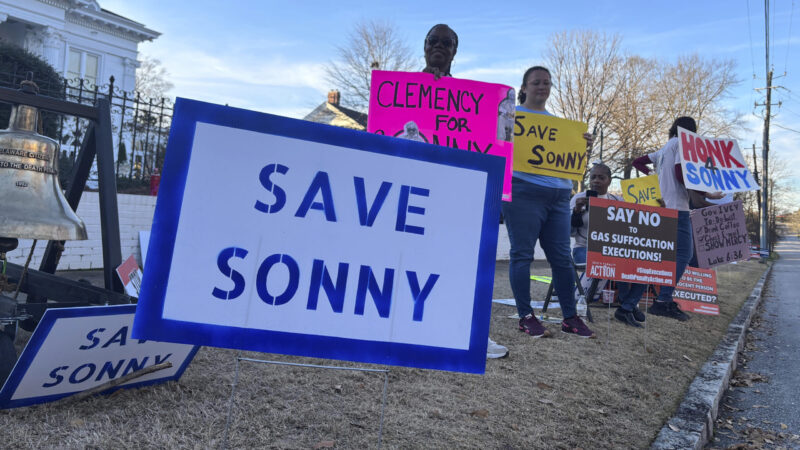
Alabama man facing execution for deadly robbery asks for clemency as he didn’t kill victim
Charles “Sonny” Burton is scheduled to be executed March 12 for his role in a 1991 robbery in which a man was fatally shot. His supporters and attorney are asking the governor for clemency, arguing that his life should be spared because Burton didn’t fire the gun or witness the killing.
One week into the Iran war, the fallout is global
The war is no longer just about the U.S., Israel and Iran. More countries are getting caught in the political crossfire or being drawn into the fighting themselves.

Curling had its moment at the Olympics and now Paralympics. It sparked a curling bonanza in America
Hundreds of people become interested in curling every four years and the 2026 numbers already show that boom.
Iran’s president defies U.S. demands while apologizing for strikes on neighbors
President Masoud Pezeshkian said Saturday that a demand by the U.S. for an unconditional surrender is a "dream that they should take to their grave." He also apologized for Iran's attacks on regional countries.
What the Trump administration says about why it went to war with Iran
The Trump administration says it is "laser focused" and mission driven, but the messaging has been varied. The range of cited motivations for striking Iran now are sometimes at odds with each other.
