
South Africa’s president creates commission to look at police corruption allegations
JOHANNESBURG — South African President Cyril Ramaphosa has suspended his police minister after explosive allegations of links to organized crime were made against him.
Ramaphosa made the announcement in a special address to the nation on Sunday night, also declaring he was setting up an independent commission of inquiry into the claims.
“The Commission will investigate the role of current or former senior officials in certain institutions who may have aided or abetted the alleged criminal activity,” Ramaphosa said.
“In order for the Commission to execute its functions effectively, I have decided to put the Minister of Police Mr. Senzo Mchunu on a leave of absence with immediate effect,” he added.
Mchunu, 67, has denied the allegations. He was an ally of Ramaphosa in the African National Congress (ANC) party, thought to be untainted by corruption, and considered a possible successor to the president.
But earlier this month KwaZulu-Natal Provincial Commissioner Lieutenant-General Nhlanhla Mkhwanazi broke with protocol to hold his own press conference the weekend before claiming Mchunu has received payments from a corruption suspect. He also accused his boss of having disbanded a police task team investigating political killings after outside pressure.
In his address Ramaphosa noted Mkhwanazi had “made public serious allegations about the existence and operation of a sophisticated criminal syndicate that has allegedly infiltrated law enforcement and intelligence structures in South Africa.”

Ramaphosa, who came to office promising an end to the endemic corruption that plagues South African government, said the commission of inquiry would present its initial findings within three months. The allegations are the latest blow to the fragile Government of National Unity (GNU), formed just over a year ago after the ANC lost its parliamentary majority for the first time since the advent of democracy in 1994.
Other political parties were quick to criticize the president, who is often perceived as being slow to make firm decisions on divisive issues that could lead to greater factionalism within an already divided ANC.
“These allegations provided the President with an opportunity to show bold and firm leadership,” South Africa’s second-biggest party, the Democratic Alliance, said in a statement.
“Instead, he has once again outsourced executive responsibility to a commission, and South Africans have grown cynical of talk shops, task teams and commissions which they see as buying time and avoiding accountability.”
The Daily Maverick newspaper on Monday also accused the president of a “commission of inquiry addiction,” noting what it said was his fondness for passing the buck to costly inquiries whose recommendations are then not acted on.
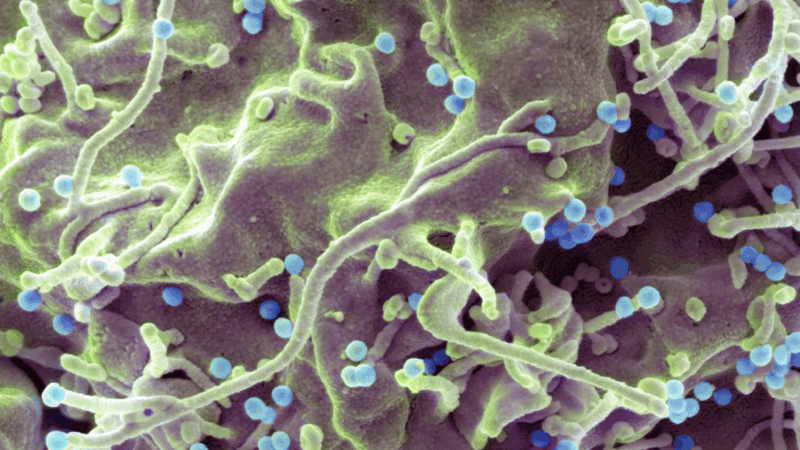
A new one-a-day-pill holds promise for HIV’s ‘forgotten population’
It's designed to take the place of complicated, multiple drug regimens that many people with HIV need to follow. And it's also beneficial because the HIV virus is always evolving.
For filmmaker Chloé Zhao, creative life was never linear
Director Chloé Zhao used meditation, somatic exercises and dance to inspire the cast and crew of this Oscar-nominated story about William Shakespeare's family.

10 new books in March offer mental vacations
March is always a big one for books – this year is no different. We call out a handful of upcoming titles for readers to put on their radars — offering a good alternative to doomscrolling.
Sen. Chris Coons, D-Del., talks about the war with Iran and upcoming war powers vote
NPR's A Martínez asks Delaware Democrat Chris Coons, a member of the Senate Foreign Affairs Committee, about the war with Iran.

The candy heir vs. chocolate skimpflation
The grandson of the Reese's Peanut Butter Cups creator has launched a campaign against The Hershey Company, which owns the Reese's brand. He wants them to stop skimping on ingredients.

Scientists make a pocket-sized AI brain with help from monkey neurons
A new study suggests AI systems could be a lot more efficient. Researchers were able to shrink an AI vision model to 1/1000th of its original size.
