
Shoes off at the airport? TSA appears to be giving the pesky rule the boot

The Transportation Security Administration appears to be kicking one of the most despised rules at U.S. airport security checkpoints: removing your shoes.
The federal government began requiring airline passengers to slip off their footwear during security checks in 2006, roughly five years after British-born terrorist Richard Reid tried to detonate a bomb hidden in his shoes on an American Airlines flight from Paris to Miami.
On Tuesday, the rule already seemed to have ended at some airports.
An NPR reporter at Ronald Reagan Washington National Airport (DCA) early Tuesday observed fliers passing through multiple security checkpoints without removing their shoes. A spokesperson for the Philadelphia International Airport confirmed Tuesday morning that the TSA was permitting standard passengers to keep their footwear on during the screening process there.
Some travelers also posted on social media this week that they’ve been able to keep their shoes on in U.S. airport security lines. “Just went through at Buffalo, didn’t take shoes off,” one X user wrote Monday night. “Shoes on at SeaTac (Seattle) just now,” said another.
The TSA did not directly confirm the policy shift in a statement to NPR Tuesday morning.
“TSA and [the Department of Homeland Security] are always exploring new and innovative ways to enhance the passenger experience and our strong security posture,” the spokesperson said. “Any potential updates to our security process will be issued through official channels.”
The lack of clarity about whether the policy had actually been withdrawn led to at least one confusing exchange at a New York City airport. “I flew through LaGuardia this morning and when I went to take my shoes off the TSA agent yelled at me like I was a crazy person doing something completely unexpected,” another X user said early Tuesday.
Laverne McCartney Knighton, a Minneapolis resident whose flight landed in Washington, D.C., Tuesday morning, said she welcomed the new approach.
“As a woman, who wants to pull her shoes off? And I don’t like pulling my shoes off in public places. I don’t like my feet on floors that I don’t know about,” McCartney Knighton said. “But it’s faster, you know, so it’s been wonderful for me.”
Bianca DuBose, who was also traveling from Minneapolis, applauded the rule change but also said she remembers the airport security changes implemented after the September 11th terrorist attacks and recognizes the need for added safety measures while traveling.
“I like it, but I grew up military, so if we have to go back to it I understand why,” DuBose said of the shoe removal rule change. “To me, if that’s the bigger issue, I’ll take my shoes off any day.”
But Caleb Harmon-Marshall, a former TSA officer who now writes the travel newsletter Gate Access, said fliers shouldn’t be concerned about the security implications of the rule reversal. He first reported the rule change Friday in his newsletter.
“Travelers should know that TSA has the technology to appropriately screen passengers with their shoes on,” Harmon-Marshall said. “That means they can detect anything that’s harmful while you’re wearing shoes.”
He also predicted that potentially scrapping the shoe removal policy would make TSA security lines move more quickly. “It is a hassle at times, especially with families with large groups or children that are over the age of 12,” said Harmon-Marshall. “Shoes can cause delays because they get stuck in the X-ray machine.”
It’s unclear how allowing travelers to keep their shoes on would affect TSA PreCheck, the program that lets fliers pay for expedited airport screening, including the perk of keeping their footwear on through security checkpoints.
Opinion: The immorality of betting on war
Traders on prediction markets bet on nearly anything. One made more than half a million dollars betting on the U.S. strike against Iran. But should people wager on human suffering?
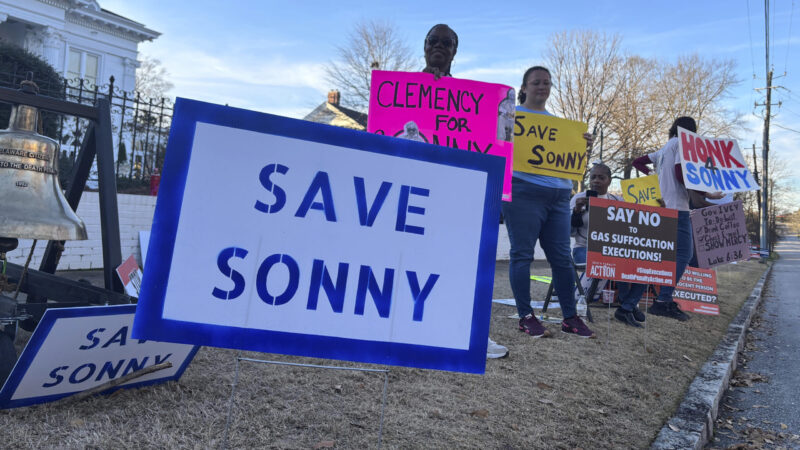
Alabama man facing execution for deadly robbery asks for clemency as he didn’t kill victim
Charles “Sonny” Burton is scheduled to be executed March 12 for his role in a 1991 robbery in which a man was fatally shot. His supporters and attorney are asking the governor for clemency, arguing that his life should be spared because Burton didn’t fire the gun or witness the killing.
One week into the Iran war, the fallout is global
The war is no longer just about the U.S., Israel and Iran. More countries are getting caught in the political crossfire or being drawn into the fighting themselves.

Curling had its moment at the Olympics and now Paralympics. It sparked a curling bonanza in America
Hundreds of people become interested in curling every four years and the 2026 numbers already show that boom.
Iran’s president defies U.S. demands while apologizing for strikes on neighbors
President Masoud Pezeshkian said Saturday that a demand by the U.S. for an unconditional surrender is a "dream that they should take to their grave." He also apologized for Iran's attacks on regional countries.
What the Trump administration says about why it went to war with Iran
The Trump administration says it is "laser focused" and mission driven, but the messaging has been varied. The range of cited motivations for striking Iran now are sometimes at odds with each other.
