
Sen. Dick Durbin, a top Senate Democrat, says he will not seek reelection

Illinois Sen. Dick Durbin, one of the highest ranking Democrats on Capitol Hill, will not seek reelection next year, capping a more than four decade-long tenure in Congress.
“The decision of whether to run for re-election has not been easy. I truly love the job of being a United States Senator. But in my heart, I know it’s time to pass the torch,” Durbin said in a video released on Wednesday. “So, I am announcing today that I will not be seeking re-election at the end of my term.”
Durbin, 80, who had previously said he was undecided on whether he would run for a sixth term in the Senate but Democrats privately speculated for months that he would step aside.
His retirement creates a valuable opening within Democratic leadership. The longtime Illinois lawmaker has served as the Senate Democratic whip — the second-ranking post in the caucus — for the last 20 years.
Democrats under pressure to identify future leaders
Durbin’s announcement comes at a critical moment for the party, as Democratic lawmakers stand divided over how best to mount an effective opposition strategy against President Trump’s agenda while stuck in the minority in both the House and the Senate.
Congressional Democrats continue to face intense pressure from their base to be more aggressive in pushing back against Trump and the GOP.
That pressure has intensified following the decision by Senate Minority Leader Chuck Schumer, D-N.Y., to advance a Republican-backed spending bill in March in order to avoid a potential government shutdown. Nine Democrats joined Schumer in voting to advance that GOP measure — including Durbin. While Schumer has faced blowback for that vote, he has said he will not step down.
Schumer praised Durbin for his decades of work in the Senate in a statement following the announcement.
“His deep commitment to justice, his tireless advocacy for Americans in need, and his wisdom in leadership have left an indelible mark on this institution, the United States, and his beloved Illinois,” Schumer wrote. “The Senate—and the country—are better because of his service.”
Durbin’s departure is expected to further fuel calls from within the Democratic Party for new, younger leadership to guide the party. Sens. Brian Schatz of Hawaii and Amy Klobuchar of Minnesota are among the possible contenders to succeed Durbin in Senate leadership.
“I’m lucky to call Senator Durbin a mentor and friend. I know he will be running through the tape, fighting for Illinois and our nation, as always,” Schatz wrote in a statement. “His work and legacy will continue to shape the U.S. Senate and our country for years to come.”
Democrats expect to retain the Senate seat in Illinois
Democrats are widely expected to retain Durbin’s seat in the midterm elections next year, however, several other Democratic-held Senate seats are expected to be competitive.
Durbin is now the fourth Senate Democrat to announce they will not seek reelection in 2026, joining Sen. Jeanne Shaheen of New Hampshire, Sen. Tina Smith of Minnesota and Sen. Gary Peters of Michigan. Republicans control a 53-47 majority in the Senate, leaving Democrats with a difficult path back to the majority. On the GOP side, Kentucky Sen. Mitch McConnell, one of the longest-serving Senators in U.S. history, has also said he won’t run for reelection next year.
In addition to his leadership role with Senate Democrats, Durbin also chaired the Senate Judiciary Committee from 2021 until 2025. As chairman, he presided over confirmation hearings for Justice Ketanji Brown Jackson after she was nominated by former President Joe Biden to serve as the first Black woman on the Supreme Court.
Before coming to the Senate in 1997, Durbin served seven terms in the House of Representatives.

Russian strike on Kyiv region kills 4 and wounds 15, with peace talks stalled
The strikes comes after the United States paused ceasefire talks between Russia and Ukraine due to the war with Iran.
As the risk of measles grows, why are parents so divided on vaccines?
In South Carolina, some parents embrace vaccines, others opt out. Why do people make such different choices? A mix of politics, distrust and misinformation is pushing neighbors apart.

Brazil’s ex-President Bolsonaro is in intensive care with pneumonia, hospital says
One of Bolsonaro's doctor's described the former Brazilian president's medical condition as "serious."

Opinion: An ancient, sophisticated palate
Researchers looking at foodcrusts on the pottery shards of ancient humans say there's evidence of a wide variety of ingredients, indicating that they may have been experimenting with "recipes."
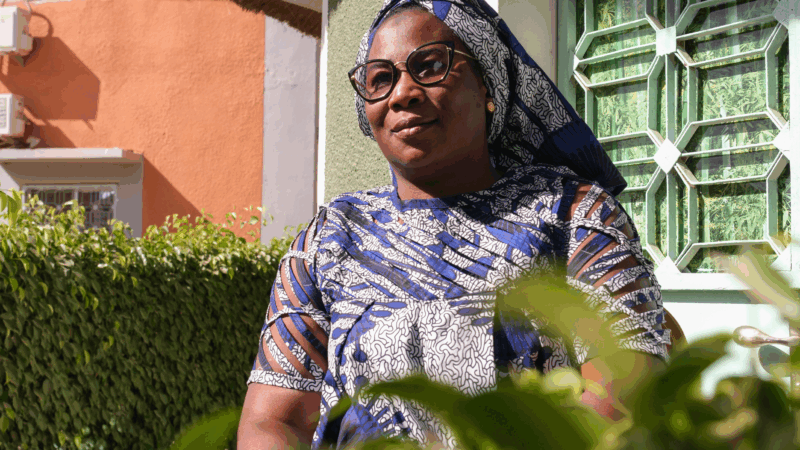
Why women have an especially tough time in Senegal’s prisons
Women charged with a crime in Senegal are at the mercy of a slow judicial process and prisons that may lack basic supplies. They also face stigma that robs them of familial and community support.

Musher from Alabama is going for back-to-back Iditarod wins
Riches and paid appearances haven’t followed Jessie Holmes since he won the world’s most famous sled dog race, the Iditarod, last year. He doesn't mind.
