Rubio announces that 83% of USAID contracts will be canceled
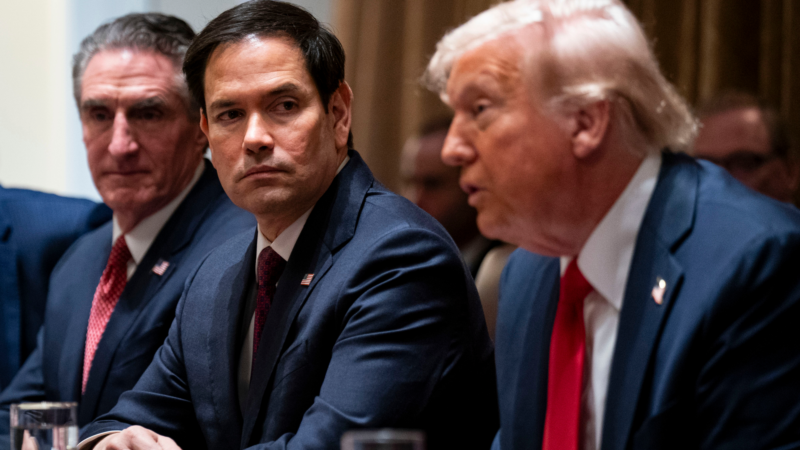
The Trump administration officially canceled 83% of U.S. foreign aid contracts on Monday.
“The 5200 contracts that are now cancelled spent tens of billions of dollars in ways that did not serve, (and in some cases even harmed), the core national interests of the United States,” Secretary of State Marco Rubio wrote on X early Monday morning.
The total number of contracts is about 6,200, representing programs that were appropriated by Congress in the last budget approval.
Rubio said that the remaining 1,000 or so contracts would be administered by the State Department, which absorbed the U.S. Agency for international Development (USAID) last month.
In his post, Rubio thanked DOGE — the Department of Government Efficiency headed by Elon Musk — for implementing “overdue and historic reform.”
A review that beat its deadline
Trump ordered a review of all foreign aid programs on his first day in office. Rubio then announced a temporary pause on these programs beginning Jan. 24 while the Trump administration conducted a 90-day review to assess their effectiveness.
The notice posted on X on Monday indicates that the review concluded early, taking only six weeks. It’s not clear if additional programs that survived could still be subject to review.
These official cuts are reverberating throughout the aid community and raising concerns about the consequences.
Memos on the consequences
Last week, a top USAID official painted a bleak picture. In a bombshell series of memos drafted by Nicholas Enrich, the acting assistant administrator for global health at USAID, and obtained by the press, including NPR, the potential for damage is quantified with estimates of how many people would possibly become sick and die if the pause in aid continues.
The halt on lifesaving programs that provide vaccinations, health care and food for the hungry, Enrich noted in the memos, “will lead to increased death and disability, accelerate global disease spread, contribute to destabilizing fragile regions, and heightened security risks — directly endangering American national security, economic stability, and public health.”
USAID tracks closely how many people each program helps — for example, how many children are given food and nutrition each year or bed nets or HIV medications. Based on those numbers, Enrich projected that, if the cutbacks are not restored and other donors do not step in, each year:
- 1 million starving children won’t have access to food and nutrition.
- Up to 17.9 million more people will get malaria and as many as 166,000 people will die from it — a 39% increase from current rates.
- Tuberculosis cases, including multidrug-resistant TB, will soar by 28 to 32 percent.
- As many as 28,000 people will suffer from emerging infectious diseases, like Ebola and Marburg.
- Hundreds of millions of people will be sickened by polio infections over the next decade, with an additional 200,000 people paralyzed by polio.
Enrich also noted that the cuts could lead to “increasing the likelihood of unchecked outbreaks of emerging infectious diseases such as avian influenza, Ebola, and mpox — threats that can spread globally and endanger American citizens.”
The projections have not been peer-reviewed or confirmed by outside experts.
NPR asked the State Department to comment on these projections. In an email response, the State Department did not answer questions about the accuracy of these estimates and whether the memos have informed the administration’s actions on aid. NPR also asked about Enrich’s current status at USAID; the State Department said they would not comment on personnel matters.
Reaction from health specialists
Sources in the field believe the estimates hold merit.
Jeanette Bailey, director of nutrition research and innovation at the International Rescue Committee, says that 31 of its 41 stabilization centers — in-patient centers for the most severely malnourished children — received termination notices from the Trump administration. Some of those terminations have since been rescinded, but a lack of payment from the U.S. government has hobbled the ability for programs to resume normal operations. Some centers are shuttered, others are severely understaffed and others are running out of specialized food, Bailey says: “None of us have ever seen anything like this.”
There are similar fears among those who treat tuberculosis, whose annual death toll of 1.25 million makes it one of the world’s biggest killers.
The halt in U.S. aid could have “fatal consequences for millions worldwide,” said Tereza Kasaeva, director of the Global Programme on TB and Lung Health at WHO, in a press statement issued last Wednesday. Historically, the U.S. has provided about one-quarter of TB aid.
Much of that support has now dried up, according to Deborah Ikeh, executive director of the Debriche Health Development Centre in Nigeria. Her nonprofit reached over half a million people last year, providing TB awareness, peer-to-peer support for drug adherence and initiatives to combat stigma which prevents many people from seeking care. Now, much of the work has stopped. The staff used to number between 60 and 70 people but now with cuts to U.S. funding, Ikeh says, the NGO will only be able to keep fewer than 10 people on staff.
“This impact will be irreversible,” she says. The halt will lead to “death from a disease that is preventable, treatable, curable.”
The figures are a painful reminder of the immense consequences the halt in U.S. foreign aid will have on the lives of people around the world, says Jennifer Kates, senior vice president and director of the Global Health and HIV Policy Program at the health nonprofit KFF.
“These are people’s lives,” Kates says. “If you stop those programs, you’re going to have more malaria, more children dying.”
NPR correspondent Gabrielle Emanuel contributed reporting to this story.
Melody Schreiber is a journalist and editor of What We Didn’t Expect: Personal Stories About Premature Birth.


Russia sends 3 Iranian satellites into orbit, report says
The report said that a Russian rocket sent the satellites on Sunday from a launchpad in eastern Russia.

Viral global TikToks: A twist on soccer, Tanzania’s Charlie Chaplin, hope in Gaza
TikToks are everywhere (well, except countries like Australia and India, where they've been banned.) We talk to the creators of some of the year's most popular reels from the Global South.

This painting is missing. Do you have it?
An important work from a rediscovered artist has been absent from public view since the 1970s. A New York curator is hunting for it.

Memory loss: As AI gobbles up chips, prices for devices may rise
Demand for memory chips currently exceeds supply and there's very little chance of that changing any time soon. More chips for AI means less available for other products such as computers and phones and that could drive up those prices too.

Brigitte Bardot, sex goddess of cinema, has died
Legendary screen siren and animal rights activist Brigitte Bardot has died at age 91. The alluring former model starred in numerous movies, often playing the highly sexualized love interest.
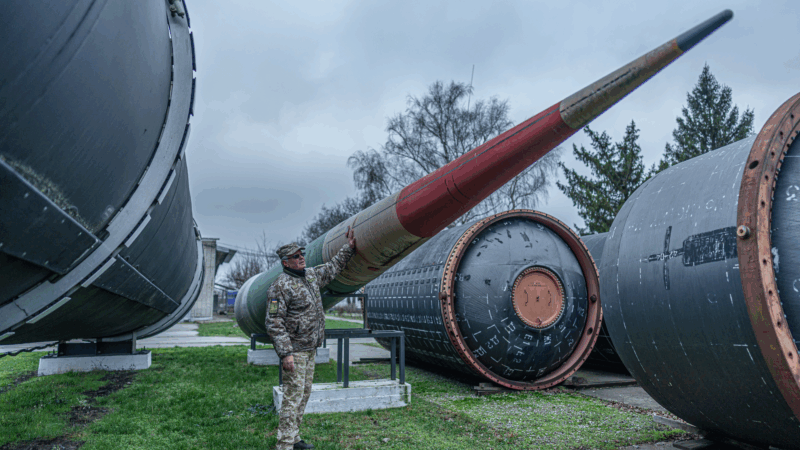
For Ukrainians, a nuclear missile museum is a bitter reminder of what the country gave up
The Museum of Strategic Missile Forces tells the story of how Ukraine dismantled its nuclear weapons arsenal after independence in 1991. Today many Ukrainians believe that decision to give up nukes was a mistake.