
RFK Jr. confirmed as Trump’s health secretary, over Democrats’ loud objections
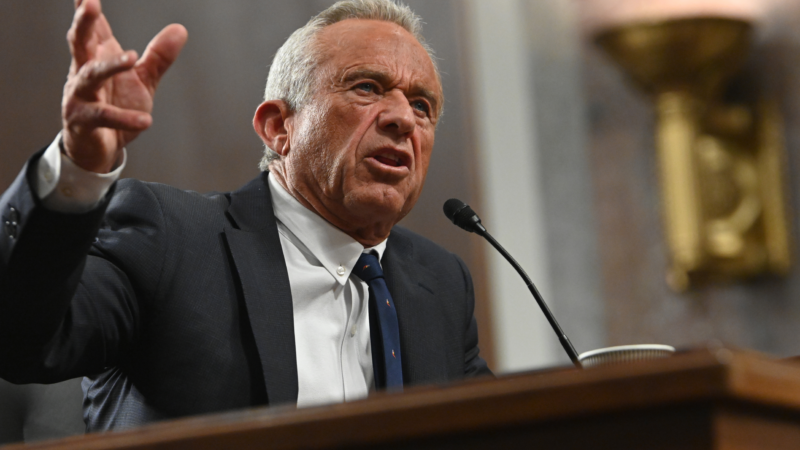
Despite millions of dollars spent by groups opposed to his nomination, the Senate voted to install Robert F. Kennedy Jr. at the helm of the Department of Health and Human Services.
Kennedy faced opposition from the left for his decades of espousing conspiracy theories on vaccines and from the right for his past support of abortion rights. For several weeks, it was uncertain whether he had enough senators backing him to get through. Yesterday, Democratic senators made speeches on the floor past midnight in protest. But on Thursday morning, he had the votes to be confirmed. The vote was 52 to 48. Sen. Mitch McConnell, the former Republican majority leader and a polio survivor, was the sole Republican joining Democrats to vote against Kennedy.
“In my lifetime, I’ve watched vaccines save millions of lives from devastating diseases across America and around the world,” McConnell said in a statement explaining his vote. “I will not condone the re-litigation of proven cures, and neither will millions of Americans who credit their survival and quality of life to scientific miracles.”
There are many questions about what happens next for Medicare, vaccines and medical research. Here are a guide to five key issues to watch as Kennedy takes control at the huge health agency in the coming weeks:
1. Congress could cut Medicaid and (maybe) Medicare
Kennedy hasn’t spoken much about the future of Medicaid or Medicare and in his hearings fumbled basic questions about how they are set up. But he now oversees both popular programs that together insure about 140 million Americans.
As soon as the 119th Congress was sworn in, Republicans began to talk about ways to cut spending in Medicaid. That is a public health program for low-income people that is paid for partly by the federal government and partly by states. Historically it’s been very popular with the public — a KFF survey from last year found 71% of Americans wanted the program to continue mostly as it is.
Amid talks of cuts, President Trump declared that his team would “love and cherish” Medicare, Medicaid and Social Security, and that any cuts would be related to waste or abuse and wouldn’t affect beneficiaries.
But cuts well beyond waste and abuse may well be coming anyway to free up funds for Trump’s priorities like tax cuts and border security. Conservative groups and Republican lawmakers have long argued that Medicaid has grown too big — during the pandemic, enrollment grew to 80 million people. The proposal from House Republicans would seek to find $880 billion in cuts to Medicaid. States would likely cut benefits and limit eligibility. Medicare could also be in for cuts of some kind as well.
Dr. Mehmet Oz, the heart surgeon, TV personality and former candidate for Senate in Pennsylvania, is Trump’s pick to lead the Centers for Medicare & Medicaid Services, which is part of HHS. A date for Oz’s confirmation hearing is not yet set.
2. Future of vaccine policy after confusing signals in hearings
As senators voted to confirm Kennedy, a measles outbreak continued in Texas. As Marfa Public Radio reported, nine have been hospitalized in an outbreak of at least 24 measles cases in Gaines County, which has one of the lowest vaccination rates in the country. All cases are in people who were unvaccinated, most are children.
Kennedy is one of the country’s most prominent vaccine opponents. During confirmation hearings, he repeatedly claimed he was not anti-vaccine or against the vaccine schedule, and he said he supported certain vaccines, including polio. He would not accept, however, that the link between autism and vaccines had been thoroughly debunked.
Kennedy won confirmation on the strength of his promises to Sen. Bill Cassidy, R-La., a physician and the chair of the Senate’s health committee. Those promises included that he would not interfere with current vaccine policy and that Cassidy would have oversight over some of his decisions at HHS.
The committee’s former chair, Sen. Patty Murray, D-Wa., said in a press conference this week that those promises were not credible. “Republicans are choosing to pretend like it is in any way believable that RFK Jr. won’t use his new power to do exactly the thing he has been trying to do for decades: undermine vaccines,” she said.
There is a lot Kennedy could do on vaccines in terms of appointing advisors, directing NIH research, and changing public health messaging about the importance of vaccines. Public health and medical advocates will be watching closely to see what Kennedy does in this arena.
3. Will HHS get the DOGE treatment?
DOGE, the Elon Musk-led effort to unilaterally dismantle agencies through furloughs, firings and stop work orders, could well be coming to HHS.
Right now, HHS has a budget of nearly $2 trillion and a staff of 90,000 people. A huge part of that budget is Medicare and Medicaid, the public health programs for seniors and low-income people respectively. DOGE staffers have been at the Centers for Medicare and Medicaid Services for the past several weeks, CMS officials told NPR.
Other health agencies that are part of HHS include the Food and Drug Administration, the Centers for Disease Control and Prevention, and the National Institutes of Health.
Project 2025, the blueprint from the Heritage Foundation that has so far aligned closely with DOGE’s actions, proposes dramatic changes to HHS, including splitting CDC into two agencies and eliminating Head Start. Kennedy hasn’t spoken much about his plans for the agencies, except to say that he would fire 600 NIH researchers and instruct the agency to redirect resources from infectious disease and towards investigating the root causes of chronic diseases.
4. Science information and research in disarray
Already, without Congressional cuts or DOGE, actions by the Trump Administration have caused tectonic changes to science in America.
Several executive orders about “ideology” caused federal health agencies to delete scores of databases and web pages that included forbidden terms like “gender,” although seemingly unrelated websites on tuberculosis and natural disasters went dark as well. A federal judge has since instructed the agencies to restore those pages, but their sudden disappearance of resources — including those used by doctors routinely when treating patients — has alarmed many in public health and medicine. It’s especially unclear how research that involves groups that cannot be mentioned, like transgender people, can now proceed.
Biomedical research — long a source of bipartisan support and national pride — has not been spared either. NIH’s grants to research institutions have already been targeted for dramatic cuts, another move that is currently paused by a federal judge. Several Republican senators, including Cassidy, Susan Collins of Maine and Katie Britt of Alabama, have spoken out about how damaging this blanket policy could be to universities with large research institutions. Collins wrote in a statement that Kennedy promised her he would “re-examine” the policy when confirmed.
5. How can “MAHA” translate to policy
Kennedy spoke in his confirmation hearings about how he understood the health agencies from a unique point of view — as a science outsider who had spent decades filing lawsuits against many of them. He asserts that the agencies have lost their way and that is reflected in the fact that Americans have poor life expectancy and many chronic diseases.
He hasn’t yet laid out how he can use policy and his power overseeing the agencies to “put the health of America back on track.” He spoke a lot during the hearings about food programs outside of HHS’ jurisdiction, suggesting maybe he will seek to work with the Department of Agriculture to collaborate on programs like SNAP.
There are powerful industries that could push back against some of his goals like Big Food and Big Pharma, as NPR has reported. And some public health researchers question how realistic such an overhaul will be in a Republican-controlled, regulation-unfriendly federal government.

Indiana completes undefeated season and wins first national title, beating Miami
Indiana bullied its way into the history books Monday night, toppling Miami 27-21 to put the finishing touch on a rags-to-riches story, an undefeated season and the national title.
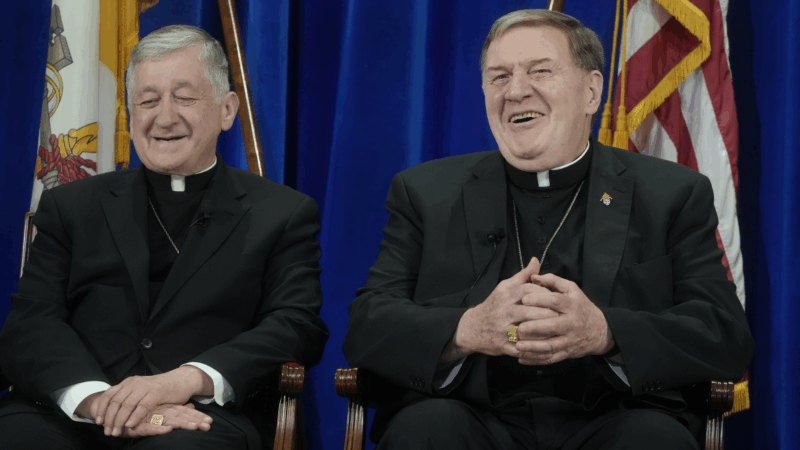
Top U.S. archbishops denounce American foreign policy
The three most-senior cardinals leading U.S. archdioceses issued the rebuke in a joint statement on Monday, saying recent policies have thrown America's "morale role in confronting evil" into question.
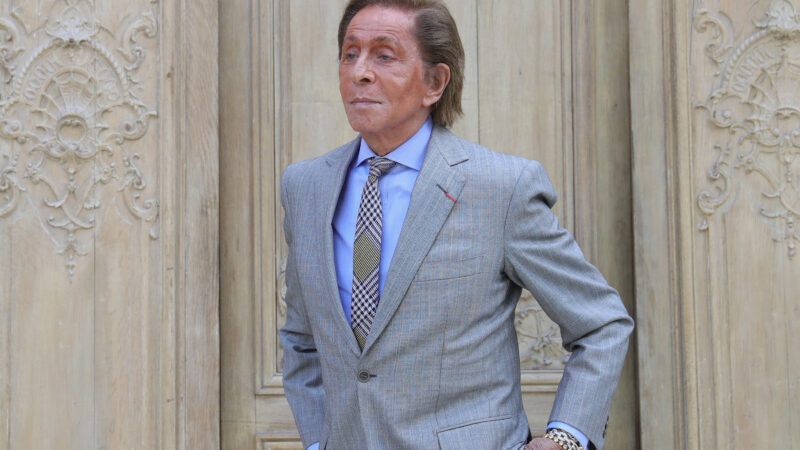
Italian fashion designer Valentino dies at 93
Garavani built one of the most recognizable luxury brands in the world. His clients included royalty, Hollywood stars, and first ladies.
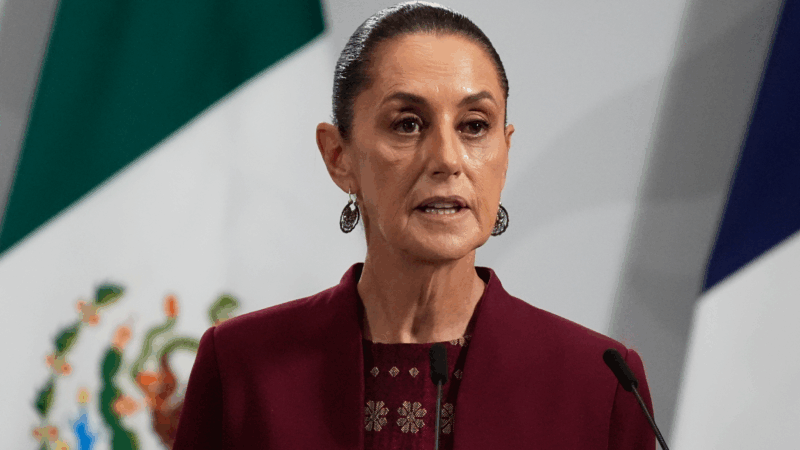
Sheinbaum reassures Mexico after US military movements spark concern
Mexican President Claudia Sheinbaum quelled concerns on Monday about two recent movements of the U.S. military in the vicinity of Mexico that have the country on edge since the attack on Venezuela.
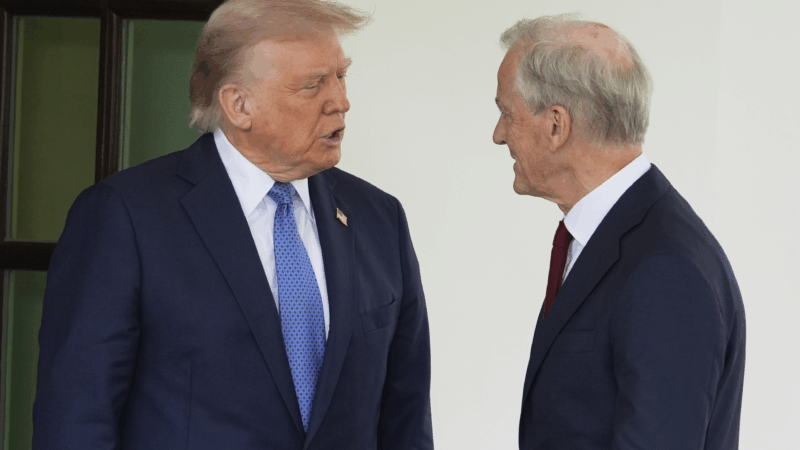
Trump says he’s pursuing Greenland after perceived Nobel Peace Prize snub
"Considering your Country decided not to give me the Nobel Peace Prize… I no longer feel an obligation to think purely of Peace," Trump wrote in a message to the Norwegian Prime Minister.

Can exercise and anti-inflammatories fend off aging? A study aims to find out
New research is underway to test whether a combination of high-intensity interval training and generic medicines can slow down aging and fend off age-related diseases. Here's how it might work.
