
Researchers find that songbirds sometimes get ‘divorced’

Getting divorced is a common and unpleasant experience for many people, but new research shows a European songbird has its own version of heading to splitsville.
The new study reveals that some avian couples appear to call it quits at the end of their breeding season. The divorcees appear to go their separate ways while other couples stick together over the winter months so they can breed together again in the spring.
While the findings may be unsurprising to anyone who’s been through a breakup, it does show that socialization matters for more than just humans.
1248050363
“I think more and more we are really understanding the extent to which social behavior influences animals’ lives,” says Adelaide Abraham, a PhD student at the University of Oxford and first author of the study. “It’s hugely, hugely important.”
Bird Breaks
The type of bird Abraham studied is known as the Great Tit, and it’s found throughout Europe.
“They’re a sort of small songbird, they’re a bit yellow, they’ve got a nice handsome black stripe on the front,” Abraham says.
In the spring, the little birds couple up to make babies. The male feeds his female partner as she incubates the eggs, and once the chicks are hatched, both of the parents help feed the chicks caterpillars and other insects.
When the babies fly away in summer, the couple’s duties are done. But what happens then? To find out, Abraham and her colleagues used little radio tags to track individual birds in the woods near Oxford. The tags would ping when the birds visited feeders set up by the researchers throughout the woods.
As summer turned into fall, they discovered that many pairs continued to hang at bird feeders together. But others did not. Some couples seemed to start drifting apart. The researchers described the pairs as “divorcing” in a paper published today in the journal Proceedings of the Royal Society B
“Those divorcing birds, they, from the start, are already not associating as much [at the feeders] as the faithful birds,” Abraham says. “That only increases as the winter goes on.”
Most humans can relate, Abraham says. “Yeah we’ve gotten that a lot, people are like, ‘Oh we really could have predicted that.'”
But scientists say it’s not a given that the birds would behave this way.
“The other way this study could have gone is that there’s no association with who they’re hanging out with during the non-breeding season,” says Sarah Khalil, a postdoctoral associate at the Cornell Lab of Ornithology.
The entire flock might just randomly chill together until it’s time to pair off in the spring. Or it could be that exes would continue to cooperate over winter and then quickly find a mate as the weather started to warm.
Instead it seems like individuals are ditching their exes early, and building new relationships over the winter months.
Now Abraham does want to be clear: These birds aren’t really getting divorced. They’re not serving each other with papers, or appearing in tiny courtrooms high in the trees.
Still, she says the work shows that bird drama is real: “There is actually a lot more going on in those flocks of birds out your window than you think there is.”

Mideast clashes breach Olympic truce as athletes gather for Winter Paralympic Games
Fighting intensified in the Middle East during the Olympic truce, in effect through March 15. Flights are being disrupted as athletes and families converge on Italy for the Winter Paralympics.

A U.S. scholarship thrills a teacher in India. Then came the soul-crushing questions
She was thrilled to become the first teacher from a government-sponsored school in India to get a Fulbright exchange award to learn from U.S. schools. People asked two questions that clouded her joy.

Sunday Puzzle: Sandwiched
NPR's Ayesha Rascoe plays the puzzle with WXXI listener Jonathan Black and Weekend Edition Puzzlemaster Will Shortz.

U.S.-Israeli strikes in Iran continue into 2nd day, as the region faces turmoil
Israel said on Sunday it had launched more attacks on Iran, while the Iranian government continued strikes on Israel and on U.S. targets in Gulf states, Iraq and Jordan.
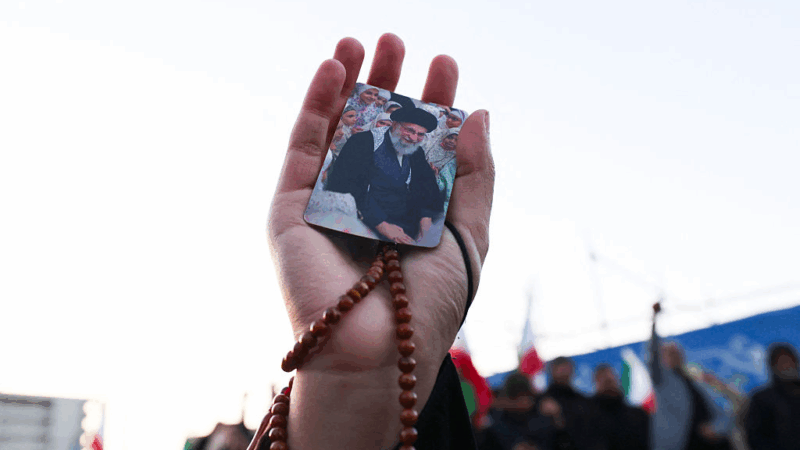
Trump warns Iran not to retaliate after Ayatollah Ali Khamenei is killed
The Iranian government has announced 40 days of mourning. The country's supreme leader was killed following an attack launched by the U.S. and Israel on Saturday against Iran.

Iran fires missiles at Israel and Gulf states after U.S.-Israeli strike kills Khamenei
Iran fired missiles at targets in Israel and Gulf Arab states Sunday after vowing massive retaliation for the killing of Supreme Leader Ayatollah Ali Khamenei by the United States and Israel.
