
Pope Leo’s religious community is drawing renewed interest. Here’s what makes it unique
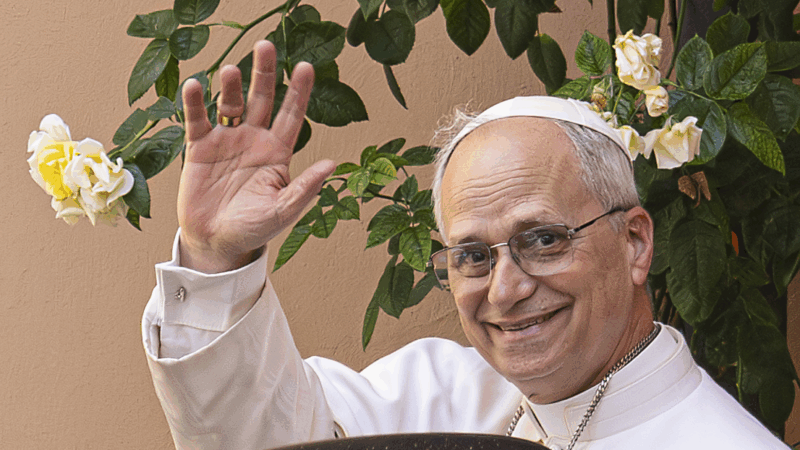
When James Schloegel took his vows as an Augustinian friar this summer, he knelt before the altar in a Chicago church, surrounded by friends, family, and fellow friars. At 32, he had spent years discerning his calling to religious life — a journey rooted in prayer, spiritual study, and community.
“I, James Michael Schloegel, led by the Holy Spirit, declare my intention to follow Jesus Christ more closely,” he said during the ceremony, “and to give a fuller expression of my baptismal consecration.”
Schloegel is one of three men who formally entered the U.S. province of the Order of St. Augustin, known as the Augustinians, in recent months. And he is part of a noticeable uptick in interest in the small Roman Catholic religious order — a trend sparked, in part, by the election earlier in Mayof Pope Leo XIV, the first North American pontiff and the first Augustinian to lead the global Church.
The Augustinians number fewer than 3,000 friars worldwide, making any increase in people interested in joining the order significant.
Before entering the discernment process, Schloegel said his life in his twenties was typical for someone his age.
“Anything that a young man would do, I was doing,” he said.
But he felt a persistent yearning for something deeper.
“My heart was hurting. It was open. And I wanted direction,” Schloegel said. The discipline of religious life and the vows involved appealed to him. “Poverty, chastity, obedience — these are ways we can open ourselves up to Christ and to the people He asks us to serve.”
Community and friendship draws men to the Augustinian order
The process of discernment wasn’t solitary. Schloegel regularly met with others exploring a similar call.
“We prayed the Liturgy of the Hours,” he recalled. “We spoke about where we felt like we were being led. Father Phil also posed books from Saint Augustine to us to read.”
“Father Phil” is the Rev. Philip Yang, vocations director for the Augustinians in the western United States. He’s seen a marked rise in interest since Pope Leo’s election in May.
“Before, we might get two or three discerners. But after Pope Leo, I now have 15,” Yang said. “It’s unbelievable.”
But Yang believes it’s not just the papal spotlight driving interest. It’s also the Augustinians’ model of religious life — centered on community rather than solitude.
“Most priests live alone,” Yang said. “With Augustinians, there’s what we call intentional community. When the day is done, you come back home to share a meal with your brothers, to pray the Psalms together, and to have this holy time of friendship.”
For Saint Augustine, the 4th-century bishop and theologian whose teachings inspired the order, friendship was more than companionship — it was a path to holiness.
“When Christ talked to the disciples, He said, ‘You are no longer slaves. You are my friends,'” Yang said. “Saint Augustine took that very seriously. True holiness can come from deep friendship.”
The Rev. Max Villeneuve, an Augustinian pastor at Our Mother of Good Counsel in Los Angeles, says Augustinian community is not simply about living together. It’s about spiritual unity.
“We’re not like holy roommates,” he said. “It’s one mind and heart intent upon God, as St. Augustine says. Before all else, love God and one another.”
That purpose — to love more deeply and grow closer to God — is central to the Augustinian way of life. Villeneuve often returns to a recurring theme in Augustine’s writings: the inward journey of knowing oneself as a path to knowing God.
“Lord, let me know myself that I may know You,” Villeneuve said, quoting one of Augustine’s prayers.
Outside his parish, a mosaic of Augustinian saints — including Saint Monica, Clare of Montefalco, and Saint Rita of Cascia — reflects that spiritual lineage. These are Villeneuve’s cloud of witnesses who drew close to God through friendship and faith.

Community shapes people into better versions of themselves
Schloegel remembers feeling anxious at the start of his novitiate, the period of living in community with other Augustinians before taking his vows. “The first two days, quite frankly, I was terrified,” he said. “I asked the Blessed Virgin Mary, ‘Help me stay here.’ And she did.”
Since then, he said, the community has shaped him — sometimes in difficult but transformative ways.
“Community is like a tray full of precious gems,” Schloegel said. “Each one, beautiful, but they’re jagged. And what community does is it shakes that tray, which then leads to the other gems grinding each other until it becomes smooth.”
Still distinct, but refined — polished by one another through life shared in faith.
House Dem. Leader Jeffries responds to air strikes on Iran by U.S. and Israel
NPR's Emily Kwong speaks to House Minority Leader Hakeem Jeffries (D-NY), who is still calling for a vote on a war powers resolution following a wave of U.S.- and Israel-led airstrikes on Iran.
Iran’s Ayatollah Ali Khamenei is killed in Israeli strike, ending 36-year iron rule
Khamenei, the Islamic Republic's second supreme leader, has been killed. He had held power since 1989, guiding Iran through difficult times — and overseeing the violent suppression of dissent.
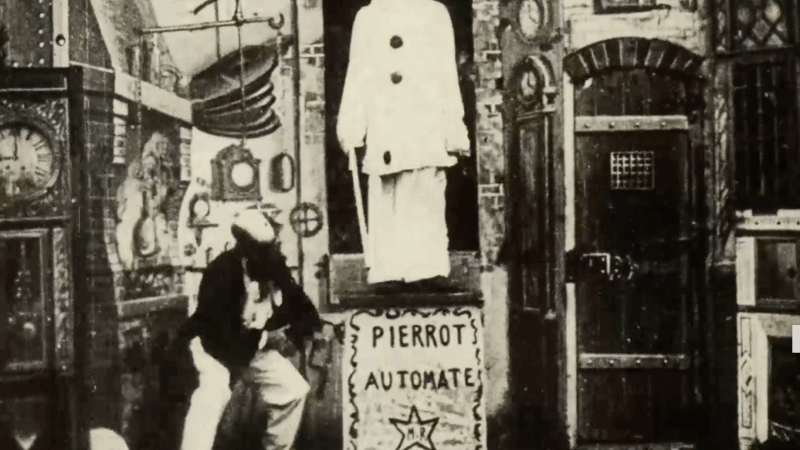
Found: The 19th century silent film that first captured a robot attack
A newly rediscovered 1897 short by famed French filmmaker Georges Méliès is being hailed as the first-ever depiction of a robot in cinema.
‘One year of failure.’ The Lancet slams RFK Jr.’s first year as health chief
In a scathing review, the top US medical journal's editorial board warned that the "destruction that Kennedy has wrought in 1 in office might take generations to repair."
Here’s how world leaders are reacting to the US-Israel strikes on Iran
Several leaders voiced support for the operation – but most, including those who stopped short of condemning it, called for restraint moving forward.

How could the U.S. strikes in Iran affect the world’s oil supply?
Despite sanctions, Iran is one of the world's major oil producers, with much of its crude exported to China.
