
Opinion: Remembering Bill Moyers
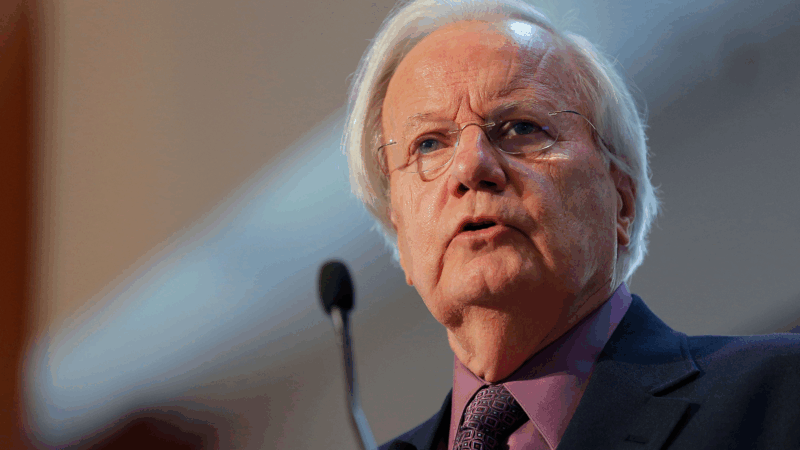
All of us in public broadcasting owe a thanks to Bill Moyers, who died this week at the age of 91. He was one of the signature figures, along with Big Bird and Susan Stamberg, who helped build public broadcasting in the United States.
Moyers started his career as a teenage cub reporter at a newspaper in Marshall, Texas. He went on to work as an intern for then-senator Lyndon Johnson. He became ordained as Baptist minister, and a few years later, in 1960, he joined Johnson on the campaign trail, eventually following him to the White House after the Kennedy assassination.
“I work for him despite his faults,” he said once when he was Johnson’s press secretary, “and he lets me work for him despite my deficiencies.” They had a falling out, reportedly over the war in Vietnam, and Moyers returned to journalism for the next 6 decades.
He won the most prestigious awards of our profession, some in bunches: more than 30 Emmys, 11 Peabodys, two Columbia-Duponts, and many other honors for his PBS documentaries and interviews.
He interviewed newsmakers. But from the start of Bill Moyers Journal, to NOW with Bill Moyers, and to Wide Angle, he interviewed poets like Rita Dove, scholars like Joseph Campbell, and other writers, artists, religious leaders and historical figures like Holocaust survivor Elie Wiesel and South African Archbishop Desmond Tutu.
He once asked Tutu how people who read the same Bible and prayed to the same God could wind up on opposite sides of grievously serious issues.
“We are human beings,” Tutu said to him, “who have been given, extraordinarily, by this God we worship the gift of freedom … God takes seriously the gift that God has given us. And we make choices. And the God, who is an omnipotent God, in many ways become impotent, because God has given us the gift to choose.”
In a media world which can overwhelm with breaking news, Bill Moyers asked questions that could be at once simple and probing in his Texas hill country tenor, steeped with a pastor’s compassion, and reminded us to try to find out what can last in the human heart.
I remember what seemed almost an incidental remark he made years ago at a long news meeting which we both attended.
“Is this a story that reaches into people?,” Bill Moyers asked.
We can honor his memory by asking ourselves that question as we go on with our work today.
Nancy Guthrie search enters its second week as a purported deadline looms
"This is very valuable to us, and we will pay," Savannah Guthrie said in a new video message, seeking to communicate with people who say they're holding her mother.

Immigration courts fast-track hearings for Somali asylum claims
Their lawyers fear the notices are merely the first step toward the removal without due process of Somali asylum applicants in the country.

Ilia Malinin’s Olympic backflip made history. But he’s not the first to do it
U.S. figure skating phenom Ilia Malinin did a backflip in his Olympic debut, and another the next day. The controversial move was banned from competition for decades until 2024.

‘Dizzy’ author recounts a decade of being marooned by chronic illness
Rachel Weaver worked for the Forest Service in Alaska where she scaled towering trees to study nature. But in 2006, she woke up and felt like she was being spun in a hurricane. Her memoir is Dizzy.
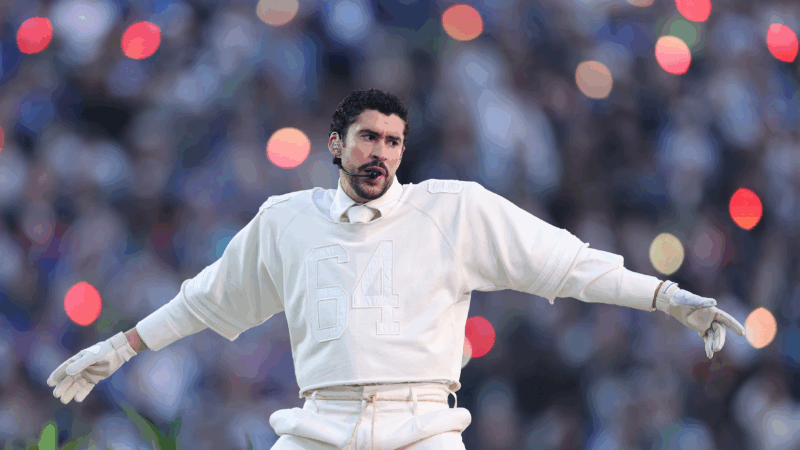
Bad Bunny makes Puerto Rico the home team in a vivid Super Bowl halftime show
The star filled his set with hits and familiar images from home, but also expanded his lens to make an argument about the place of Puerto Rico within a larger American context.
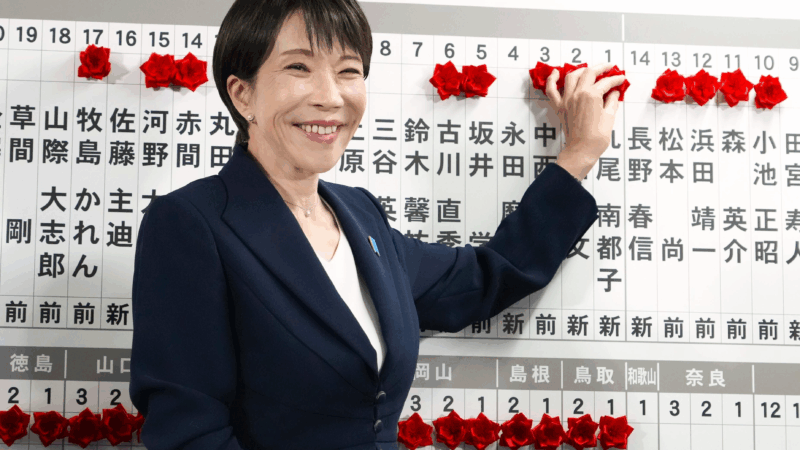
Japan’s Takaichi to pursue conservative agenda after election landslide
Japan's first female Prime Minister, Sanae Takaichi, brought the ruling Liberal Democratic Party its biggest-ever electoral victory, fueling her ambitions to pursue to a political agenda which she says could "split public opinion."
