
New books this week: The case for the Constitution, and a celebration of chosen family
During news cycles that feel especially vicious, dispiriting or relentless — or worse, all three at once — it can be helpful to temper the ol’ doomscrolling by cracking a book now and then.
Now, that’s not to say that books are only good for a hit of escapism — though to be clear, they can be terrific at that, as well. This week sees the release of several works of fiction that challenge or outright shrug off the hard rigors of the day-to-day, in pursuit of something far more out there: proof, at least in concept, that other worlds are possible.
But this week’s publishing calendar also offers help for readers seeking to understand, or simply cope with, this one. Because even if it isn’t an escape, there’s still value in applying a different, more deliberate lens to the — world, national, even personal — history that we can’t help but live and breathe while we’re around.

The Book of Guilt, by Catherine Chidgey
Few historical forks in the road seem as consequential, or as seductive to speculative fiction, as the outcome of World War II. Only, the thought experiment is typically framed as a simple either-or, with the Axis powers subbed in as victors — as in Philip K. Dick’s paragon of the form, The Man in the High Castle. Here, though, Chidgey imagines an outcome in which a treaty leaves no clear victor, and in which the U.K. carries on with the caveat that Nazi crimes have become useful scientific precedent. The New Zealand novelist centers the perspectives of teenage British triplets, caught several decades later in a turbid world where the line between political and scientific subject has become disturbingly unclear.

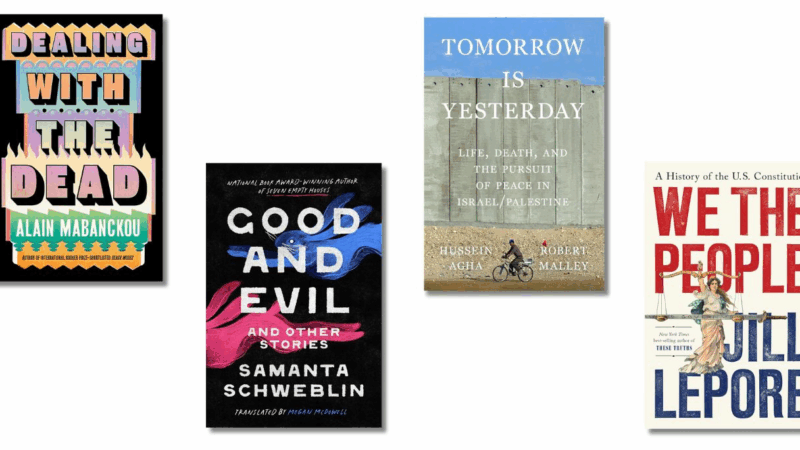
Dealing with the Dead: A Novel, by Alain Mabanckou, translated by Helen Stevenson
For years, fairly or unfairly, Mabanckou has gamely shouldered the mantle of “African Samuel Beckett.” Born in what’s now the Republic of Congo, now based in the U.S., the francophone’s nickname comes from his philosophical bent and keen sense of the absurd. In his new novel, translated from the original French by Stevenson, the decorated author returns to his hometown of Pointe-Noire for a lively dance between the permeable worlds of the living and the recently dead, and the present and the inescapable past.

Good and Evil and Other Stories, by Samanta Schweblin, translated by Megan McDowell
It makes sense that Schweblin brought up David Lynch during her 2022 chat with NPR’s Weekend Edition. Sure, the Argentine expat (now based in Berlin) works in a different medium and language, but Schweblin’s fiction bears an undeniable resemblance to the late American director’s films. Even when they’re not outright fever dreams, her worlds tend to be inescapably off — disconcertingly akimbo and bathed in unplaceable menace. Best not to let your guard down with her new short story collection, brought into English by McDowell, a veteran translator of Schweblin’s work.

Tomorrow Is Yesterday: Life, Death, and the Pursuit of Peace in Israel/Palestine, by Hussein Agha and Robert Malley
Thirty-two years since Israeli and Palestinian leaders gathered at the White House to celebrate a historic framework for peace, that promise today is farther out of reach than even its fiercest skeptics could have feared. Here, two longtime negotiators — Malley for the U.S., and Agha for the Palestinians — reflect on this painful road to ruin. To them it’s clear the catastrophe in Gaza is unfolding not despite those peace efforts, but rather because of them — and all the “illusions, delusions, lies, noise, missteps, misreadings” that plague both sides and their American mediators, as Agha told NPR’s Weekend Edition. “Hopefully people who read the book, people who are going to think about this issue, will come up with a prescription and better ideas,” Malley added. “But at a minimum, they won’t keep their head in the sand and continue trying what has been done so long and led to the disaster we’re in today.”

We the People: A History of the U.S. Constitution, by Jill Lepore
To build a durable foundation for a house, you’ll want to use the kinds of materials that resist change — concrete, say, or steel rebar. But a foundation for a country is another beast entirely. In Lepore’s latest book, a hefty volume heavy on historical detail, the Harvard professor and New Yorker staff writer makes the timely case that the strength and stability of America’s founding document, particularly in times of great stress, reside first and foremost in its capacity for adaptation.

The Wilderness: A Novel, by Angela Flournoy
Flournoy’s debut, The Turner House, drew plaudits from a slew of prize committees, including a spot on the National Book Award shortlist. She has spent a decade crafting her sophomore effort, a novel that swaps the multigenerational family drama of that book for a focus on chosen family. Interlinked narratives tell the story of five young Black women whose complex friendship animates this slim and trim novel, and whose personal trials weave in and out of the familiar historical landmarks of our tumultuous 21st century.
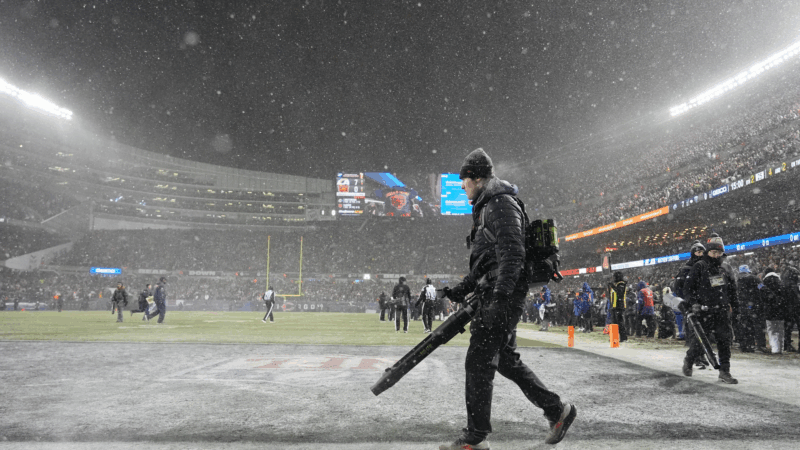
Why the Chicago Bears could be moving to Indiana
While Illinois is trying to keep the team in Chicago's suburbs, Indiana lawmakers are offering a plan to finance a new stadium
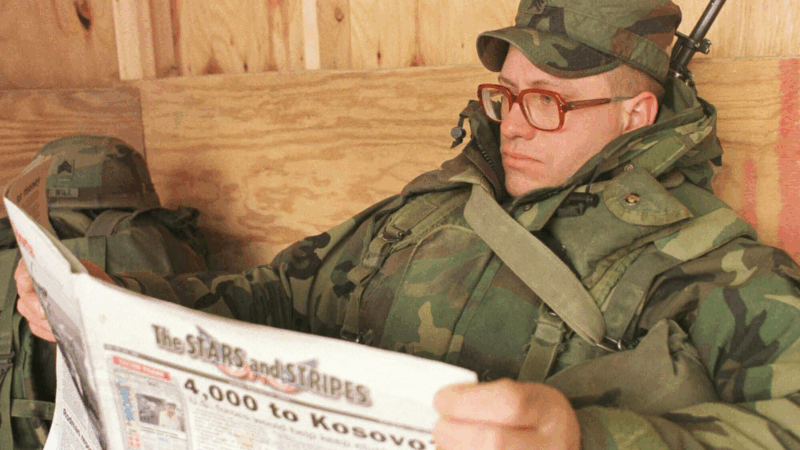
Pentagon tightens controls over Stars and Stripes after calling it “woke”
The new rules for the independent military newspaper are the Defense Department's latest effort to put extraordinary restrictions on journalists covering the agency.
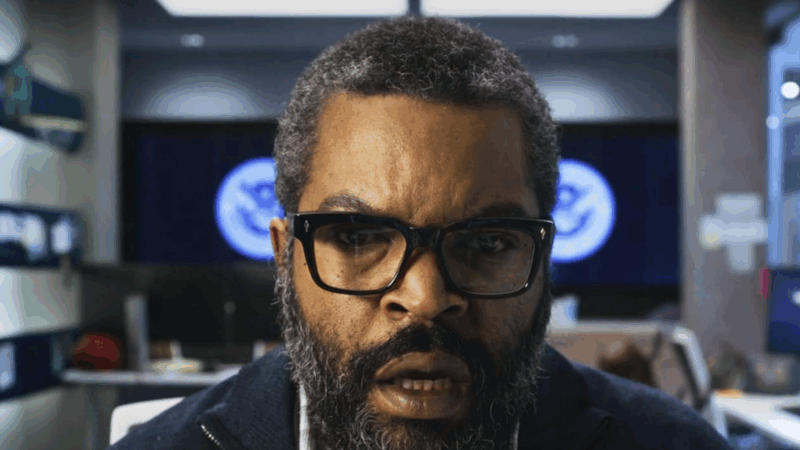
‘War of the Worlds’ remake sinks to the bottom at this year’s Razzie Awards
The surveillance industry version of HG Wells' 1898 classic sci-fi novel stars Ice Cube, and won accolades for worst picture, actor, director and more.
Russian strike on Kyiv region kills 4 and wounds 15, with peace talks stalled
The strikes comes after the United States paused ceasefire talks between Russia and Ukraine due to the war with Iran.
As the risk of measles grows, why are parents so divided on vaccines?
In South Carolina, some parents embrace vaccines, others opt out. Why do people make such different choices? A mix of politics, distrust and misinformation is pushing neighbors apart.
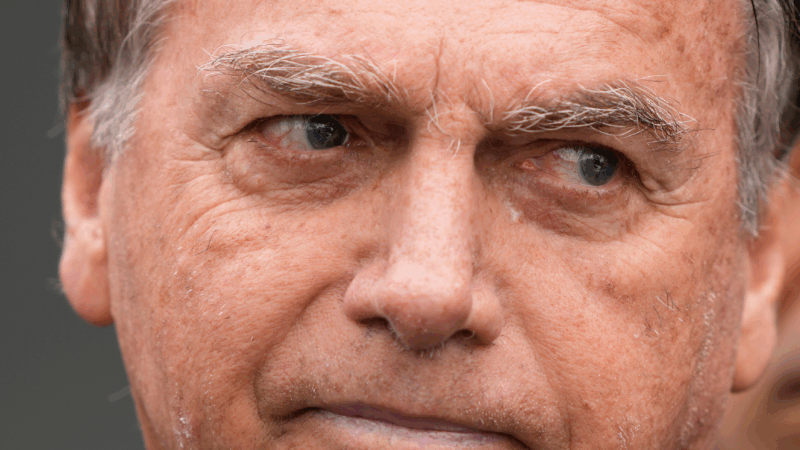
Brazil’s ex-President Bolsonaro is in intensive care with pneumonia, hospital says
One of Bolsonaro's doctor's described the former Brazilian president's medical condition as "serious."
