
National Park signage encourages the public to help erase negative stories at its sites

The Department of the Interior is requiring the National Park Service (NPS) to post signage at all sites across the country by June 13, asking visitors to offer feedback on any information that they feel portrays American history and landscapes in a negative light.
The June 9 memo sent to regional directors by National Parks Service comptroller Jessica Bowron and leaked to NPR states the instructions come in response to President Trump’s March “Restoring Truth and Sanity to American History” executive order and Interior Secretary Doug Burgum’s follow-up order last month requesting its implementation. Trump’s original order included a clause ordering Burgum to remove content from sites that “inappropriately disparages Americans past or living and instead focuses on the greatness of the achievements and progress of the American people.”
Under the heading “Encouraging Public Participation,” Bowron’s memo states: “All NPS units are required to post signage that will encourage public feedback via QR code and other methods that are viable.”
An example image of a sign leaked to NPR for Wilson’s Creek National Battlefield in Missouri, the site of the second major battle of the Civil War, ahead of its potential installation, asks visitors to identify “any signs or other information that are negative about either past or living Americans or that fail to emphasize the beauty, grandeur, and abundance of landscapes and other natural features.” (The sign also asks for feedback concerning areas and services that need repair or improvement.)
Additionally, Bowron’s memo gives the parks until mid-July to conduct a review of all public-facing images, descriptions and other content that might be disparaging.
The review affects other Department of the Interior groups besides the Park Service – the Bureau of Land Management, Bureau of Indian Affairs, and U.S. Fish and Wildlife Service. But it excludes properties located on Native American lands unless they fall within National Park Service sites.
“This order reaffirms the NPS mission by emphasizing the importance of accuracy in how we tell stories of American history,” Park Service spokesperson Rachel Pawlitz said in a statement to NPR. “Our visitors come to national parks to celebrate the beauty, abundance, and grandeur of America’s landscapes and extraordinary multicultural heritage. This allows them to personally connect with these special places, free of any partisan ideology.”
But others have voiced concern about these developments.
“It’s pretty dangerous when you start rewriting history,” said Theresa Pierno, CEO and president of the National Parks Conservation Association, an independent national parks advocacy nonprofit. “ It’s so important that we learn from our history. To think that that could be erased or changed because visitors might prefer that story not be told – or not be told accurately – is frightening.”
Opinion: The immorality of betting on war
Traders on prediction markets bet on nearly anything. One made more than half a million dollars betting on the U.S. strike against Iran. But should people wager on human suffering?
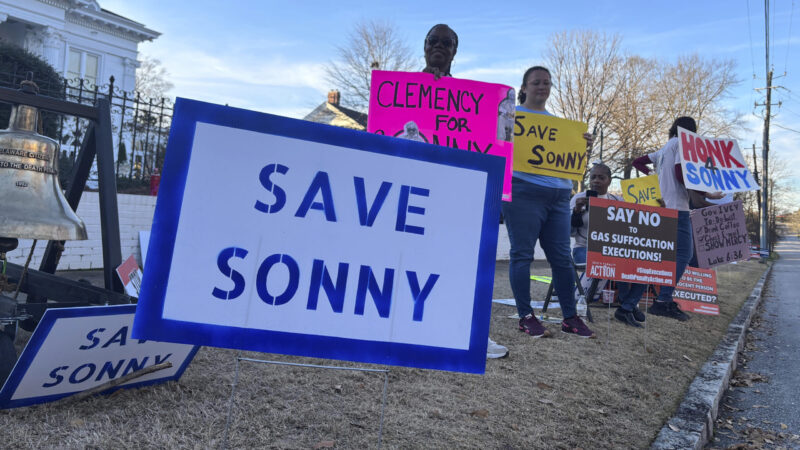
Alabama man facing execution for deadly robbery asks for clemency as he didn’t kill victim
Charles “Sonny” Burton is scheduled to be executed March 12 for his role in a 1991 robbery in which a man was fatally shot. His supporters and attorney are asking the governor for clemency, arguing that his life should be spared because Burton didn’t fire the gun or witness the killing.
One week into the Iran war, the fallout is global
The war is no longer just about the U.S., Israel and Iran. More countries are getting caught in the political crossfire or being drawn into the fighting themselves.

Curling had its moment at the Olympics and now Paralympics. It sparked a curling bonanza in America
Hundreds of people become interested in curling every four years and the 2026 numbers already show that boom.
Iran’s president defies U.S. demands while apologizing for strikes on neighbors
President Masoud Pezeshkian said Saturday that a demand by the U.S. for an unconditional surrender is a "dream that they should take to their grave." He also apologized for Iran's attacks on regional countries.
What the Trump administration says about why it went to war with Iran
The Trump administration says it is "laser focused" and mission driven, but the messaging has been varied. The range of cited motivations for striking Iran now are sometimes at odds with each other.
