
Mount Etna erupts, shooting a massive ash cloud into the sky and raising alerts

Italy’s Mount Etna produced a spectacularly explosive eruption Monday morning, sending a ripple of reddish clouds down from its summit. The soaring ash rose to form a mushroom cloud high above Etna, Europe’s highest active volcano, triggering a red alert for aviation crews in the region.
The National Institute of Geophysics and Volcanology’s Etna Observatory in Catania estimated the volcanic cloud’s height at about 21,325 feet. The massive ash cloud was moving in a west-southwest direction, according to the agency, known as INGV.
The dramatic scene at Etna’s southeast crater was caught on multiple webcams, spreading quickly across social media. As seen in a Weather Sicily webcam video, the eruption rapidly grew from a few lava flows to cascades of boiling ash and smoke that rose into a large cloud.
Thankfully, the eruption doesn’t seem to have had any immediate impact on people in the area, other than forcing officials to halt tourists’ visits to the volcano, which is a popular destination and is located on the east coast of Sicily.
Officials believe that a large portion of the crater collapsed, according to the Italian news agency ANSA.
Aviation alerts were eased later on Monday as the INGV said volcanic activity and ash emissions were finally decreasing. With the ash cloud moving toward the west, operations at Vincenzo Bellini Catania Airport, due south of Etna, weren’t affected.
It’s not unusual for Etna to emit lava and gases from its summit craters. Etna is “the most active stratovolcano in the world that has continuously pumped ash and lava” for thousands of years, according to the United Nations. (A stratovolcano, also known as a composite volcano, is often steep and conical, according to the U.S. Geological Survey. In contrast, shield volcanoes, like Hawaii’s Mauna Loa, are larger but with a more gradual slope.)
Etna has a long history of frequent eruptions, documented at least to 1500 B.C.
Most of Etna’s eruptions are “Strombolian eruptions” — ejections of cinder, gas and molten lava that result from repeated, but relatively small, explosions.
“The Strombolian activity generally affects a limited area around the vent and is not an agent of risk [to] built up areas” around Etna, according to Italy’s Civil Protection Department. Etna’s lava flows are also normally viscous and slow-moving, often allowing authorities to intervene to redirect flows that threaten communities.
Etna’s eruptions have produced striking scenes over the years, from a vivid nighttime display in 2011 to an outburst that preceded an earthquake in 2018.

U.S. unexpectedly adds 130,000 jobs in January after a weak 2025
U.S. employers added 130,000 jobs in January as the unemployment rate dipped to 4.3% from 4.4% in December. Annual revisions show that job growth last year was far weaker than initially reported.

Greetings from Mexico City’s iconic boulevard, where a dog on a bike steals the show
Every week, more than 100,000 people ride bikes, skates and rollerblades past some of the best-known parts of Mexico's capital. And sometimes their dogs join them too.
February may be short on days — but it boasts a long list of new books
The shortest month of the year is packed with highly anticipated new releases, including books from Michael Pollan, Tayari Jones and the late Nobel laureate Mario Vargas Llosa.

Shootings at school and home in British Columbia, Canada, leave 10 dead
A shooting at a school in British Columbia left seven people dead, while two more were found dead at a nearby home, authorities said. A woman who police believe to be the shooter also was killed.
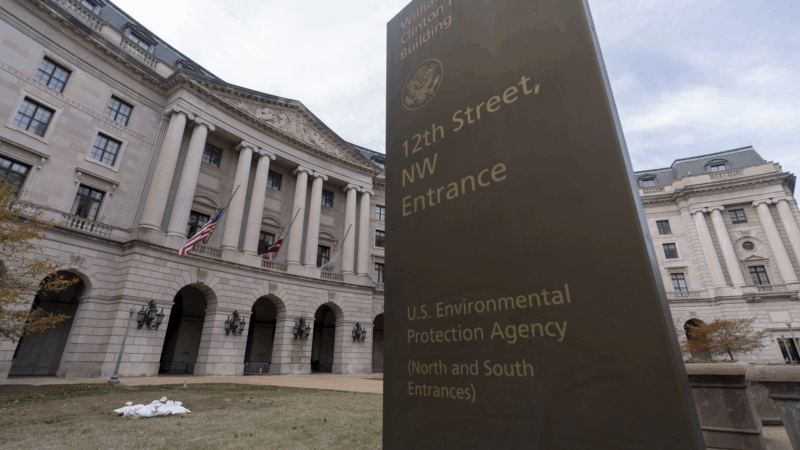
Trump’s EPA plans to end a key climate pollution regulation
The Environmental Protection Agency is eliminating a Clean Air Act finding from 2009 that is the basis for much of the federal government's actions to rein in climate change.
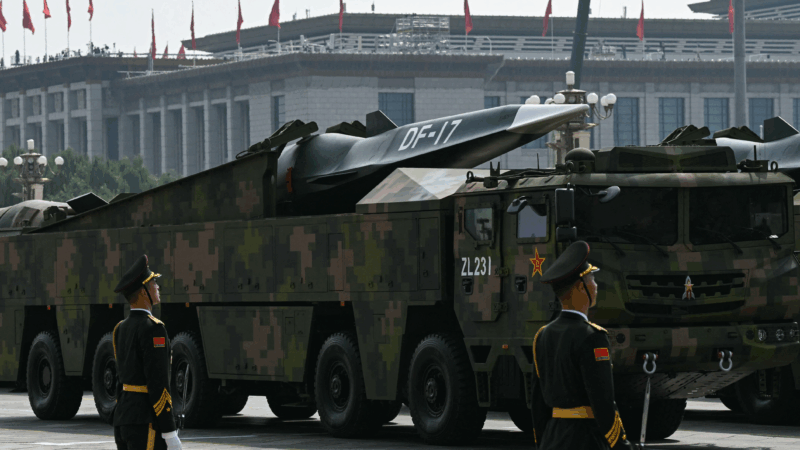
The U.S. claims China is conducting secret nuclear tests. Here’s what that means
The allegations were leveled by U.S. officials late last week. Arms control experts worry that norms against nuclear testing are unraveling.
