
Mercury, Venus and Saturn to delight stargazers in a parade across the sky
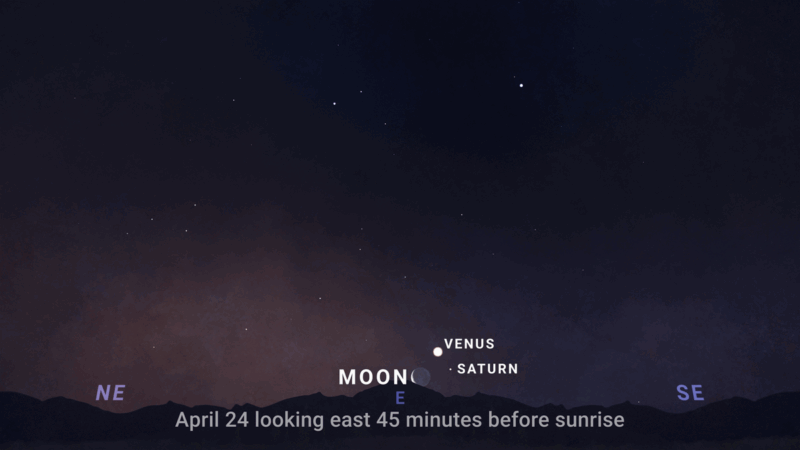
Alongside a crescent moon, Mercury, Venus and Saturn will become visible to stargazers just before dawn on Friday morning.
According to NASA, the planetary phenomenon will be clearest about 45 minutes before sunrise, low in the eastern sky and appearing near the moon. Venus and Saturn will be the easiest to spot — but for those with a clear view of the horizon, Mercury can be observed hanging low and bright in the cosmos.
This planet parade — when planets align in the sky and become clearly visible to the naked eye — is one of a handful to occur this year.
In February, stargazers enjoyed a rare occurrence: All seven of Earth’s planetary siblings dotted the night sky at once.
And later this year in August, four planets — Mercury, Venus, Jupiter and Saturn — will become visible.
The phenomenon accompanies other April treats for astrophiles. This week, the Lyrid meteor shower has taken over the night sky, casting shooting stars and fireballs darting overhead.
And NASA says that Messier 3 — a sprawling expanse of dazzling stars some 34,000 light-years from Earth — is also visible this month. For those looking to observe the ancient globular cluster, which NASA estimates is between 11 and 13 billion years old, the agency says to look “a third of the way from Arcturus to Cor Caroli,” two notably bright stars.
“Through binoculars, Messier 3, or M3, appears as a small, fuzzy, star-like patch of light,” the agency says on its website. “With a small telescope, you’ll see a more defined glow with a slightly grainy texture. And with telescopes 8 inches or larger, the cluster begins to resolve into hundreds of individual stars.”
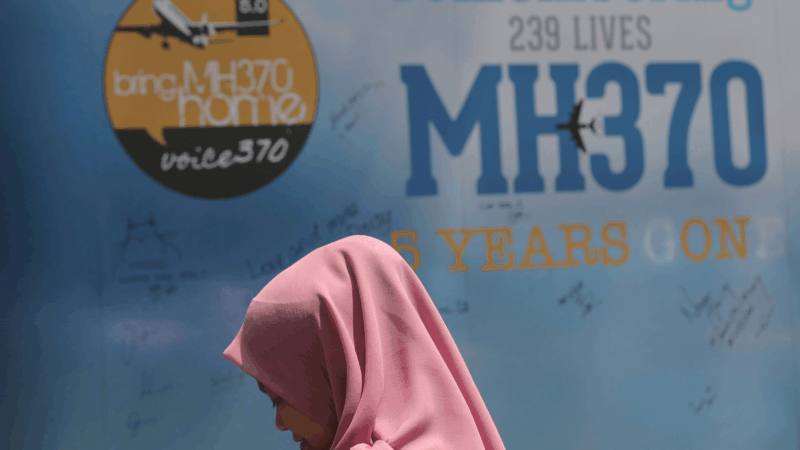
12 years on, renewed hunt for missing Malaysia Airlines flight comes up empty
Twelve years after Malaysia Airlines Flight MH370 vanished with 239 people aboard, a deep-sea search has so far failed to locate the missing aircraft, as families pressed for the effort to continue.

U.S. military kills 6 in strike on alleged drug boat in the Eastern Pacific
Sunday's attack brought the death toll to at least 157 people since the Trump administration began targeting alleged drug-smuggling vessels, in early September.
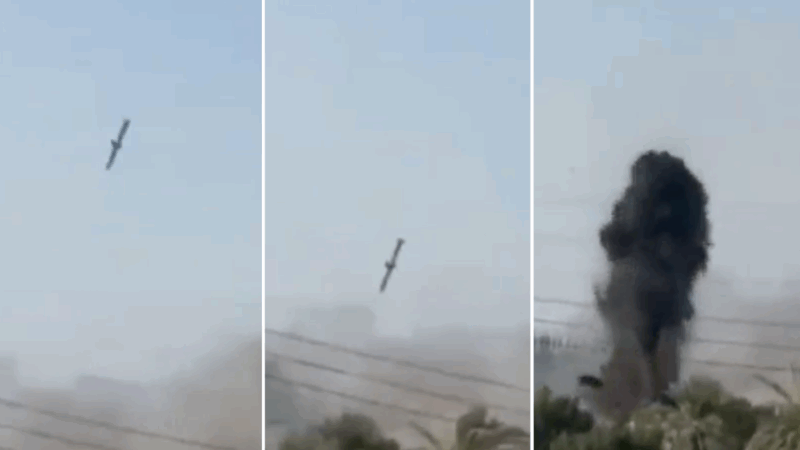
Video appears to show U.S. cruise missile striking Iranian school compound
The seven-second video was released by Iranian state media and directly contradicts statements made by President Trump, who said Iran was responsible for the strike.
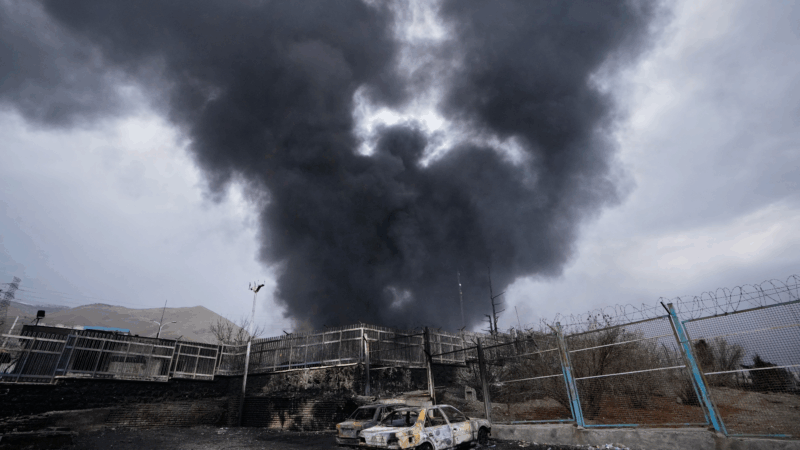
Crude oil rockets past $100 as markets lose hope for a quick resolution in Iran
Brent crude reached its highest price since Russia invaded Ukraine in 2022. Gasoline prices in the U.S. are expected to continue to rise.

Country Joe McDonald, anti-war singer who electrified Woodstock, dies at 84
Country Joe and the Fish's best-known song, "I-Feel-Like-I'm-Fixin'-to-Die Rag," captured the growing anti-war sentiment of the Vietnam era.

OpenAI robotics leader resigns over concerns about Pentagon AI deal
A senior member of OpenAI's robotics team said guardrails around certain AI uses were not sufficiently defined before OpenAI announced an agreement with the Pentagon.
