
Marc Maron, Human Rights Watch and others slam Saudi comedy festival
Saudi Arabia is not known as a center for comedy. But through Oct. 9, the country’s capital, Riyadh, is hosting dozens of A-list comedians — many of them American — at the first ever Riyadh Comedy Festival.
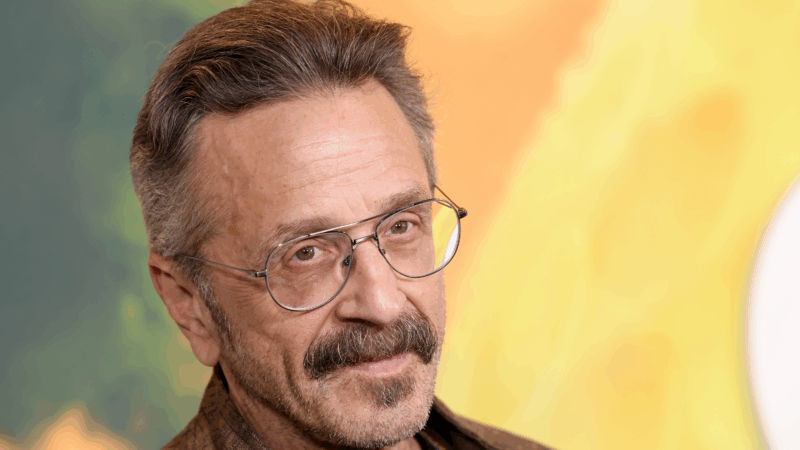
The participation of big-name funnymen, including Dave Chappelle, Aziz Ansari, Kevin Hart and Jimmy Carr, has provoked criticism from fellow comedians, including Marc Maron, Shane Gillis and Stavros Halkias, as well as human rights groups and other commentators.
“The Saudi government is using the Riyadh Comedy Festival … to deflect attention from its brutal repression of free speech and other pervasive human rights violations,” said Human Rights Watch in a statement this week. “Participating comedians, to avoid contributing to laundering the Saudi government’s reputation, should use the comedy festival to publicly urge Saudi authorities to free unjustly detained Saudi dissidents, journalists, and human rights activists.”
A recent U.S. State Department report on Saudi Arabia’s human rights record in 2024 listed abuses including “arbitrary or unlawful killings, disappearances, torture, arbitrary arrest and detention, and serious restrictions on freedom of expression and media freedom,” among other issues.
Comedians’ spat
In a video on Maron’s Instagram channel, the WTF podcast host took aim at colleagues who signed up to perform at the festival, while referencing the allegations of the Saudi government’s possible involvement in the Sept. 11 attacks and its role in the 2018 murder of journalist Jamal Khashoggi.
“From the folks that brought you 9/11. Two weeks of laughter in the desert, don’t miss it!'” joked Maron acerbically. “The same guy that’s gonna pay them is the same guy that paid that guy to bone-saw Jamal Khashoggi and put him in a f***ing suitcase. But don’t let that stop the yucks, it’s gonna be a good time!”
Gillis and Halkias were both invited to perform at this event, which was announced in July by General Entertainment Authority chairman Turki Alalshikh. On his podcast, Gillis said he declined a “significant bag” to perform at the event. “I took a principled stand,” he said. In a podcast conversation with Chris DiStefano, Halkias said “Can’t do it.”
Fellow comedian DiStefano, conversely, told Halkias he accepted the invitation: “I didn’t want to do it either,” he said, adding that it was his wife who urged him to take the money.
Saudi Arabia’s play
NPR reached out to representatives of nearly every participating comedian for comment, as well as the Saudi embassy in Washington, D.C., and the country’s General Entertainment Authority. No one had responded by the time of publication. However, in its statement announcing the event, the General Entertainment Authority described the festival as “the largest of its kind globally,” adding that it “reflects the efforts to amplify Riyadh’s status as a leading destination for major cultural and artistic events.”
As a nation heavily dependent on oil, Saudi Arabia is currently engaged in a plan to diversify itself economically, socially and culturally. Its Vision 2030 program, implemented in 2016, encompasses efforts to increase the country’s visibility on the cultural stage. “Vision 2030 is a blueprint that is diversifying the economy, empowering citizens, creating a vibrant environment for both local and international investors, and establishing Saudi Arabia as a global leader,” the website states.
A history of pushback
The Riyadh Comedy Festival isn’t the first time artists have inspired blowback for accepting invitations to participate in events in Saudi Arabia.
Big name pop music acts including Mariah Carey, The Black Eyed Peas and Justin Bieber all earned criticism for opting to perform in the country in recent years. “Doesn’t she know Saudi Arabia is one of the most repressive and murderous regimes on the planet?” wrote the activism group Code Pink in a 2019 statement calling for Carey to cancel her show that year.
And American visual artists who’ve exhibited their work at Desert X AlUla, a spinoff of the U.S. Desert X art festival in the Saudi Arabian desert, as well as the event’s organizers, have also received criticism. In a 2019 article, Los Angeles Times art critic Christopher Knight called the show “morally corrupt.” Knight added: “Saudi Arabia is an absolute monarchy built on theocratic law. Free expression is forbidden. Illegal. A criminal act.”
Comedian Tim Dillon said on his podcast last month that he signed up for financial reasons. He said he had been offered “a large sum of money” — $375,000 for one performance — and said that other comedians had been offered as much as $1.6 million. He told his detractors to “get over it,” adding, “So what if they have slaves, they’re paying me enough to look the other way.”
But in an episode of the Tim Dillon Podcast last week, the comedian announced he’d been removed from the lineup for the comments he made about the country’s record on slavery. (NPR reached out to Saudi’s General Entertainment Authority for verification, but has not yet heard back.) “I addressed it in a funny way and they fired me,” Dillon said on his podcast. “I certainly wasn’t gonna show up in your country and insult the people that are paying me the money.”
China sets a lower economic growth target of 4.5% to 5% for 2026 as challenges loom
China has signaled continuity rather than change for its economy, setting a slightly lower target for growth this year in the midst of a property slump and other headwinds at home and growing uncertainty abroad.
Carney says he backs strikes on Iran ‘with some regret’ as world order frays
Canadian Prime Minister Mark Carney says he supports the strikes on Iran "with some regret" as they represent an extreme example of a rupturing world order.
Iranian civilians are now fleeing the relentless bombing for neighboring Turkey
As the U.S. military broadens its strikes in Iran, traumatized Iranians are reaching the border with Turkey.
A split Senate votes against measure to constrain Trump’s authorities in Iran
Democrats in the Senate were facing an uphill climb Wednesday in their push to restrain President Trump's ability to wage war against Iran.
WATCH: How traffic dried up in the Strait of Hormuz since the Iran war began
The effective closure of the Strait of Hormuz is "about as wrong as things could go" for global oil markets. Iran achieved it not with a naval blockade, but with cheap drones.
As Mississippi waits to spend opioid settlement funds, children and families suffer
Mississippi will receive more than $400M to fight the opioid epidemic. So far, officials haven't directed it toward programs that support addiction recovery.
