
Mahmoud Khalil had hoped to walk free today. A federal judge said no
Mahmoud Khalil will remain in federal custody after a federal judge accepted the government’s shifting explanations for why it is detaining him at an immigration facility in rural Louisiana.
Khalil had hoped to be released Friday after U.S. District Judge Michael Farbiarz ruled in recent days that the government’s original justification for arresting him – because his pro-Palestinian activism threatened U.S. foreign policy goals – would likely be found unconstitutional and that it could not continue to detain him.
But in a letter to the judge Friday, Justice Department lawyers justified not releasing Khalil, saying that accusation is not the only grounds on which the government is trying to deport him. Almost two weeks after ICE agents arrested him in New York in March, they added another charge against him in immigration court: that he committed fraud on his 2024 green card application.
“Khalil is now detained based on that other charge of removability,” the government lawyers wrote. “Detaining Khalil based on that other ground of removal is lawful.”
In a brief order Friday afternoon, Judge Farbiarz accepted the government’s reasoning, and said Khalil’s detention on the charge of immigration fraud could continue.
It was a demoralizing setback for Khalil and his lawyers, who have been trying to free him since he became the first student arrested in President Trump’s crackdown on pro-Palestinian activists.
“The government’s decision to continue to detain Mahmoud on these patently false and pretextual charges is only more evidence of their cowardly vindictiveness toward him and their unrelenting desire to punish him for speaking out against them and their complicity in genocide,” one of Khalil’s lawyers, Baher Azmy, said in a statement.
The Justice Department declined a request for comment, and the Department of Homeland Security did not immediately respond.
Khalil was arrested after Marco Rubio invoked a rarely used statute that allows him, as Secretary of State, to personally deport people he determines threaten U.S. foreign policy goals. Rubio, President Trump, and other top officials accused Khalil, a leader of pro-Palestinian protests at Columbia University, of aligning himself with Hamas and of promoting antisemitism – allegations that Khalil has denied and for which the government has never provided evidence.
The fraud charge that immigration officials later added accuses Khalil of purposely omitting details on his green card application about his work history and involvement with certain organizations, including a U.N. agency that helps Palestinians.
Khalil’s lawyers said the charge was baseless, and accused the Trump administration of adding it as a pretext, giving them another option to deport him if their attempt to expel him over his activism was eventually found to be unconstitutional.
An immigration judge at the Louisiana detention center where Khalil is being held is currently considering whether the government has provided enough evidence to justify deporting Khalil on the fraud charge. If she rules that it has not, it could pave the way for his release.
In the meantime, the federal judge who denied his request for release on Friday said Khalil has other options, including asking the immigration judge in Louisiana to release him on bail.
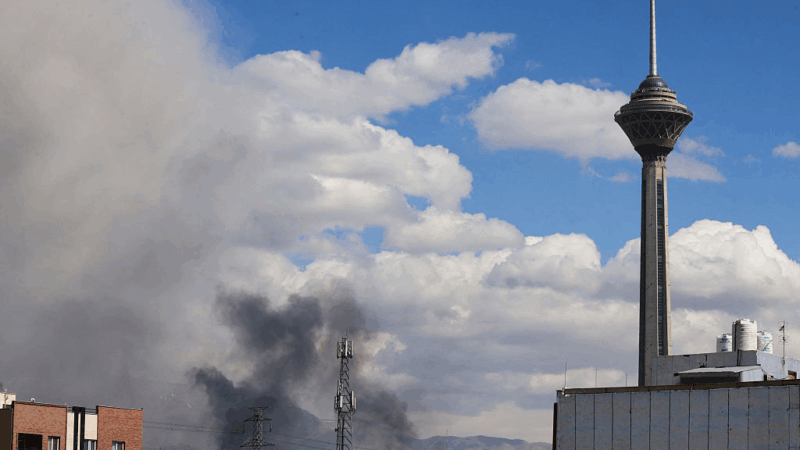
U.S.-Israeli strikes in Iran continue into 2nd day, as the region faces turmoil
Israel said on Sunday it had launched more attacks on Iran, while the Iranian government continued strikes on Israel and on U.S. targets in Gulf states, Iraq and Jordan.
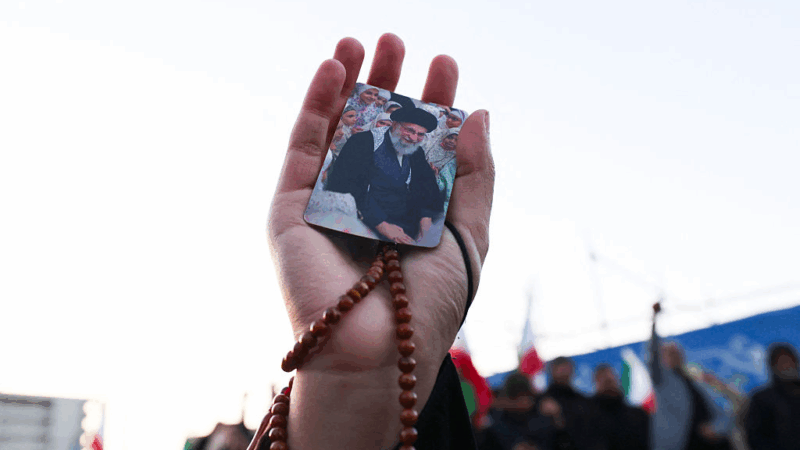
Trump warns Iran not to retaliate after Ayatollah Ali Khamenei is killed
The Iranian government has announced 40 days of mourning. The country's supreme leader was killed following an attack launched by the U.S. and Israel on Saturday against Iran.
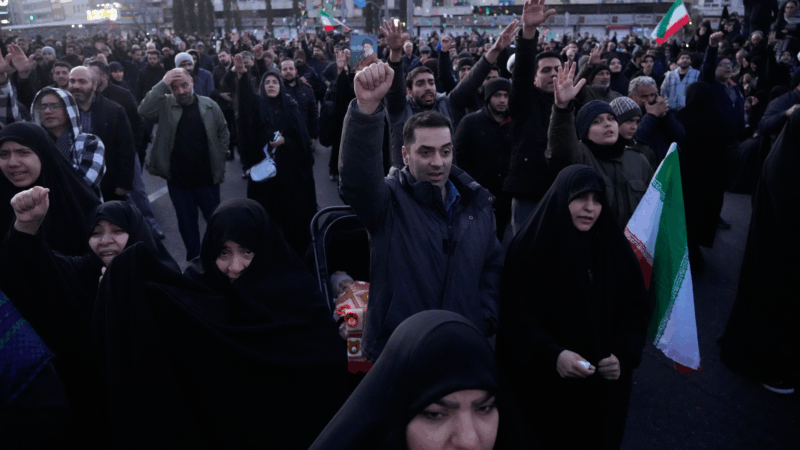
Iran fires missiles at Israel and Gulf states after U.S.-Israeli strike kills Khamenei
Iran fired missiles at targets in Israel and Gulf Arab states Sunday after vowing massive retaliation for the killing of Supreme Leader Ayatollah Ali Khamenei by the United States and Israel.
House Dem. Leader Jeffries responds to air strikes on Iran by U.S. and Israel
NPR's Emily Kwong speaks to House Minority Leader Hakeem Jeffries (D-NY), who is still calling for a vote on a war powers resolution following a wave of U.S.- and Israel-led airstrikes on Iran.
Iran’s Ayatollah Ali Khamenei is killed in Israeli strike, ending 36-year iron rule
Khamenei, the Islamic Republic's second supreme leader, has been killed. He had held power since 1989, guiding Iran through difficult times — and overseeing the violent suppression of dissent.

Found: The 19th century silent film that first captured a robot attack
A newly rediscovered 1897 short by famed French filmmaker Georges Méliès is being hailed as the first-ever depiction of a robot in cinema.
