Law firm says Trump order targeting it specifically is attack on rule of law
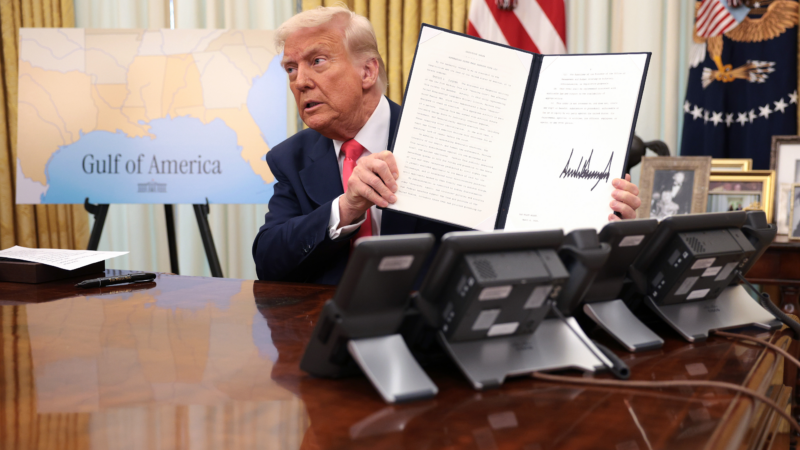
The law firm Perkins Coie is suing the Trump administration, alleging that a recent executive order targeting the firm is unconstitutional and aims to punish it for representing clients and causes that are opposed to the administration.
President Trump signed an executive order last week, “Addressing Risks from Perkins Coie LLP,” that accused the firm of “dishonest and dangerous activity” that sought to overturn laws and elections, and also said it “racially discriminates against its own attorneys and staff” through its diversity, equity and inclusion programs.
In the lawsuit filed Tuesday in federal court in Washington, D.C., attorneys for Perkins Coie call the executive order “an affront to the Constitution and our adversarial system of justice.”
“Its plain purpose is to bully those who advocate points of view that the President perceives as adverse to the views of his Administration, whether those views are presented on behalf of paying or pro bono clients,” the lawsuit says.
Trump’s executive order, it adds, presents a threat to Perkins’ Coie’s ability to represent the interests of its clients and its ability to operate as a business. The suit is asking the court to strike down the order and to prevent it from being implemented.
The Justice Department did not immediately respond to a request for comment.
Trump’s executive order accused Perkins’ Coie of a range of nefarious actions over the years allegedly seeking to undermine democratic elections as well as the integrity of U.S. courts and law enforcement.
The order specifically mentions the firm’s representation of Hillary Clinton’s 2016 campaign, and the role attorneys at Perkins Coie played in the creation of a dossier of unsubstantiated allegations about possible Trump-Russia ties.
The lawsuit pushes back against any allegation of wrongdoing. It notes that Trump filed a lawsuit in 2022 against Perkins Coie, Hillary Clinton and others alleging a conspiracy against Trump. The case was dismissed months later by a federal court.
It also notes that the two attorneys who led the firm’s work for the Clinton campaign no longer work for Perkins Coie. One of lawyers, Michael Sussmann, was charged by a Justice Department special counsel in connection with his work related to the dossier. A jury found him not guilty at trial.
Trump’s order also accuses the law firm of racial discrimination because of it diversity, equity and inclusion policies.
The lawsuit pushes back on that accusation as well. Perkins Coie, it says, is committed to diversity and inclusion, but “does not discriminate against its attorneys or employees on the basis of race or otherwise.”
The firm’s attorneys say Trump’s order is unconstitutional on several grounds, including violations of the First, Fifth and Sixth Amendments.
Congress failed to extend Obamacare subsidies. This Democrat says Trump can save them
Sen. Peter Welch, D-Vt., says he thinks the Senate can pass a "retroactive" Affordable Care Act subsidy extension, but "we need President Trump."
Rideshare union rights, social media limits and other state laws taking effect Jan. 1
Every new year, public media reporters across the country bring us some of the new state laws taking effect where they are. Here are six in 2026.
Guides to help you tackle your New Year’s resolutions
From building your strength to tackling credit card debt, NPR's Life Kit has a newsletter journey to help you tackle your New Year's resolution.
Guides to help you tackle your New Year’s resolutions
From building your strength to tackling credit card debt, NPR's Life Kit has a newsletter journey to help you tackle your New Year's resolution.

Dozens presumed dead in fire at Swiss Alps bar during New Year’s celebration
Dozens of people are presumed dead and about 100 injured, most of them seriously, following a fire at a Swiss Alps bar during a New Year's celebration, police said Thursday.

Crypto soared in 2025 — and then crashed. Now what?
For most of 2025, cryptocurrencies such as bitcoin surged as President Trump vowed to make the U.S. a crypto leader. But now, a severe sell-off has shaken the sector.