Kurdish militant group PKK declares ceasefire after decades of conflict with Turkey
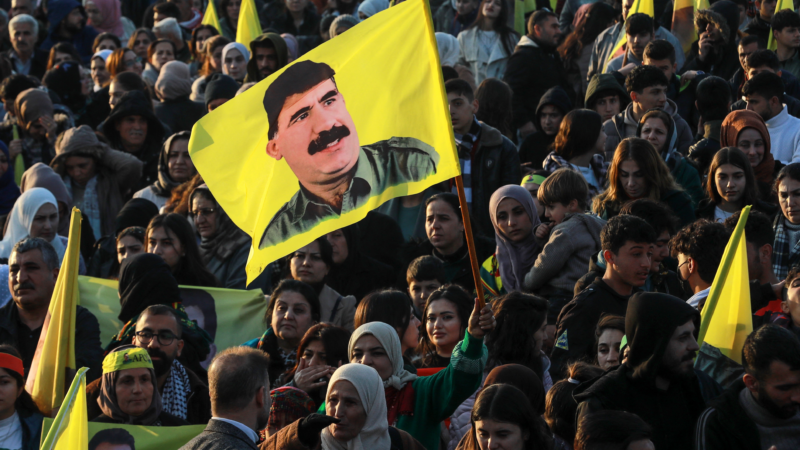
Militants from the Kurdish ethnic group who have fought an insurgency against Turkish authorities for more than four decades have declared a ceasefire, in what may represent a significant political breakthrough for Turkish President Recep Tayyip Erdoğan.
The announcement came just two days after the leader of the militant PKK group, Abdullah Ocalan, whom Turkey has held in prison since 1999, called on his fighters to disarm.
The PKK, known as the Kurdistan Workers’ Party, launched its war against the Turkish state in the early 1980s, due to perceived ill-treatment of Turkey’s Kurdish minority. The conflict has caused thousands of deaths in the more than 40 years that have followed.
The group has carried out only smaller-scale attacks inside Turkey in recent years though, and has seen the Turkish military using armed drones to drive many of its cadres across the mountain border into neighboring Iraq.
The move follows 18 months of seismic change in the region, following the Oct. 7, 2023, Hamas attacks on Israel and the response in Gaza; the conflict between Israel and Hezbollah in Lebanon and the toppling of long-time Syrian President Bashar al-Assad by rebels who are now building a new government in Damascus.
The latest peace efforts involving Ankara and the PKK, which the governments of Turkey and many European allies have designated a terrorist organization, have been driven in recent months by political partners of President Erdoğan.
Erdoğan may need Kurdish support to run again
Some analysts have said public suggestions by Erdoğan’s political allies that Ocalan, the 75-year-old PKK leader, could be released in return for a renunciation of violence, form part of an effort to woo Kurdish voters. Kurdish support might be necessary to alter constitutional term limits that bar Erdoğan from running for re-election in 2028.
But Turkey’s largest legal pro-Kurdish political party has faced increased pressure in the past few months, with mayors belonging to the party replaced by Erdoğan-friendly appointees.
The ceasefire announcement does mark the first concrete steps toward peace since the PKK and Turkish government abandoned the last set of disarmament negotiations a decade ago, but some analysts remain skeptical about its longer term durability.
“I’d be shocked if anything much comes out of this, but that might take years to see its way through,” says Bill Park, a visiting research fellow at King’s College London.
Park says PKK’s allies in Syria may not agree with this decision, and that could complicate this announcement. “I’m very skeptical — I don’t see in Turkey any democratization, any change of heart. The Kurdish local governments have been closed down — activists in prison, journalists in prison,” he says.
And he says there are divisions within the PKK, but many members may feel they have to go along with what Ocalan says because of his cult status as the group’s long-time jailed leader.
Erdoğan, though, said that Ocalan’s call this past week for PKK fighters to put down their arms represented a “new phase” in peace attempts for the people of Turkey.
“There is an opportunity to take a historic step toward tearing down the wall of terror that has stood between [Turkish and Kurdish peoples’] 1,000-year-old brotherhood,” Erdoğan said on Friday.
The dramatic changes in Syria also play a role
But the changing political and security landscape in next-door Syria may also be key to the group’s decision, according to Caroline Rose, a senior fellow at the News Lines Institute, a foreign policy-focused think tank headquartered in Washington, D.C.
“The events over the last three months, particularly security reform between the SDF and the new Syrian Army,” says Rose, “is one of the primary reasons why we saw the PKK lay down its arms and announce a ceasefire with Turkey.”
The Kurdish-led Syrian Democratic Forces — which has historically been sympathetic to the PKK, though it denies strong links — may soon be integrated into Syria’s new military forces.
Meanwhile Syria’s new leaders are considering a role for Turkish military forces in efforts to root out ISIS inside their country’s borders, Rose says. But given the distrust of Erdoğan felt by many in northeast Syria, she acknowledged such a move “would, of course, make a lot of Kurdish constituents uncomfortable.”
Kurds historically inhabit parts of modern day Turkey, Iraq, Syria and Iran.
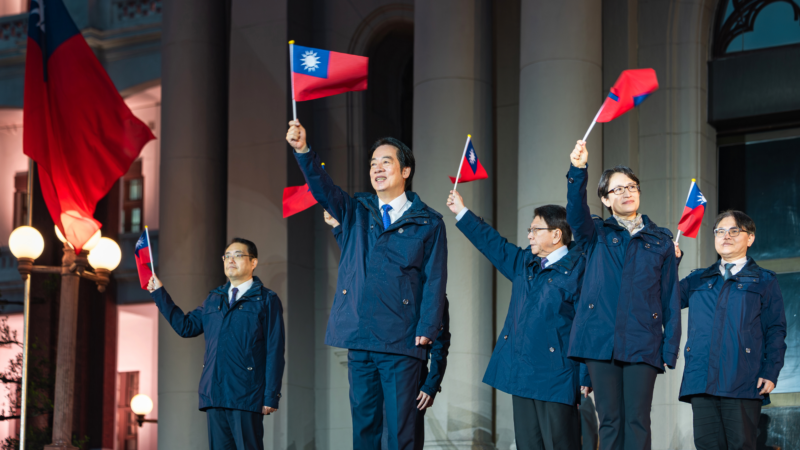
Taiwan’s president pledges to defend island’s sovereignty after Chinese military drills
Taiwanese President Lai Ching-te vowed to defend the self-ruled island's sovereignty in the face of what he termed China's "expansionist ambitions," days after Beijing wrapped up live-fire military drills near its shores.
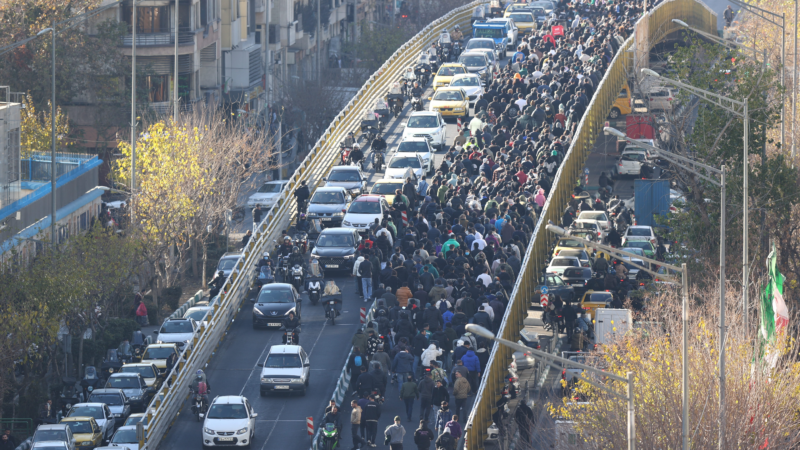
Deaths reported during widening protests in Iran sparked by ailing economy
The protests began due to economic pressures, with Iran's currency rapidly depreciating. Demonstrators have also chanted against the country's theocracy.
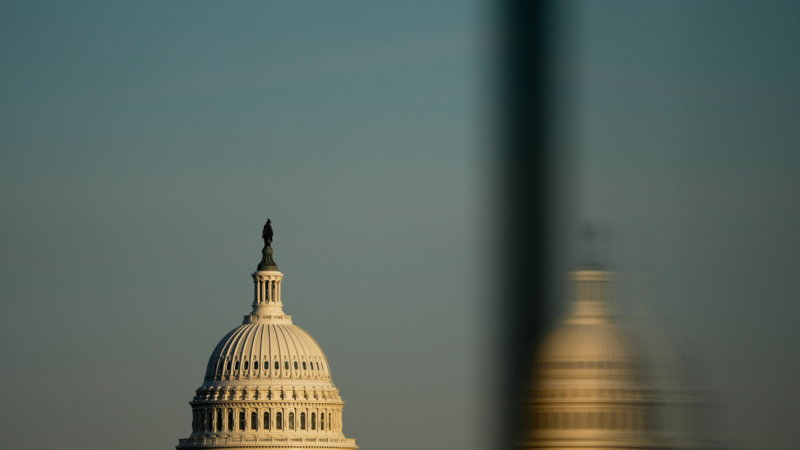
Congress failed to extend Obamacare subsidies. This Democrat says Trump can save them
Sen. Peter Welch, D-Vt., says he thinks the Senate can pass a "retroactive" Affordable Care Act subsidy extension, but "we need President Trump."
Rideshare union rights, social media limits and other state laws taking effect Jan. 1
Every new year, public media reporters across the country bring us some of the new state laws taking effect where they are. Here are six in 2026.
Guides to help you tackle your New Year’s resolutions
From building your strength to tackling credit card debt, NPR's Life Kit has a newsletter journey to help you tackle your New Year's resolution.
Guides to help you tackle your New Year’s resolutions
From building your strength to tackling credit card debt, NPR's Life Kit has a newsletter journey to help you tackle your New Year's resolution.