Israel expands its ground offensive in Gaza as Hamas fires rockets back
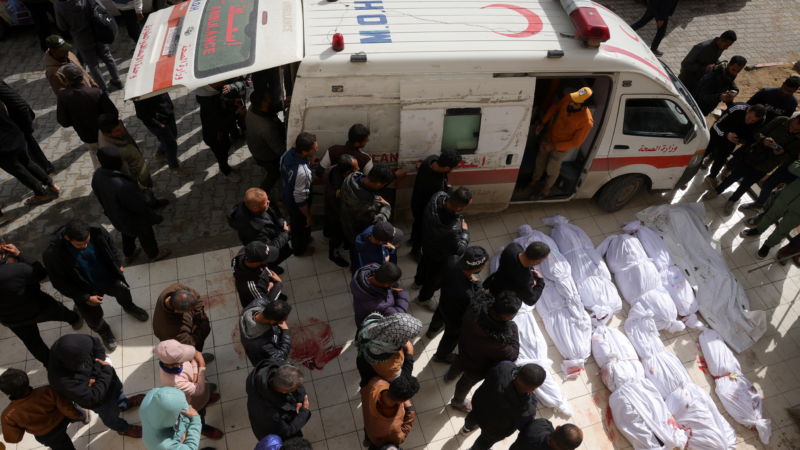
GAZA CITY, Gaza and TEL AVIV, Israel — The Israeli military expanded its ground offensive in Gaza, and killed at least 80 Palestinians in a new wave of strikes Thursday, according to Gaza health officials. Hamas fired its first rockets since Israel broke a recent ceasefire and resumed heavy airstrikes on Gaza this week.
Scenes that were familiar from earlier in the war once again returned in Gaza: Israeli evacuation orders, partial prohibitions on movement between north and south Gaza, and airstrikes that have killed a total of more than 500 people — including more than 200 children — over the last several days, according to Gaza health officials. Israel said the return to war is in order to pressure Hamas to release more Israeli hostages.
Hamas wants the original agreement to proceed, whereby it releases all living hostages and Israel agrees to permanently end the war, which Israel’s far-right government refuses to do.
Israel’s military said it was launching a “targeted ground operation” against Hamas infrastructure and weapons sites. It sent troops to the coastal area of Beit Lahia in northern Gaza, a residential area that had already been largely destroyed in an Israeli offensive before the ceasefire.
Palestinian families who had returned to live among the ruins of the devastated neighborhood during the ceasefire once again fled, piling mattresses and belongings on donkey carts and escaping on muddy roads.
Israel said the aim of the new offensive was to expand a “security perimeter” buffer zone that separates Gaza from southern Israel. Troops also returned to areas where they had retreated in the ceasefire, like the Netzarim corridor, a large strip of land the military had previously taken over dividing Gaza’s north and south.
In a video addressed to Gaza residents, Israeli Defense Minister Israel Katz said he was issuing a “final warning,” demanding Hamas’ hostages be released and the group be removed from control in Gaza.
“What comes next will be much harsher, and you will bear the full consequences,” he said, speaking in Hebrew with Arabic subtitles. He warned Israel would act “with force beyond anything you have ever seen.”
“We can’t take it anymore.” Palestinians are jolted by the return to war
Israeli airstrikes killed at least 70 people Wednesday, according to Gaza civil defense, and dozens more fatalities were reported early Thursday.
A grandmother, Umm Seif al-Ghurra, said her son and his family were killed earlier in the war, and now the building where she was sheltering with three of her grandchildren has been damaged by new Israeli strikes.
“This is a calamity,” she told NPR. “We can’t take it anymore.”
On Wednesday, Israel’s military said it struck Hamas infrastructure and weapons sites around Beit Lahia. But families there tell NPR it was their homes that were struck, without warning.
The floors of the Indonesian Hospital in the city were covered in blood, with bodies wrapped in shrouds laying on the floor in hallways. Officials at the hospital’s morgue told NPR that 75 people died there overnight Wednesday and into Thursday, including entire families.
Rami Fayez Abu Nasr, 36, sat with his injured brother, the young boy’s head wrapped in bandages, his face injured so badly by shrapnel that he couldn’t speak. Abu Nasr said the family was sitting for the morning pre-dawn Ramadan meal of suhoor when the strikes hit.
“The war is back stronger than before,” he said. “The war has returned and it’s very intense this time.”
Hamas opens fire for the first time since Israel broke the ceasefire
In Tel Aviv, sirens sounded around the city Thursday, followed by a series of explosions that shook the air. The Israeli military said projectiles were fired from southern Gaza, and were either intercepted or fell in “open areas.”
It was the first military response by Hamas since Israel broke the ceasefire in Gaza earlier this week. In a statement, Hamas said it fired rockets at Tel Aviv in response to Israel’s strikes and the killing of civilians.
Also, in response to Israel’s resumption of attacks in Gaza, Iran-backed Houthis fired a missile toward central Israel from Yemen early Thursday. The group said the target was Israel’s main international airport, Ben Gurion Airport in Tel Aviv.
Sirens sounded throughout central Israel, and the military said it intercepted the missile before it crossed into Israeli territory.
Israelis protest the return to war
For three days, thousands of Israelis have taken to the streets in protest of the resumption of the war, calling instead for talks to resume that would release the remaining 59 living and dead hostages still held in Gaza.
In Tel Aviv, protesters banged drums and carried posters with the faces of Israeli hostages still held in Gaza, calling for a deal to have them all released immediately. “If there’s no deal, we will burn the country down,” one group chanted.
Thousands more marched toward Israeli Prime Minister Benjamin Netanyahu’s residence in Jerusalem, waving Israeli flags, carrying a banner calling for new elections and accusing the Israeli government of working against its people.
Polls show a majority of Israelis are against the end of the ceasefire and want negotiations to continue. Many feel this return to war is a betrayal and that Netanyahu and his government are forsaking the remaining hostages, leaving them to die in Gaza.
The protests have been met with Israeli police violence. On Tuesday night, police beat Israeli protesters in Jerusalem, saying they were uncooperative after being told they didn’t have the proper permits to march. On Thursday, police trucks sprayed foul-smelling water on protesters gathered near Netanyahu’s private residence.
The war began when Hamas attacked Israel on Oct. 7, 2023, killing nearly 1,200 people and taking 251 hostages, according to an Israeli government count.
Israel’s retaliation in Gaza destroyed much of the territory, displaced most of the population, and killed more than 49,000 Palestinians, according to Gaza health officials, who do not differentiate between combatants and civilians. Israel says about 20,000 Palestinian militants were killed.
Most of the hostages have been freed in agreements with Hamas, and some were rescued in Israeli commando raids.
NPR’s Anas Baba contributed to this story from Gaza City, Yanal Jabarin from Jerusalem, Itay Stern from Tel Aviv, and Ahmed Abuhamda from Cairo.


How China, not the U.S., became the main climate solution story in 2025
The U.S. has become a "side character" in the global story of renewable energy, experts say. China dominates the sector, with positive implications for the climate and their economy.

Supreme Court to hear case that could vastly expand presidential powers
The Supreme Court hears arguments in a case about President Trump's firing of a Federal Trade Commissioner. At stake is a 90-year precedent limiting the president's power over independent agencies.
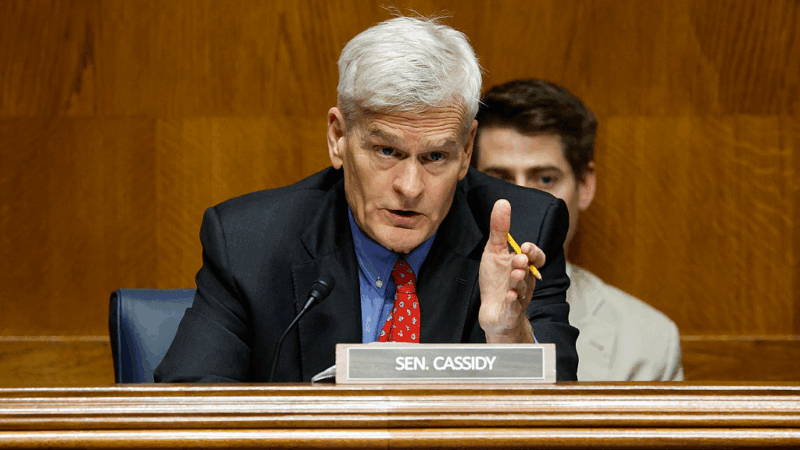
Republicans push high deductible plans and health savings accounts
A Republican call to give Americans cash instead of health insurance subsidies revives an old idea that has left millions with medical debt.
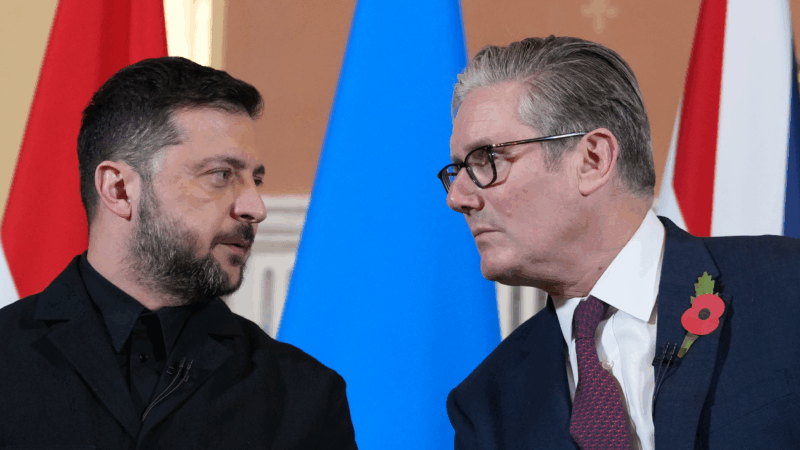
Zelenskyy heads to London for more Ukraine peace talks. Here’s what to know
The talks signal fresh support from European allies. But they follow stalled U.S. negotiations in Miami and comments from President Trump's son suggesting Washington is ready to pull back.

Tributes, not politics, play center stage as Trump hosts the Kennedy Center Honors
President Trump said he was closely involved with picking the honorees, and on Sunday he became the first president to host the Kennedy Center awards ceremony.
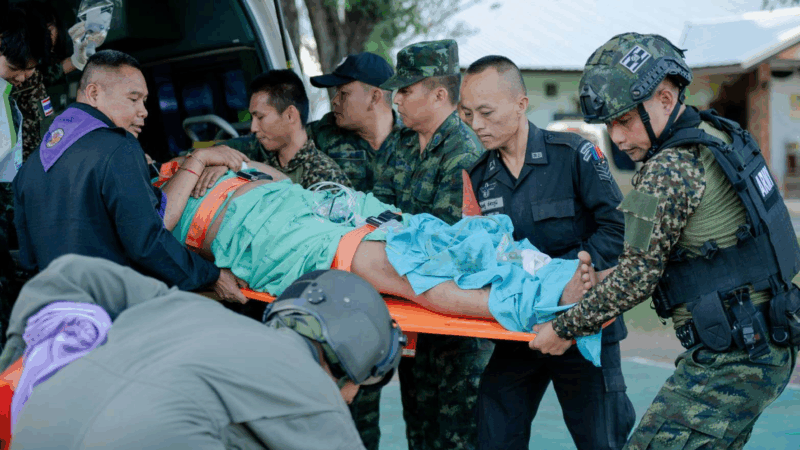
Thailand launches airstrikes along border with Cambodia as tensions reignite
Both sides accused the other of breaking a ceasefire that halted fighting earlier this year. Longstanding border disputes erupted into five days of combat in July that killed dozens.