
Is the ‘Gen Z stare’ just a call to look inwards?

As much as the news media serves to inform the public, we’re also here to give you something to talk about. Learning about the world around us provides the connective tissue for spirited interactions and growing deeper bonds with each other.
What are you going to bring up at the dinner table to get the conversation flowing? Did you read that article everybody has been talking about, too?
What is it? It’s a new social phenomenon … but also maybe it isn’t? (More on that later.)
We’re talking about the “Gen Z stare,” a term that has gone viral in the past week to describe what some see as the Gen Z tendency to stare blankly at people when they are spoken to in different environments.
As a society almost entirely constructed of skit video content, the short form video anthropologists making our TikTok and Instagram reels du jour have categorized their experiences with Gen Z starers in two categories.
The customer service stare: When a Gen Z worker stares silently at a customer before, during or after an interaction they think is ridiculous.
@netta.dar the gen z stare comes out when there’s nothing nice to say… #genz #genzstare #pov #fyp #skit #parody #stare #cafe #annoyingcustomers #customerservice ♬ original sound – Netta Dar
And the customer stare: When a Gen Z customer stares silently at a service worker before, during or after an interaction instead of responding in a timely manner.
@conornoburst Stop deliberately misinterpreting this. It might not be all of them, but its majority of gen z customers. #genz #millennial #genzstare #genzinreallife ♬ original sound – Kelsey
What’s going on? A new (and old duel) between the generations, one could say.
Remember back when an Australian millionaire claimed that millennials couldn’t achieve home ownership because they were too addicted to avocado toast and brunch?
Or when Plato wrote about the youths of his time in The Republic more than two thousand years ago:
“They disrespect their elders, they disobey their parents. They ignore the law. They riot in the streets inflamed with wild notions. Their morals are decaying. What is to become of them?”
Maybe at this point it’s almost sociologically inevitable. Young people reject an established social norm (for whatever reason) and their elders don’t seem to like that very much!
What are people saying? Gen Z is defending itself, Millennials are doubling down and one meme scholar is saying everyone could benefit from taking a look at the bigger picture.
Jennifer Grygiel, a social media expert and professor at Syracuse University, isn’t convinced that the “Gen Z” stare is really a social phenomenon or unique to this specific generation.
“I find Gen Z to be really great at having conversations,” Grygiel told NPR.
“I would say that if you are actually engaging them, they will engage you back. Maybe what we’re witnessing too is some boredom, especially with who they’re interacting with.”
Gen Z deeply values authenticity, says Grygiel, who has taught both millennial and Gen Z students. If interacting with them feels awkward, it might also be because they’re not only young, but haven’t had as much experience socializing out in the real world as other generations.
“If we’re noticing something of young people, maybe they are just maybe a little bit more well-versed, if anything, in when they’re actually being engaged, and maybe they don’t know how to fake it yet like old people. And maybe there’s something that’s young and innocent about that. If there were more enriching interactions for them, interpersonal interactions, maybe more of their personality and the ability to talk and engage would kind of cut through that.”
So, what now?
- Comment sections on these kinds of videos have been filled with plenty of Gen Z’ers reminding their critics that they were forced to spend some critical developmental years in front of screens — which may translate to some social awkwardness!
- And Grygiel advises that the urge to make something like this such a cultural discussion may signify some larger issues everyone is experiencing. “[Young people] become the target of the critique of the social ills of our time. Because in order to feel optimistic as a society, as a culture, you need to feel good about the next gen. And if some of the rhetoric is criticizing them or critiquing them, honestly, it’s a reflection not of them — it’s a reflection of society as a whole.”
Iran’s president defies U.S. demands while apologizing for strikes on neighbors
President Masoud Pezeshkian said Saturday that a demand by the U.S. for an unconditional surrender is a "dream that they should take to their grave." He also apologized for Iran's attacks on regional countries.
What the Trump administration says about why it went to war with Iran
The Trump administration says it is "laser focused" and mission driven, but the messaging has been varied. The range of cited motivations for striking Iran now are sometimes at odds with each other.

Trump looks to turn attention to Western Hemisphere at Americas summit
President Trump is set to gather with Latin American leaders on Saturday at his Miami-area golf club as his administration looks to turn attention to the Western Hemisphere, at least for a moment.
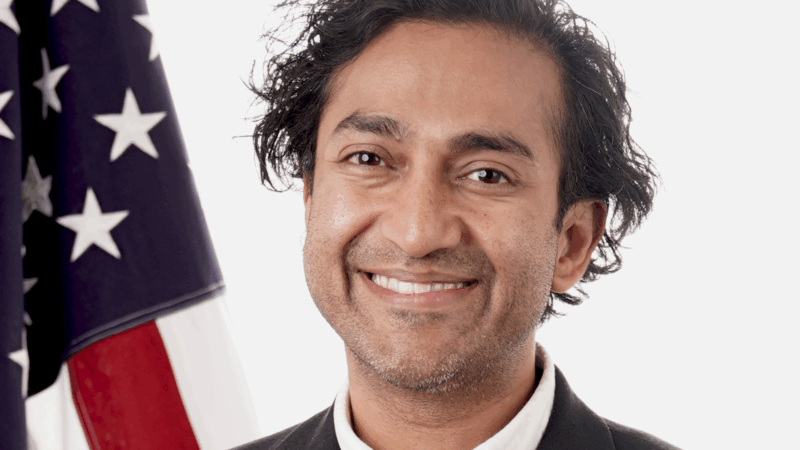
Trump administration’s embattled FDA vaccine chief is leaving for the second time
The FDA's controversial vaccine chief, Dr. Vinay Prasad, is leaving the agency. It's the second time he has abruptly departed following decisions involving the review of vaccinations and specialty drugs.
Family, former presidents and a Hall of Famer give Rev. Jesse Jackson a final sendoff
Several speakers at Jackson's funeral invoked his hallmark catchphrases: "Keep hope alive" and "I am somebody."
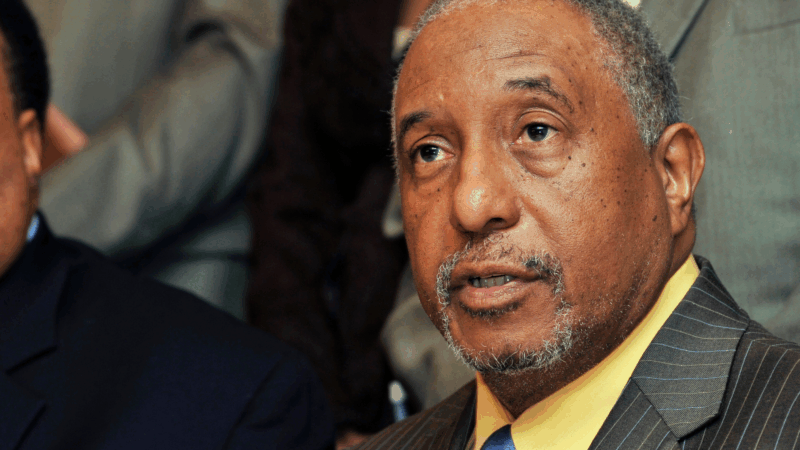
Bernard LaFayette, Selma voting rights organizer, dies at 85
Bernard LaFayette, who died Thursday, laid the foundations of the Selma, Alabama, campaign that culminated in the passage of the Voting Rights Act. He was a Freedom Rider and helped found the Student Nonviolent Coordinating Committee.
