
Is planting trees ‘DEI’? Trump administration cuts nationwide tree-planting effort
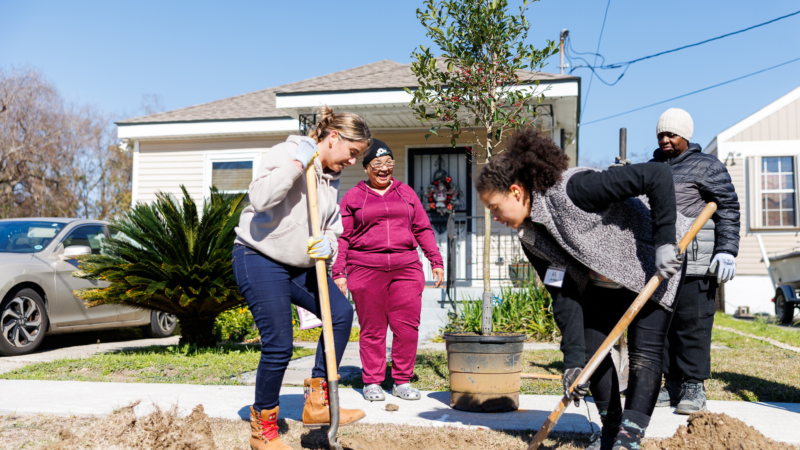
The Trump administration’s efforts to end federal diversity, equity and inclusion programs has hit an unexpected target: In February, communities around the country learned that funding was canceled for a nationwide tree-planting program aimed at making neighborhoods cooler, healthier and more resilient to climate change.
The urban forestry initiative, administered by the nonprofit Arbor Day Foundation, was supposed to distribute $75 million in grant funding to about 100 different cities, nonprofit organizations and tribes to plant shade trees in neighborhoods that need them the most. The program was funded by the 2022 Inflation Reduction Act, which included big investments in climate initiatives.
In a letter terminating the contract, the U.S. Forest Service stated the program “no longer aligns with agency priorities regarding diversity, equity and inclusion.” The U.S. Department of Agriculture, which houses the Forest Service, said in an emailed statement that the agency was complying with President Trump’s executive orders.
The Arbor Day Foundation was surprised by the sudden cancelation, said Executive Director Dan Lambe.
“This was hugely disappointing,” Lambe said. “It was an exciting opportunity for us to work with organizations and communities all across the country to plant trees in communities, to create jobs, to create economic benefits, to create conservation benefits, to help create cooler, safer, and healthier communities.”
Rebuilding the canopy lost to Katrina
Driving around the Lower 9th Ward in New Orleans, Arthur Johnson pointed out the abundance of concrete and vacant lots. The whole city gets hot in the summer, he said, but in this neighborhood, there’s hardly any tree shade to provide relief.
“Last summer was bad, worse than normal, but the summer before that was extremely bad, where we had no rain and extreme heat, ” said Johnson, CEO of the Lower 9th Ward Center for Sustainable Engagement and Development. “Without trees to filter some of that heat, it’s just unbearable.”
Trees are proven to reduce heat in cities, take up stormwater when it rains and improve air quality – all important needs in New Orleans as climate change intensifies storms and raises temperatures.

The city still hasn’t recovered the estimated 200,000 trees lost to Hurricane Katrina 20 years ago. That lack of canopy is visible in the Lower 9th Ward, a majority Black neighborhood and one of the areas hit hardest by Hurricane Katrina.
Johnson’s organization was helping plant some 1,600 trees in the neighborhood when the funding was suddenly canceled. The project was managed by the New Orleans nonprofit Sustaining Our Urban Landscape, or SOUL, which had been awarded a $1 million grant from the Forest Service.
SOUL’s executive director, Susannah Burley, said she found it absurd to cancel the funding as an equity program.
“That has nothing to do with this grant funding. The word ‘equity’ is pervasive in the grants that were funded by this, but in a totally different context,” Burley said, adding that in this context, equity meant planting trees in neighborhoods without them.
“Funding would have allowed us to finish planting the Lower 9th Ward, which is a really big deal,” Burley said. “That’ll be the third neighborhood that we’ve planted every street.”
That would have made significant progress towards a citywide goal to reach 10% tree canopy coverage in every neighborhood, as part of an effort to combat the urban heat island effect, reduce flooding, take up carbon and slow down subsidence.

For Johnson, the sudden reversal has been frustrating. It undermines the trust his organization has built over years in a community that has historically been left behind, he said.
“You try to get people to have some confidence into what’s going on in the environment and what’s going on in the community and government,” Johnson said.
Anti-DEI push hits environmental justice programs
On his first day in office, President Trump signed an executive order aimed at ending federal programs and grants related to diversity, equity and inclusion, which it called discriminatory and wasteful.
The order required agencies to provide a list of all DEI programs, including programs related to environmental justice. And it ordered agencies to terminate “‘equity’ actions, initiatives, or programs” and “‘equity-related’ grants or contracts.”
The $75 million tree-planting program was part of the Biden administration’s Justice40 initiative, which aimed to direct more resources to “disadvantaged communities.” The administration defined those as areas that were generally lower-income and faced more pollution, based on factors such as health, housing, transportation and workforce development.

Ladd Keith, director of the Heat Resilience Initiative at the University of Arizona, said trees are a worthy investment. Research shows they can return more financially than their cost, through lower energy bills, lower health costs and higher property values.
“Not everything can be couched under a DEIA language kind of lens,” Keith said. “Grants like this are part of the responsibility of the federal government to help communities advance their interests and their progress.”
He argued there are good reasons to focus planting in specific areas.
“Our governments historically have disinvested in low-income communities, and so it’s our responsibility to make that right now,” Keith said. “These grants allocated to these lower-income communities to plant trees would have done a little bit of justice, in bringing that urban canopy back up to more on par with higher-income neighborhoods.”
Cuts felt from Louisiana to Oregon
The cancellation hit communities across the country, from Oregon and California to Montana and Tennessee.
In Talent, Oregon, Mike Oxendine runs Our Community Forestry. The tiny nonprofit was promised $600,000 to replace canopy lost to the Almeda Wildfire in 2020.
“We spent a year of our time as volunteers writing this grant proposal to do this work here that nobody else is doing,” Oxendine said.

The nonprofit planned to focus much of its planting in mobile home parks, which were some of the areas slowest to recover after the fire.
Oxedine said he doesn’t understand why the program was cut.
“As an all-volunteer organization, we’re putting those dollars to the highest possible use, and the return on investment is so big,” he said.
In Butte, Montana, the city was expecting nearly $800,000 from the program, said Trevor Peterson, the town’s sole urban forester. The grant would have allowed Butte to replace hazardous dead trees, while also staffing up the urban forestry department.
“If I died tomorrow, I want to know that the urban forest is going to continue to survive and thrive,” Peterson said. “This grant would have made a huge impact in that regard.”
Peterson said he’s looking for other funding, and working with local organizations to get a few trees removed for free.
In New Orleans, Arthur Johnson said the loss of federal grant money might slow down the work, but won’t stop it. His organization will work with SOUL to find other sources of funding and plant just a few trees at a time.
“We’ve gone through Katrina 20 years ago now, amazingly, where people felt hopeless, but they didn’t give up,” Johnson said. “The people who came here, who lived here, who came back, who didn’t leave, who had losses, but they still feel like it was worth it.”
“And so that’s what we want to do, and that’s what we’re going to continue to build,” he said.
High-speed trains collide after one derails in southern Spain, killing at least 21
The crash happened in Spain's Andalusia province. Officials fear the death toll may rise.
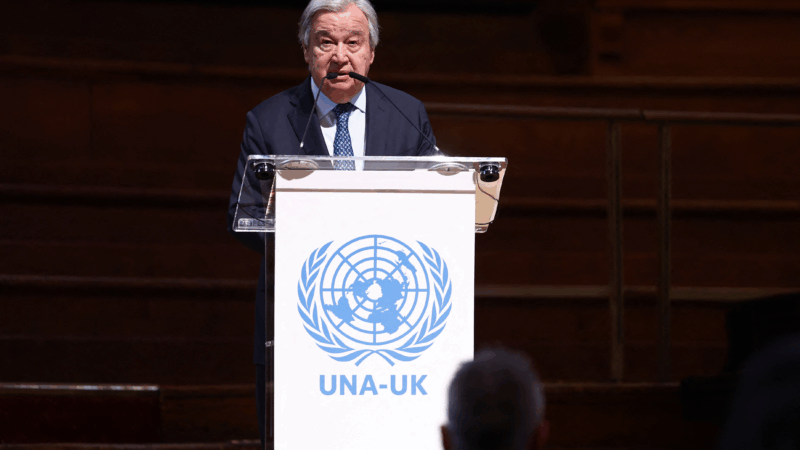
United Nations leaders bemoan global turmoil as the General Assembly turns 80
On Saturday, the UNGA celebrated its 80th birthday in London. Speakers including U.N. Secretary-General António Guterres addressed global uncertainty during the second term of President Trump.

Parts of Florida receive rare snowfall as freezing temperatures linger
Snow has fallen in Florida for the second year in a row.
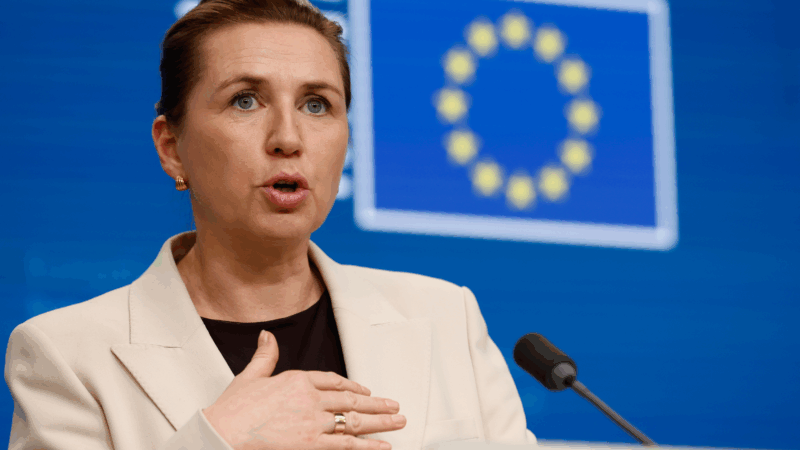
European leaders warn Trump’s Greenland tariffs threaten ‘dangerous downward spiral’
In a joint statement, leaders of eight countries said they stand in "full solidarity" with Denmark and Greenland. Denmark's Prime Minister Mette Frederiksen added: "Europe will not be blackmailed."
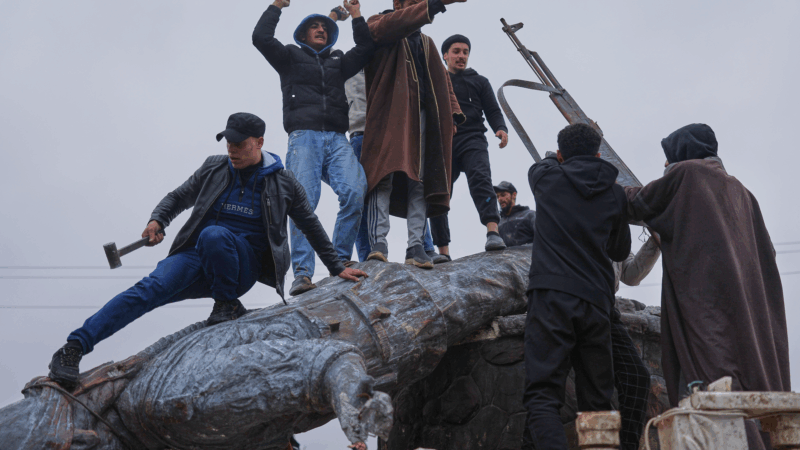
Syrian government announces a ceasefire with the Kurdish-led Syrian Democratic Forces
Syria's new leaders, since toppling Bashar Assad in December 2024, have struggled to assert their full authority over the war-torn country.
U.S. military troops on standby for possible deployment to Minnesota
The move comes after President Trump again threatened to invoke the Insurrection Act to control ongoing protests over the immigration enforcement surge in Minneapolis.
