
Investigators say a Delta jet descended too quickly before Toronto crash last month
The Delta Air Lines regional jet that crash-landed and flipped over at Toronto’s Pearson International Airport last month was descending too fast, according to Canadian investigators.
In releasing its preliminary report on the February 17th crash Thursday, Canada’s Transportation Safety Board noted that in the seconds before touching down, the CRJ 900 was descending at a rate of more than 1,100 feet per minute, which is nearly twice as fast as it should’ve been descending.
All 80 people on board the plane survived the crash, even though it flipped over and caught fire as it slid down the snowy runway. Twenty-one people were injured, two of them seriously.
The flight, operated by Endeavor Air under the Delta Connection brand name, had taken off from the Minneapolis-St. Paul airport at 11:47 a.m. CT with 76 passengers and four flight crew members on board. “The flight proceeded uneventfully” towards Toronto, according to the TSB.
In the final seconds before touching down at Toronto’s Pearson Airport at 2:12 p.m. ET in strong, gusty winds, the TSB report shows that the plane was descending at a rate of more than 1,100 feet per minute. The report notes the aircraft’s operating manual states that a hard landing is defined as “[a] landing at a vertical descent rate greater than 600 ft/min.”
In addition, the plane was banking at an angle of 7.1° to the right, and the pitch attitude was 1° nose up.
The TSB report says that as the plane touched down, the right landing gear fractured and retracted. The right wing then scraped the ground and broke off at the fuselage, releasing a cloud of jet fuel that caught fire as the airplane overturned and moved down the runway.
The TSB of Canada’s report does not explain why the plane was descending faster than it should have, nor what role the strong winds may have had in the crash. Much of the information in the preliminary report comes from the aircraft’s flight data recorder. No information from the cockpit voice recorder was released.
“We remain fully engaged as participants in the investigation led by the Transportation Safety Board of Canada,” Delta said in a statement to NPR. “Out of respect for the integrity of this work that will continue through their final report, Endeavor Air and Delta will refrain from comment.”
The final investigative report is expected in about a year.

New York Giants hire John Harbaugh as coach after identifying him as their top choice
Harbaugh joins the Giants 11 days after he was fired by the Baltimore Ravens. The Super Bowl champion is now tasked with turning around a beleaguered franchise.
US launches new retaliatory strike in Syria, killing leader tied to deadly Islamic State ambush
A third round of retaliatory strikes by the U.S. in Syria has resulted in the death of an Al-Qaeda-affiliated leader, said U.S. Central Command.
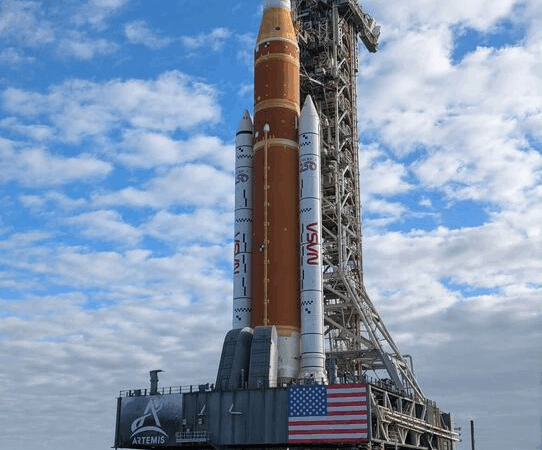
NASA rolls out Artemis II craft ahead of crewed lunar orbit
Mission Artemis plans to send Americans to the moon for the first time since the Nixon administration.

Trump says 8 EU countries to be charged 10% tariff for opposing US control of Greenland
In a post on social media, Trump said a 10% tariff will take effect on Feb. 1, and will climb to 25% on June 1 if a deal is not in place for the United States to purchase Greenland.
‘Not for sale’: massive protest in Copenhagen against Trump’s desire to acquire Greenland
Thousands of people rallied in Copenhagen to push back on President Trump's rhetoric that the U.S. should acquire Greenland.
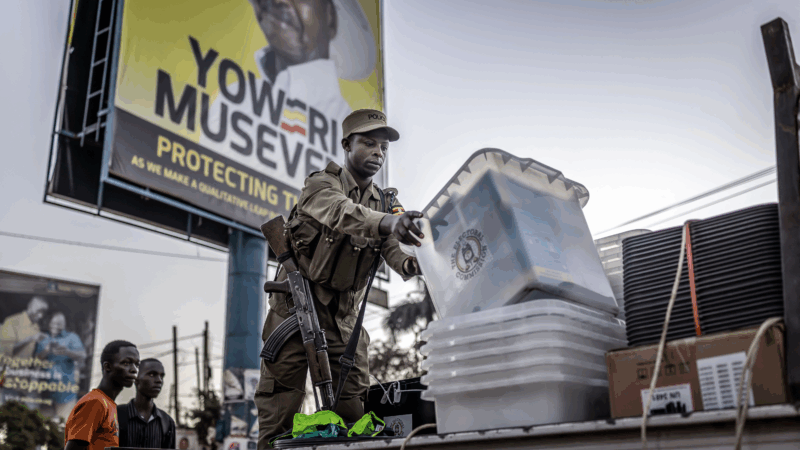
Uganda’s longtime leader declared winner in disputed vote
Museveni claims victory in Uganda's contested election as opposition leader Bobi Wine goes into hiding amid chaos, violence and accusations of fraud.
