Increase in military aid to Ukraine marks a shift in White House policy toward Russia

The Pentagon and U.S. military officials in Europe are working with NATO members to ship more Patriot missile systems to Ukraine, and release more munitions that were briefly halted.
On Monday, Defense Secretary Pete Hegseth met with his German counterpart, Federal Minister of Defense Boris Pistorius, and “discussed how to help set conditions for an end to the war in Ukraine and on terms that support an enduring peace,” said Pentagon spokesman Sean Parnell in a statement released today.
NATO said in a release it is now working on what it called “substantial military equipment packages,” including air defense systems, missiles and ammunition. “This is Europe stepping up,” said NATO Secretary General Mark Rutte, noting commitments from Germany, Finland, Denmark, Sweden, Norway, the United Kingdom, the Netherlands, and Canada, with more expected to follow.
While there were no details on what will be in the military equipment packages, two sources tell NPR – a Pentagon official and a military officer from a NATO country, both not authorized to speak publicly — that NATO will cobble together 17 Patriot missile systems to further help protect Ukraine from Russian drone and missile attacks. Ukraine currently has half a dozen Patriot systems, mostly being used to protect the capital Kyiv. There was no sense on when the additional systems would arrive.
President Trump said in a meeting with Rutte that NATO would provide its own Patriot systems and then buy additional ones from the U.S.
“You have very wealthy countries buying the best equipment in the world, and we have the best equipment in the world,” Trump said on Monday. “We make equipment like no other.”
Meanwhile, a separate NATO official not authorized to speak publicly on the state of military aid said shipments of U.S. armaments paused by the Pentagon are now flowing into Ukraine from Poland.
According to a U.S. official who requested anonymity to discuss specifics on the security assistance, the shipments include 30 Patriot missiles, 92 AIM missiles and 142 Hellfire missiles that can be used by F-16 warplanes already provided to Ukraine. Also included: nearly 9,000 Howitzer artillery rounds, as well as more than 250 GMLRS, a precision-guided rocket, meaning it has a high degree of accuracy. The weapons now moving in from Poland also include some 125 AT-4 grenade launchers and 25 Stinger missiles. Stinger missiles are shoulder-fired systems that operate as an infrared homing surface to air missile, key to striking Russian helicopters and drones.
Russia meanwhile continued to pummel Ukrainian cities overnight with some 267 drones and Ukraine’s air force said it shot down 244 of them, according to Ukrainian military officials. Russia continued its nightly bombardment shortly after Trump announced his decision to supply Ukraine with new military equipment and threatened further economic measures against Moscow.
Russia’s Defense Ministry, meanwhile, said its forces downed at least 70 Ukrainian drones overnight into Tuesday morning. Among the areas targeted were the southwestern Voronezh region which borders northeastern Ukraine. At least 24 people were injured there, Gov. Aleksandr Gusev said on Telegram.
Kremlin spokesperson Dmitry Peskov said Tuesday that Russian President Vladimir Putin would make a decision about how to respond to Trump.
“The U.S. president’s statements are very serious,” Peskov told reporters during a daily briefing. “Some of them are addressed personally to President Putin. We definitely need time to analyze what was said in Washington.”
Trump has also threatened sanctions if Russia doesn’t come to the negotiating table. Sen. Richard Blumenthal, a Connecticut Democrat, said in an interview with NPR’s Morning Edition that he welcomed the additional armaments for Ukraine and said he’ll continue to push for sanctions against Russia with his co-sponsor Republican Sen. Lindsey Graham of South Carolina.
Blumenthal said Trump’s evolution on Russia and the war and his willingness to send more weapons, is “a remarkable shift” and reflects his frustration with Putin and his unwillingness to negotiate.
“And clearly there is a personal element,” Blumenthal said, “the sense of betrayal, but also a clear understanding that Russians are mercilessly and murderously continuing to bomb and attack civilians, hospitals, homes.
The Federation for Defense of Democracies, a Washington think tank, said increasing the weapons flow to Ukraine also helps American industry and sends a message beyond Kyiv and Moscow.
“In concert with tougher sanctions on the Kremlin, supporting Kyiv while expanding U.S. defense production and stockpiles is a wise, sustainable, and necessary strategy to secure American interests, compel Putin to negotiate seriously, and deter new aggression in Europe or the Pacific.”

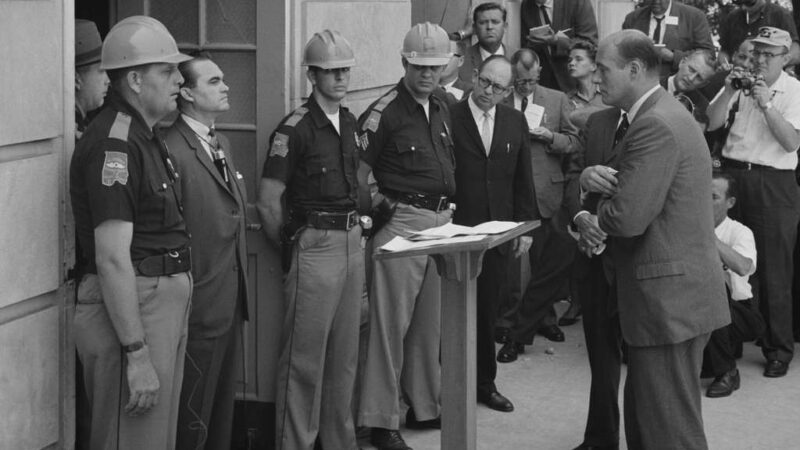
How George Wallace and Bull Connor set the stage for Alabama’s sky-high electric rates
After his notorious stand in the schoolhouse door, Wallace needed a new target. He found it in Alabama Power.

From chess to a medical mystery: Great global reads from 2025 you may have missed
We published hundreds of stories on global health and development each year. Some are ... alas ... a bit underappreciated by readers. We've asked our staff for their favorite overlooked posts of 2025.
The U.S. offers Ukraine a 15-year security guarantee for now, Zelenskyy says
Ukrainian President Volodymyr Zelenskyy said Monday the United States is offering his country security guarantees for a period of 15 years as part of a proposed peace plan.

Genre fiction and female authors top U.S. libraries’ most-borrowed lists in 2025
All of the top 10 books borrowed through the public library app Libby were written by women. And Kristin Hannah's The Women was the top checkout in many library systems around the country.

Electric vehicles had a bumpy road in 2025 — and one pleasant surprise
A suite of pro-EV federal policies have been reversed. Well-known vehicles have been discontinued. Sales plummeted. But interest is holding steady.

Why do so many people ring in the new year on Jan. 1?
Much of the world follows the Gregorian calendar, named after Pope Gregory XIII, who put the finishing touches on a Roman system that integrated ideas from other cultures.