In a policy shift, U.S. and Hamas say they’re in direct talks on hostages

LONDON and TEL AVIV — A Hamas official tells NPR that the United States held direct talks with the Palestinian militant group over the release of several American-Israeli dual citizens taken hostage during the Oct. 7, 2023 attacks in Israel.
The talks, which began as early as January and have continued since, are the first known time the U.S. has engaged directly with Hamas since it designated it a terrorist organization in 1997. It has been a long-standing U.S. policy to not negotiate with groups it designates as terrorists.
The Hamas official did not specify if the January talks took place with officials from the Biden administration or President Trump’s incoming administration. Members from both teams were present at ceasefire talks in January before Trump took office. Axios reported that members of Trump’s administration had engaged in talks with Hamas recently.
“This saves time and effort and minimizes obstacles. Talks are not going very easily, but this is positive,” the Hamas official told NPR. The official was not authorized to speak to the media and spoke on condition of anonymity. This same official said the U.S. had asked Hamas to keep silent about the talks.
Speaking to reporters Wednesday, White House press secretary Karoline Leavitt confirmed that U.S. special envoy for hostage affairs Adam Boehler had held talks with Hamas, saying that Boehler “does have the authority to talk to anyone” and that Israel had been consulted on the talks. She said the talks were ongoing and declined to speak about them in detail, referring further questions to the State Department.
Hamas had initially said it was not willing to discuss hostages with U.S. citizenship as a separate matter, but the Hamas official told NPR that now “nothing is off the table.” The official said that the U.S. and Hamas are also talking about other issues, but did not specify what those were.
There are 59 hostages still being held in Gaza. Of those, five have U.S. citizenship and it’s believed only one is still alive.
The first phase of a tenuous six-week-old ceasefire deal ended last week but fighting has not resumed.
Israel has stopped the entry of all goods and supplies into Gaza, citing what it described as Hamas’ refusal to accept a U.S. proposal to extend the first phase of the ceasefire, and threatened “further consequences.” In a statement, Hamas accused Israel of trying to evade the framework of the original ceasefire agreement that both sides agreed to in January.

Taiwan’s president pledges to defend island’s sovereignty after Chinese military drills
Taiwanese President Lai Ching-te vowed to defend the self-ruled island's sovereignty in the face of what he termed China's "expansionist ambitions," days after Beijing wrapped up live-fire military drills near its shores.
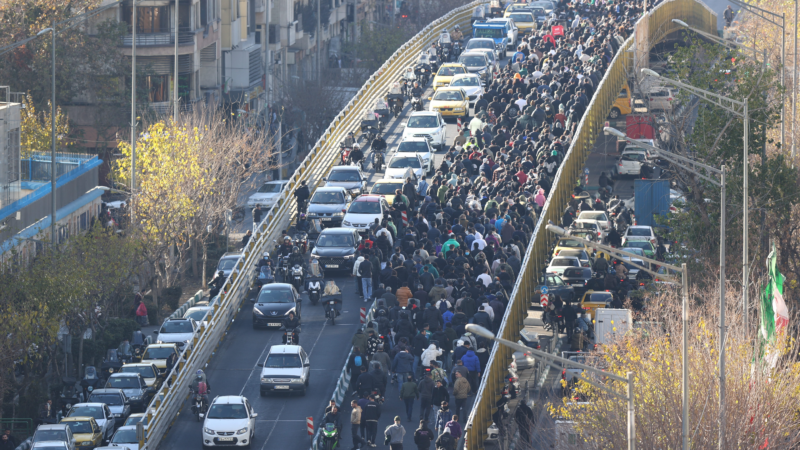
Deaths reported during widening protests in Iran sparked by ailing economy
The protests began due to economic pressures, with Iran's currency rapidly depreciating. Demonstrators have also chanted against the country's theocracy.

Congress failed to extend Obamacare subsidies. This Democrat says Trump can save them
Sen. Peter Welch, D-Vt., says he thinks the Senate can pass a "retroactive" Affordable Care Act subsidy extension, but "we need President Trump."

Rideshare union rights, social media limits and other state laws taking effect Jan. 1
Every new year, public media reporters across the country bring us some of the new state laws taking effect where they are. Here are six in 2026.
Guides to help you tackle your New Year’s resolutions
From building your strength to tackling credit card debt, NPR's Life Kit has a newsletter journey to help you tackle your New Year's resolution.
Guides to help you tackle your New Year’s resolutions
From building your strength to tackling credit card debt, NPR's Life Kit has a newsletter journey to help you tackle your New Year's resolution.