
In a historic vote, Tennessee Volkswagen workers get their first union contract
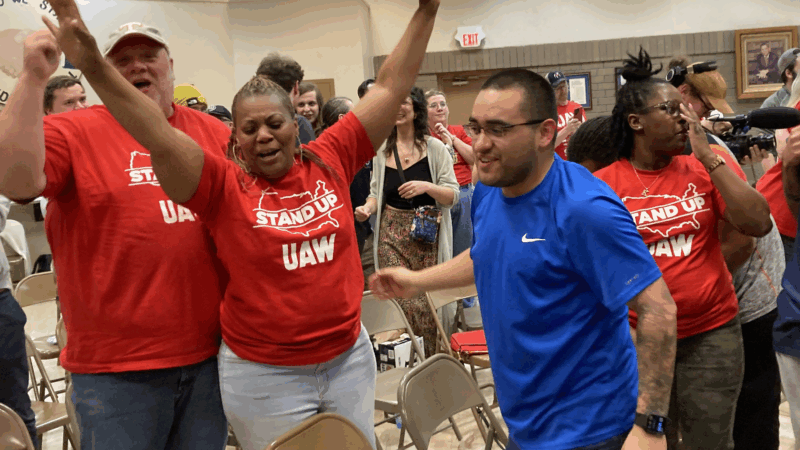
Volkswagen workers in Chattanooga, Tennessee voted to ratify their first union contract Thursday, securing pay bumps, job protections and a rare win for the United Auto Workers union in the South.
It’s been a long road to this contract. Workers initially voted twice against joining the union before casting ballots in favor in 2024, making this VW plant one of the few to unionize in the South, and the rare one that’s not a member of the “Big 3” auto companies: Ford, General Motors and Stellantis. That was nearly two years ago and negotiations have dragged on since, with workers at one point granting the union the ability to call a strike if necessary.
But contract talks were resolved in early February when the UAW and Volkswagen struck a tentative agreement, which the workers have now voted to approve, with 96% of them voting yes.
“Volkswagen workers have moved yet another mountain,” UAW President Shawn Fain said in a press release sent by the union Thursday night. “From having the courage to stand up and form their union, to having the backbone to authorize a strike and hold out for a contract that honors their worth, VW workers are leading the way for the entire labor movement and non-union autoworkers everywhere. Welcome to the UAW family.”
In a statement after the tentative contract was announced, Volkswagen officials wrote, “These benefits recognize and reward the hard work and dedication our team members give every day.”
Workers will immediately get a $6,550 bonus when the contract goes into effect Monday. They will also receive a 20% wage increase across the life of the contract, which ends in February 2030. By then, the top hourly wage for production workers will be $39.41, and $49.86 for skilled workers like machinists and electricians, whose jobs require more education and training. That top wage does not include cost of living adjustments that are also in the contract.
Health care premiums will also be reduced by 20% — even more for some plans — and won’t go up for four years. The contract gives workers two additional days off, and guarantees them some job security benefits. For example, Volkswagen must hold discussions with the union before it can make layoffs. Volkswagen has committed to keeping the plant open for the duration of the contract and to making sure there’s enough production at the facility to keep workers on the line.
The UAW will charge members dues, a minimum of 1.44% of their monthly wages — significantly less than the wage increases negotiated. Workers can also refuse to pay those dues since Tennessee is a right to work state, meaning by law workers can’t be fired for failing to pay dues.
A rare win for the UAW in the South
If the UAW wants to grow, it must look to the South. The unionized automakers in Northern states, such as General Motors and Ford, have seen their share of stateside car manufacturing shrink. Instead, the country’s auto manufacturing growth has been led by foreign auto manufacturers expanding in Southern states. This new contract gives the UAW a new selling point for recruiting those Southern workers.
“They get new momentum out of this agreement,” said Steven Silvia, a professor at American University and author of the book The UAW’s Southern Gamble. “ It gives them more specific concrete things to say to workers in other plants on what you get if you get a union contract.”
Over roughly the last three decades, Nissan, Toyota and Mercedes joined other overseas companies in opening around a dozen U.S. auto plants. That investment has continued, with Hyundai last year committing to invest $26 billion in the U.S., particularly in Southern states like Georgia, Alabama and Louisiana.
The carmakers came to the South in exchange for hundreds of millions of dollars in state incentives, which went as high as $2.1 billion in tax breaks for a Hyundai plant in Georgia. In exchange, Southern states received tens of thousands of jobs that pay wages well above those of other occupations in the region.
Keeping wages competitive with unionized plants has long been part of a strategy to keep workers from wanting to unionize in the South. For example, Hyundai, which is not unionized, announced in 2023 it would raise wages 25% by 2028 — by then, production workers will be making $36.02 an hour as the top rate, seven cents less than what the Volkswagen production workers will be making that year under the new contract.
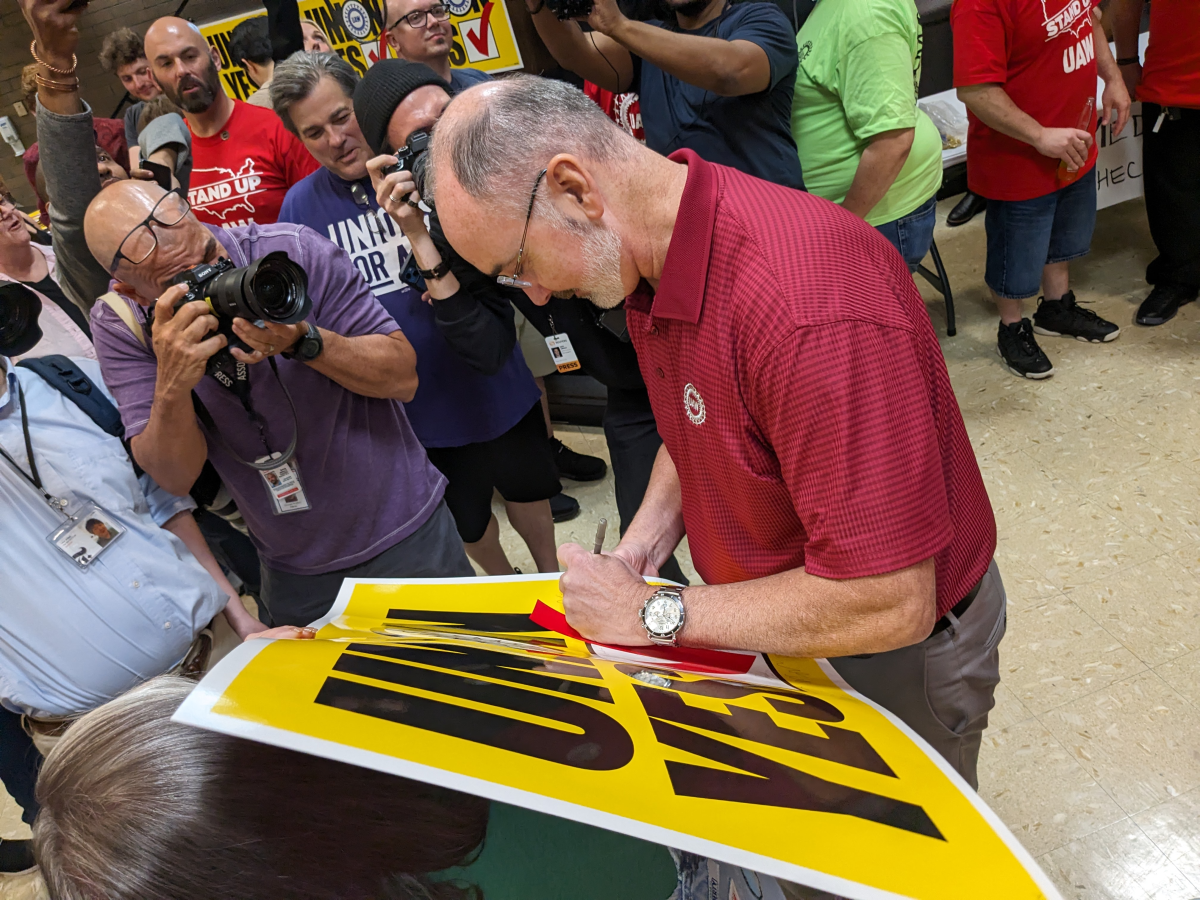
The win-win-win partnership between companies, states and workers explains why the UAW long had little to show for its decades of trying to unionize Southern plants. In both 2014 and 2019, the Chattanooga Volkswagen plant workers voted against joining the UAW.
Yet those workers started giving the UAW a fresh look in 2023. At the time, the union’s strikes against the Big 3 automakers led to historic contracts, giving it concrete victories and reigniting the U.S. labor movement. The UAW followed that by launching a $40 million campaign in a new push to unionize the South.
The Volkswagen plant was considered the union’s best shot for an early victory; although previous elections had failed, workers felt that improvements promised by Volkswagen management at the plant hadn’t materialized. The Tennessee workers voted to join the UAW in 2024, with 73% of the ballots marked yes.
During a livestreamed video, Fain hailed that vote: “When union workers at the Big 3 join together with autoworkers in the South, we all win.”
Southern union drive has lost momentum
Just a month after UAW’s victory in Tennessee, that momentum hit a wall in Alabama. Workers at the state’s Mercedes plant voted against unionizing. Alabama Gov. Kay Ivey, who celebrated the victory after campaigning for a no vote, said in a statement at the time, “We are not the Sweet Home to the UAW.”
The two German automakers took different approaches to the union drives. While Volkswagen avoided pressuring the workers on how to vote, workers in favor of the union said that Mercedes started shifts with videos showcasing union failures. The company also brought in a new CEO for Alabama and asked workers to give the new leadership a chance. Workers listened.
Other promising UAW campaigns, like one at a Hyundai plant in Montgomery, Alabama, fizzled as negotiations for the Volkswagen workers dragged on. The last year has been a challenging one for both automakers and unions. Like other automakers, Volkswagen had invested in the costly shift to producing electric vehicles, although EV sales have not been as robust as expected in the American market. The Trump administration has rolled back a generous federal tax credit on EVs, aimed at luring buyers. It’s also done away with the fuel economy and greenhouse gas standards that helped justify automakers’ investments in EVs. Tariffs have also been costly for automakers, meaning Volkswagen had less to offer during the negotiations.
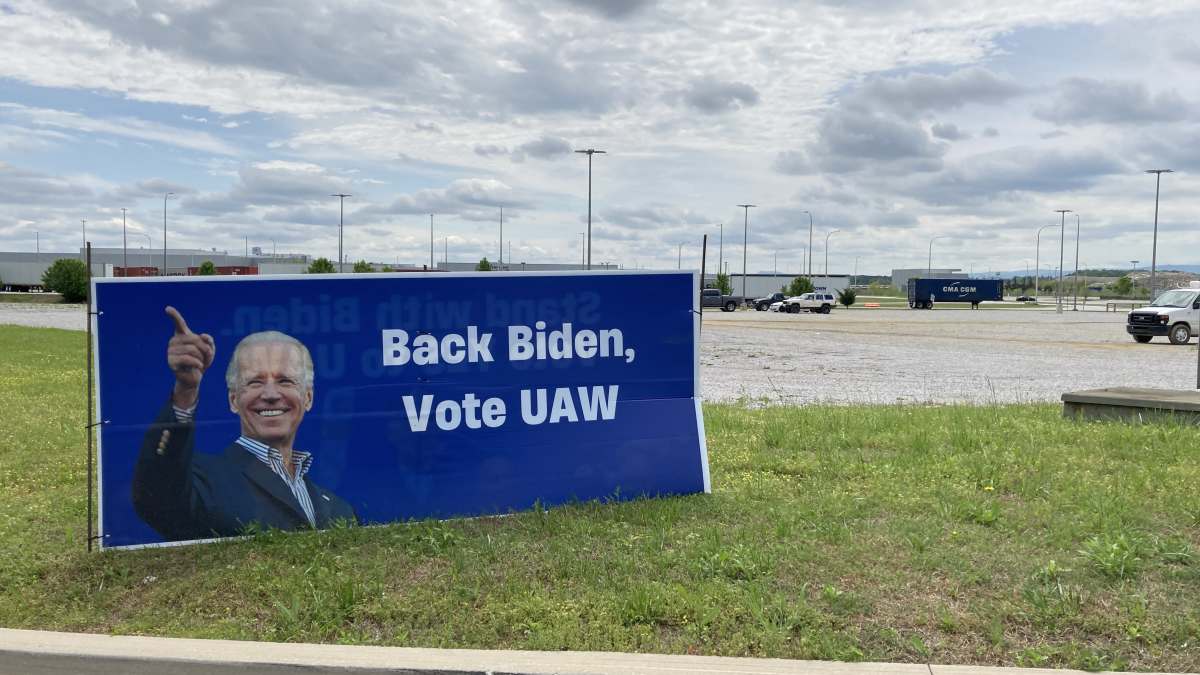
Meanwhile, the political environment has turned against unions. It’s no longer in the pro-union Biden administration — former President Biden famously joined UAW workers on the picket line — and President Trump has fired National Labor Relations Board officials and ended collective bargaining rights for more than one million federal workers.
“It’s a different world since April 2024,” A.J. Jacobs, a professor at East Carolina University and author of The New Domestic Automakers in the United States and Canada, said of the rise of foreign automakers’ plants in North America. “ I don’t expect anything dramatic to happen because of the settlement by UAW and Volkswagen in the immediate future with other auto plants.”
But the UAW hopes this new contract, along with the benefits and pay bumps that come with it, will reignite interest in unionizing at other Southern plants.
Quinton North voted in favor of the contract. He’s worked as a battery production team member at the Volkswagen plant for nine years and believes it’s a good deal, but wishes they had also won additional paid days off and a pay bump above $40 per hour.
“It’s a good pay increase,” North said. “But as a worker down there, you would always love to get a little bit more though.”
Trump says he doesn’t know if aliens are real but directs government to release files on UFOs
President Donald Trump said Thursday that he's directing the Pentagon and other government agencies to release files related to extraterrestrials and UFOs because of "tremendous interest."

Trump warns of ‘bad things’ if Iran doesn’t make a deal, as second U.S. carrier nears Mideast
Iran held annual military drills with Russia on Thursday as a second American aircraft carrier drew closer to the Middle East.
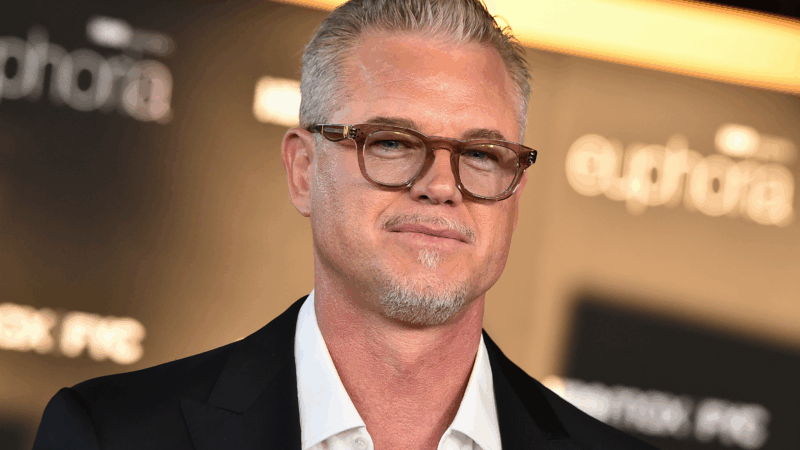
Eric Dane, ‘Grey’s Anatomy’ star and ALS awareness advocate, dies at 53
Eric Dane, the celebrated actor best known for his roles on "Grey's Anatomy" and "Euphoria" and who later in life became an advocate for ALS awareness, died Thursday. He was 53.
Venezuela approves amnesty that may release of hundreds detained for political reasons
Venezuela's acting president has signed into law an amnesty bill that could lead to the release of politicians, activists, lawyers and many others. The approval marks a stark turn for the nation.
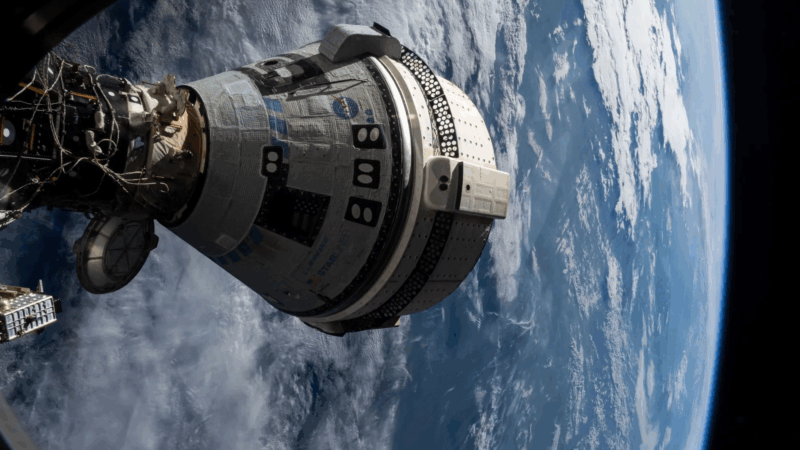
NASA chief blasts Boeing, space agency for failed Starliner astronaut mission
NASA's Jared Isaacman slammed Boeing for failures with its Starliner spacecraft, which was deemed unsafe to return its crew of two astronauts from the International Space Station
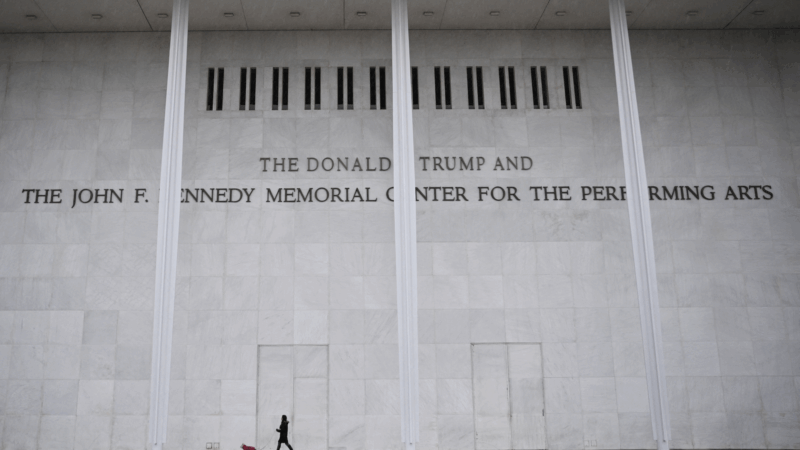
Internal memo details cosmetic changes and facility repairs to Kennedy Center
Trump announced his plans to close the Kennedy Center entirely for two years "for Construction, Revitalization, and Complete Rebuilding." The announcement came after many prominent artists canceled existing scheduled appearances.
