
Illinois officials blast Trump’s threat to deploy National Guard in Chicago
Chicago political leaders are slamming a suggestion made by President Trump late last week that he may soon send National Guard troops to the streets of the Midwest metropolis in order to combat crime.
Mayor Brandon Johnson, a Democrat, said in a statement on Friday that Trump’s approach was “uncoordinated, uncalled for, and unsound” and that “unlawfully deploying” the National Guard to Chicago could “inflame tensions between residents and law enforcement.”
Speaking on MSNBC on Sunday, Johnson added: “The city of Chicago does not need a military occupation… This is clearly a violation of the Constitution, and we’re going to remain firm and vigilant in our commitment to ensure that our democracy is protected and our humanity is secured.”
According to city data quoted by Mayor Johnson, Chicago has seen a drop in certain violent crimes in the past year, including a more than 30% reduction in homicides, a 35% drop in robberies and a nearly 40% decline in shootings.
Earlier in August, Trump deployed hundreds of National Guard members to Washington, D.C., as part of what he touted as an effort to reduce crime and root out homelessness. (That’s despite the fact that Mayor Muriel Bowser has said that violent crime in D.C. is at its lowest level in 30 years.)
Speaking to reporters Friday in the Oval Office, Trump said he wanted to take that approach to other U.S. cities, including New York and Chicago. “Chicago’s a mess. You have an incompetent mayor, grossly incompetent. And we’ll straighten that one out probably next,” Trump said.
On Sunday morning, the president said in a post on his social media network Truth Social that he might “send in the ‘troops'” to Baltimore, in response to an invitation earlier in the week by Maryland Gov. Wes Moore for Trump to join him on a public safety walk to “discuss strategies for effective public safety policy.”
On Saturday evening, the Washington Post reported that the Pentagon has been planning a military intervention in Chicago for weeks, including the mobilization of several thousand National Guard members and the possible use of active-duty troops.
It wouldn’t be the first time in recent months that federal officials have deployed the military onto American soil. In June, the Trump administration sent around 4,000 National Guard members and 700 Marines to Los Angeles following several days of protests over immigration enforcement operations there, a move California officials called illegal.
Illinois’ Democratic Gov. JB Pritzker said in a post on X Saturday that Trump’s “threat to bring the National Guard to Chicago isn’t about safety — it’s a test of the limits of his power and a trial run for a police state.”
He added: “Illinois has long worked with federal law enforcement to tackle crime, but we won’t let a dictator impose his will.”
Pritzker noted in a separate statement on Saturday that Illinois hadn’t asked for any federal government intervention, and that there was no emergency in the state that warranted the deployment of the National Guard or the military.
Chicago’s crime rate has dropped as the city and the federal government have invested in targeted violence intervention programs there, WBEZ’s Mariah Woelfel reported, but the Justice Department recently cut grant funding for such work.
China slams Trump’s trade investigation, as it approves a 5-year economic plan
China's Foreign Ministry criticized the Trump administration's trade investigation as a "pretext" for tariffs. Meanwhile, China is moving ahead with a five-year plan that may rankle trade partners.
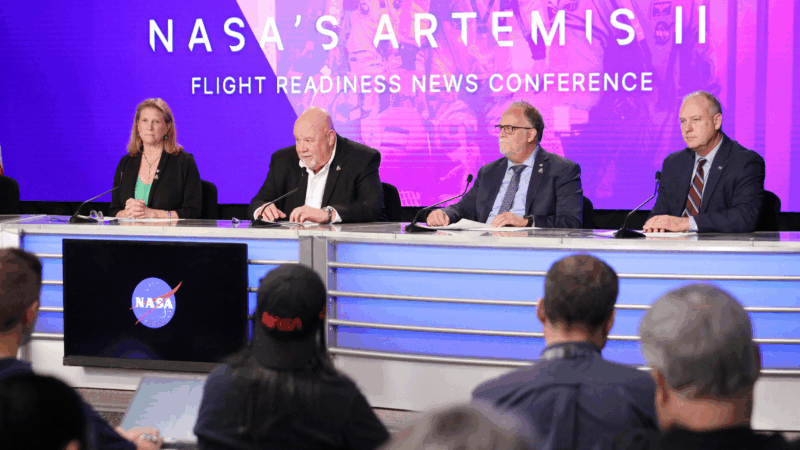
NASA targets Artemis II crewed moon mission for April 1 launch
A six-day launch window opens on April 1 from NASA's Kennedy Space Center in Florida. The lunar orbital mission would be the first time humans have returned to the moon since Apollo 17 in 1972.

Auburn football player uses NIL funds to open a community hub in Birmingham
Jourdin Crawford, a freshman defensive lineman at Auburn, used earnings from a Name, Image, and Likeness deal to give back to his hometown.

Fear of Iranian mines in the Strait of Hormuz could further slow the flow of oil
Attacks by Iran have already nearly halted the flow of oil through the vital waterway as commercial ship crews fear being hit by missiles, drones or mines.
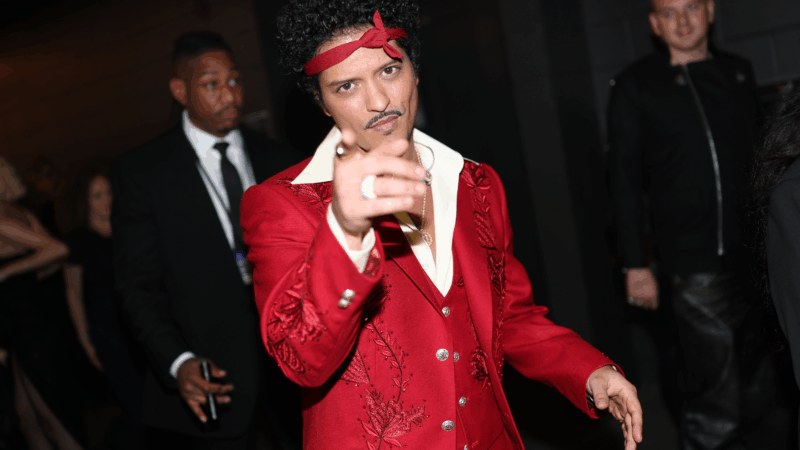
Bruno Mars adds yet another milestone to his career with ‘The Romantic’
Bruno Mars is the most-listened to artist in the world on Spotify. He's won 16 Grammys. In case you thought there were no battles left for him to win, this week he unlocked another achievement.

There’s more than one path to a confessional song
On new albums by viral sensation Yebba and studio whiz Pimmie, it's clear modern R&B has been clearing space for vastly different stripes of singer-songwriter.
