
Hurricane Erin update: Forecast sees huge storm moving closer to U.S.
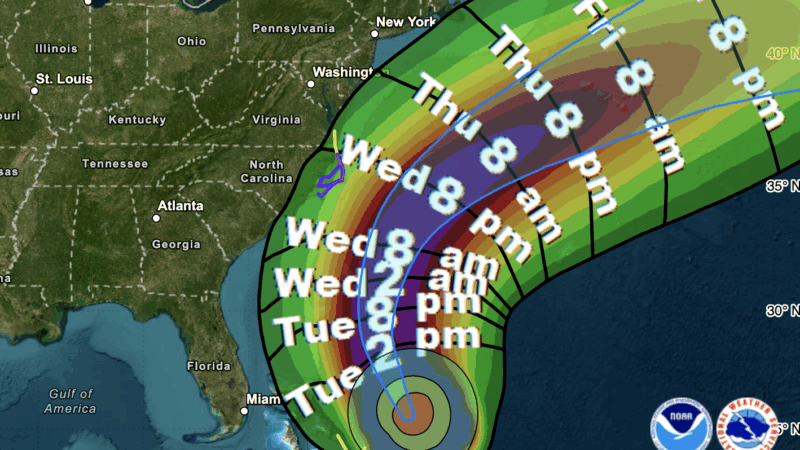
Hurricane Erin is moving closer to the Eastern seaboard, bringing dangerous rip currents and flood risks that have prompted evacuation orders and states of emergency in two North Carolina counties.
Hurricane Erin was 690 miles south-southeast of Cape Hatteras, N.C., as of 11 a.m. ET, the National Hurricane Center said on Tuesday morning. It was moving northwest at 9 mph, packing maximum sustained winds of 105 mph. That’s a big drop from Monday’s figure of 140 mph, but the large storm is expected to regain some strength — and get even larger.
Erin isn’t expected to make landfall in the U.S., but forecasters say it will push large waves of 15 to 20 feet or higher onto the shoreline, along with storm surge.
A tropical storm warning — meaning tropical storm conditions are expected within the next 36 hours — is in effect for the Outer Banks from Beaufort Inlet to Duck.
The hurricane center has also issued a storm surge warning along the Outer Banks from Cape Lookout to Duck. National Hurricane Center Director Michael Brennan said in a briefing Tuesday morning that the warning “means there’s a danger of life-threatening inundation of 2 to 4 feet … above ground level.”
As of Tuesday, everyone on Hatteras and Ocracoke islands in the Outer Banks was under mandatory evacuation orders. Authorities want people to leave before seawater overtakes Highway 12, the main road connecting a long string of North Carolina communities.
Dare County Emergency Management Director Drew Pearson issued a blunt message to people in the area: “I encourage all residents and visitors to heed the evacuation order and take action to protect themselves, to protect their property, and to get up and leave — now.”
Once the water arrives, the National Weather Service office in Morehead City, N.C., warns, roads and cars in low-lying areas will likely be inundated for days.
From Florida up to Long Island, New York, there’s a high risk of “life-threatening surf and rip currents,” the National Hurricane Center says. Anyone who wants to go to an East Coast beach this week, the agency adds, should consult a local or national map of rip current risks.
The latest forecasts have nudged Erin’s predicted track more toward the west, increasing the chance for impacts on land. And while the system’s intensity has fallen since its winds zoomed up to nearly 160 mph over the weekend, the hurricane center says the storm’s massive size, rather than its windspeeds, is what makes it a threat.
“We see some comments in the community: ‘How come we’re being impacted at the coast? The storm is well out to sea,'” Erik Heden, the warning coordination meteorologist at the National Weather Service office in Morehead City, said in an update. “That’s correct — with the center of the storm. But keep in mind, it’s hundreds of miles across.”
Erin is projecting tropical-storm-force winds up to 205 miles from its center, with hurricane-force winds extending up to 80 miles.
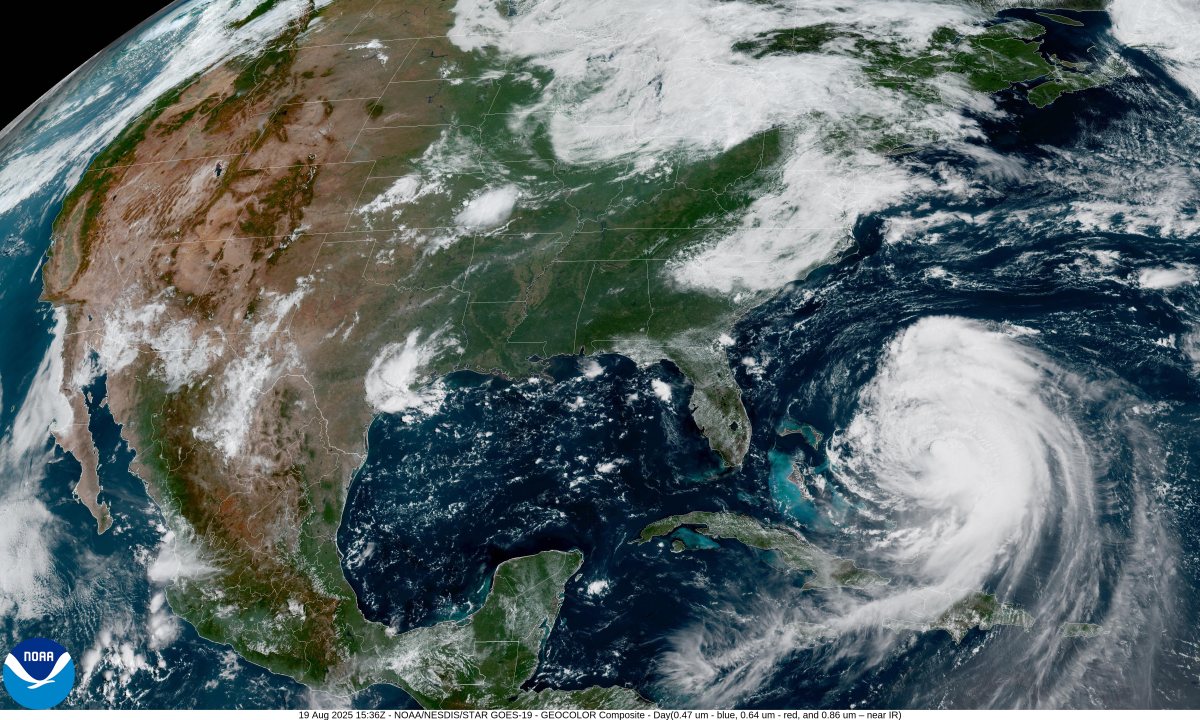
Because of the storm’s unusual size, the Hurricane Center cautions that even its own advisories likely underestimate the risk of tropical-storm-force winds being felt onshore this week, from North Carolina to southern New England. The reason, the center says, is that Erin’s massive wind field “is considerably larger than average compared to the wind field” that its predictions are based upon.
Why the storm’s size matters more than windspeed
And while windspeed often makes headlines, a hurricane’s size is often linked to damage and risk.
“The size of the storm really is correlated with higher storm surge levels over larger swaths of area, and that tends to lead to much more dramatic impacts,” says Matthew Janssen, a research assistant professor and engineer who studies coastal hazards at the Stevens Institute of Technology in New Jersey.
Parts of the Outer Banks, which extend for miles from the mainland, are especially prone to being washed out, according to Janssen.
“In some parts of that, the barrier islands may be a thousand feet wide in some areas. So very, very vulnerable” to even moderately strong storms, he says.
In this case, Erin is expected to bring waves to the surf area that are as high as 15 to 20 feet or more. One positive in the forecast, Janssen says, is that the U.S. coast will be spared a direct hit because Erin is “distal, which basically means that it’s approaching along the side of the coast, not a direct landfall.”
The storm will also largely be a coastal phenomenon, the NWS’ Heden says, with communities further inland expected to face far less dire conditions. But he and Janssen both say that the storm’s imposing waves will likely reshape and erode beaches, washing over dunes and pulling sand down and into the water to form or add to sandbars.
Erin is the first hurricane of the Atlantic season, which began in June. But experts warn that we shouldn’t read too much into the fairly slow start to the season.
“The leading consensus among most experts is that the effects of climate change on hurricane formation will be fewer hurricanes, but we will [see] more intense storms,” Janssen says. “Specifically, more frequent major [Category 3 or greater] storms. Erin, in some ways, plays right into that narrative.”
Climate change is causing hurricanes to get more powerful on average. In general, air that’s becoming warmer and more moist provides more fuel for extreme weather, from hurricanes to intense inland storms. Experts say that warm ocean temperatures can also help storms carry a great deal of water, raising the risk of flooding — the main cause of death from hurricanes.
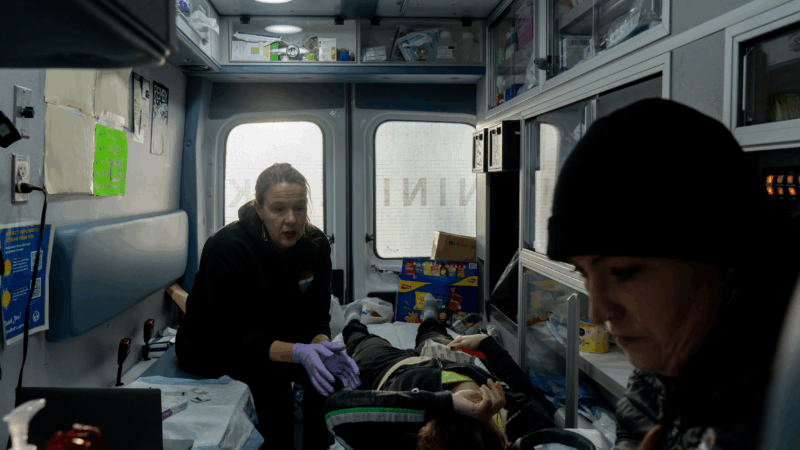
For those with addiction, going into and coming out of prison can be a minefield.
Many jails and prisons around the country don't provide medication treatment for opioid use disorder. Studies show that medication makes recovery more likely and reduces the risk of overdose death.

Trump struck deals with 16 drug companies. But they’re still raising prices this year
All 16 drug companies that inked deals with the Trump administration over the past few months still raised some of their prices for 2026.
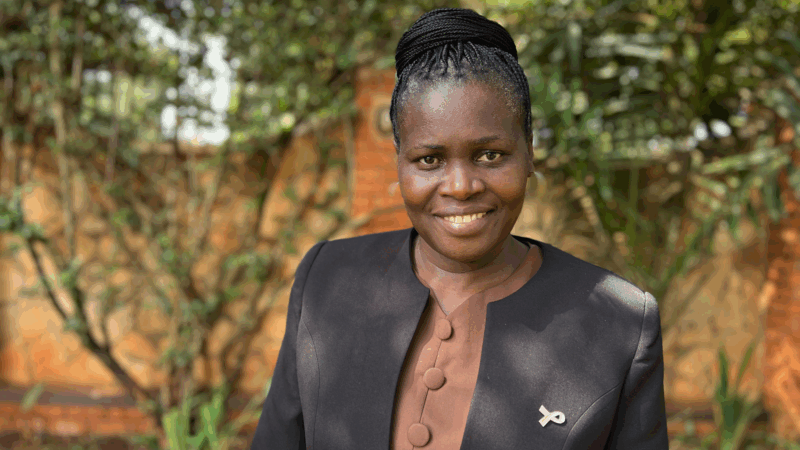
This hospice has a bold new mission: saving lives
A hospice in Uganda asked itself: Can we do more than ease the pain of dying? Can we actually prevent deaths from cervical and breast cancer?
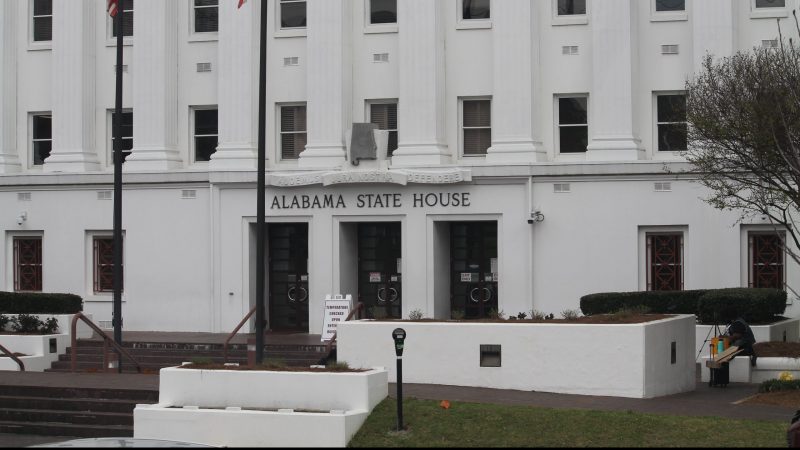
Ivey releases proposed state budgets
Lawmakers are often running in Montgomery having finished the first week of this year's legislative session. It's a week that saw the announcement of Gov. Kay Ivey's budget proposal, along with the first bills starting to make their way through the legislative process. We talk about that with Todd Stacy, host of Capital Journal on Alabama Public Television.
Canada agrees to cut tariff on Chinese EVs in return for lower tariffs on Canadian farm products
Breaking with the United States, Canada has agreed to cut its 100% tariff on Chinese electric cars in return for lower tariffs on Canadian farm products, Prime Minister Mark Carney said Friday.

What do eggs, Grok and Greenland have in common? They’re all quiz-worthy! Are you?
See if you can get a perfect score for once.
