
‘Highest 2 Lowest’ is a fun ride, even if old-school opulence tempers the bite
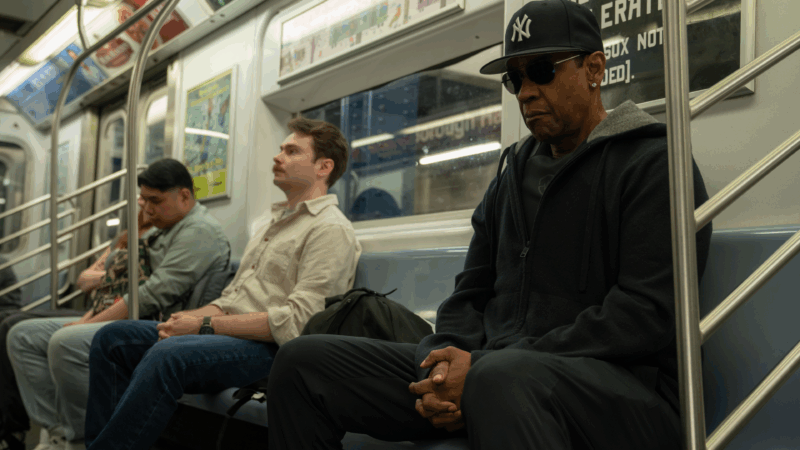
Attempting to reimagine Akira Kurosawa’s 1963 near-perfect High and Low may seem like a fool’s errand, but ultimately it’s easy to understand Spike Lee’s desire to do so. Lee is both a noted cinephile and longtime examiner of the haves and have-nots. The central premise — a wealthy businessman, scrambling to gain control of his company, faces a crisis of conscience when his chauffeur’s son is held at ransom — is sturdy and universal enough to bear fruit from a contemporary update.
Lee’s latest joint, Highest 2 Lowest, isn’t near-perfect, nor does it reach the creative heights of his best work in four-plus decades of filmmaking. But unlike his 2013 remake of Oldboy, it clearly demonstrates its reasons for being. Finally, he’s reunited with one of his most fruitful collaborators, Denzel Washington, almost two decades after their pairing on the inspired and thrilling heist film Inside Man. Together they create a fun homage that rekindles their spark, even if by the end, Lee seems to be pulling punches in his examination of class and privilege.
Washington is one-percenter David King, a music mogul who lives like a king of New York City. He’s said to have “the best ears in the business,” and has used that acuity to build an empire for his wife Pam (Ilfenesh Hadera) and their teen son Trey (Aubrey Joseph); they all live in a towering penthouse mansion in Brooklyn’s Olympia DUMBO building, an ostensible oasis which presently beckons privileged would-be tenants with the opportunity to “live above it all.” Lee and cinematographer Matthew Libatique take full advantage of those stunning views, immersing the audience in the grand splendor of the city’s famous skylines from a myriad of angles. It’s basically the cityscape version of food porn.
As the movie begins, the King family’s platinum tower is in a precarious state. David’s label Stackin’ Hits Records is at risk of being swallowed up in a merger by a huge conglomerate. He fears what will happen if the deal goes through — a loss of the Black identity he’s cultivated at the company over the years, AI composing music with “no soul, no heart” — and is strategizing to buy back the majority of the label’s shares.
That plan is jeopardized, however, by a kidnapping; Trey is the intended target, but in a case of mistaken identity, his best friend is scooped up instead — and that friend also happens to be the son of Paul (Jeffrey Wright), David’s chauffeur and closest confidante. Suddenly, David is presented with a moral dilemma: cough up $17.5 million to the kidnapper and lose his label, or save Stackin’ Hits but decimate a family bond.

Like most of Lee’s catalog, Highest 2 Lowest is brimming with of-the-moment political commentary, nerdy cinematic references, and didactic downloads of Black history, some of which gel better with the story than others. In its best moments, it locks into the inherent imbalance of David and Paul’s murky dynamic, with Wright, per usual, giving a magnetic, full-bodied performance energizing every scene he’s in. He excavates moments of unease from his character’s position in life, finding the tension between Paul’s love for David and his clear-eyed understanding that at the end of the day, this is still an employee-employer relationship.
Somewhat disappointingly, the latter half of the film largely abandons its interest in exploring the vast power gap between them and what it means for their friendship. The screenplay, credited to Alan Fox, becomes a very different kind of movie — more like Washington’s Equalizer franchise meets Robert Altman’s The Player, as it were. The social commentary is still there and Washington’s calculating swagger keeps the plot engaged, but it shifts from an upstairs-downstairs morality tale to a “kids these days” morality tale, and that manifests as a missed opportunity given the extreme wealth inequity in the U.S. and the public’s current animus towards billionaires.

The movie’s last act, which brings the kidnapper fully into the fold, reminded me of one of the more preposterous viral memes from Black Twitter’s heyday, involving a pie-in-the-sky would-you-rather prompt: Have dinner with Jay-Z, or get $500K [or some other large amount] in cash? The query functioned as a Rorschach test to determine who’d fully bought into the hard-worn myth of hustle culture mentality — a myth from which Jay-Z built an entire career — and who was more, shall we say, pragmatic about it. When asked about the meme, even Jay himself wasn’t trying to sell a dream, at least in this case; anyone expecting him to teach them how to fish over dinner would do better to “take the money,” he told Gayle King. “You got all that [wisdom] in [my] music for $10.99 — that’s a bad deal.”
Perhaps intentionally (or unavoidably), Washington’s David invokes Jay’s contradictory legacy, and Highest 2 Lowest plays out a bit like that dinner-with-Hov exercise, in that it reveals — sometimes inadvertently — the trappings and limitations of celebrating Black wealth. There’s an old-school, Oprah-esque sheen that tempers the movie’s bite, from the King household’s ostentatious art collection inspired by Lee’s own personal archive (Basquiat, Kehinde Wiley, and so on) to the repeated detail that the family supports up-and-coming Black artists. The presentation compels the audience to marvel at and be proud of a Black family having attained all this power, and suggests that so long as they do the “right” things with said power — donate to charities and liberal causes, profess a love of Black culture, etc. — there’s no need to question it.
It seems strange to be critiquing a Spike Lee joint for not being hard-hitting enough, but there are worse sins. If Highest 2 Lowest falls short of searing analysis, it nevertheless reiterates that Lee and Washington — who’s been on the verge of “retiring” from leading-man status as far back as Inside Man — are invigorated by this work, and it shows. The highs are just high and plentiful enough to make up for the few lows.

Pregnant migrant girls are being sent to a Texas shelter flagged as medically risky
Government officials and advocates for the children worry the goal is to concentrate them in Texas, where abortion is banned.
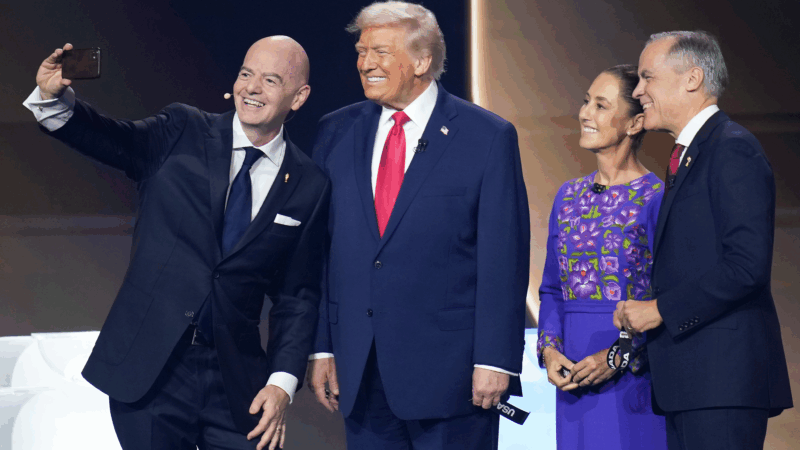
The 2026 World Cup faces big challenges with only 100 days to go
Will Iran compete? Will violence in Mexico flare up? And what about funding for host cities in the U.S.? With only 100 days left before it beings, the 2026 World Cup in North America is facing a lot of uncertainty.

A glimpse of Iran, through the eyes of its artists and journalists
Understanding one of the world's oldest civilizations can't be achieved through a single film or book. But recent works of literature, journalism, music and film by Iranians are a powerful starting point.

Mitski comes undone
She may be indie rock's queen of precisely rendered emotion, but on Mitski's latest album, Nothing's About to Happen to Me, warped perspectives, questionable motives and possible hauntings abound.

This quiet epic is the top-grossing Japanese live action film of all time
The Oscar-nominated Kokuho tells a compelling story about friendship, the weight of history and the torturous road to becoming a star in Japan's Kabuki theater.
The Live Nation trial could reshape the music industry. Here’s what you need to know
On Tuesday opening statements will begin for the federal antitrust trial against Live Nation, one of the largest entertainment companies in the world.
