HHS guts the teams that fulfill public records requests for health agencies
Teams that fulfilled requests for government documents lost their jobs on Tuesday as part of the Trump administration’s 10,000-person staff cuts at the Department of Health and Human Services. Their work, mandated by Congress since the 1960s under the Freedom of Information Act or FOIA, gives the public a view of the inner workings of federal health agencies.
Some public records teams were entirely cut at the Centers for Disease Control and Prevention, the Food and Drug Administration, the National Institutes of Health and other agencies on Tuesday, according to multiple current and former staffers who did not want to be named because of fears of retribution. A few people have been left standing on other FOIA teams within these agencies, for now.
Health Secretary Robert F. Kennedy Jr. has promised “radical transparency,” but the firings suggest that promise is a “lie,” says Jason R. Baron, a former director of litigation at the National Archives and Records Administration and current professor at the College of Information at the University of Maryland.
The layoffs of FOIA staff will “exponentially” increase backlogs and delays for health-related public records requests, he predicts.
“They are the American people’s records, and there should be adequate FOIA staff to make sure that record requests are answered promptly,” he says. “Firing your staff is antithetical to openness and transparency.”
In response to a request for comment, HHS emailed NPR the following: “The FOIA offices throughout the Department were previously siloed, and did not communicate with one another. Under Secretary Kennedy’s vision for a more efficient HHS, these offices will be streamlined, and the work will continue.”
Congress passed the Freedom of Information Act to increase government transparency. It mandates that federal agencies allow members of the public to request and receive records created and maintained by government agencies.
This can mean documents involving the safety and efficacy of new drugs, for example, or it can mean emails sent and received by agency workers. Members of the public may also want these records to help with their injury lawsuits, for example.
Reporters often use FOIA requests to shine a light on government activities that happen behind closed doors. For example, NPR obtained the government’s $5.3 billion contract to purchase Paxlovid in 2021 this way and reported on some surprises contained within the deal. NPR also reported on problems with other COVID contracts using documents published proactively to HHS’s online FOIA reading room.
“This move is honestly outrageous,” Gunita Singh, an attorney at the Reporters Committee for Freedom of the Press, told NPR in an email. “Why anyone would think putting transparency on the chopping block is a good idea is beyond me.”
Sometimes, organizations – including NPR – have to sue to get public records released under the law. This week, Singh got an email from an attorney representing HHS in one such case. She read the email to NPR but didn’t forward it because it includes other information that is privileged between her and her client:
“I had a good call with the agency on Monday and was anticipating having answers for you shortly. However, I was just informed that [Administration for Children and Families’] entire FOIA office is currently on administrative leave. I don’t have further information at this point and will keep you apprised as I learn more. I appreciate your patience.”
Although Singh couldn’t say what records she was trying to get, she called getting the email “devastating,” in a phone call to NPR.
“So a direct effect of these layoffs is that FOIA litigation squarely in the public interest is being stymied,” Singh says. “Journalists and other members of the public will be left without information on the processing of their requests; and government records to which the press and public are entitled will take much longer to get in our hands.”
FOIA offices were already understaffed, according to Singh, who says she often hears this from FOIA officers and litigators for the government. That’s why records are rarely produced in the 20 days required under the law. The staff cuts would likely exacerbate these delays, she wrote in an email to NPR, adding “FOIA is a law – not a mere suggestion,” and it requires compliance.
She and her colleague wrote a research paper about how when the FBI shut down its FOIA office during COVID, it made it much harder to submit requests and get documents – even after the office reopened.
Baron of the University of Maryland says firing HHS FOIA staff will only lead to more litigation and stricter judicial scrutiny of how agencies are adhering to public records laws. “HHS may be able to fire FOIA staff, but this Administration can’t wish away its FOIA obligations under present law.”
Rob Stein and Selena Simmons-Duffin contributed to this report.


Auburn tabs USF’s Alex Golesh as its next coach, replacing Hugh Freeze on the Plains
The 41-year-old Golesh, who was born in Russia and moved to the United State at age 7, is signing a six-year contract that averages more than $7 million annually to replace Hugh Freeze. Freeze was fired in early November after failing to fix Auburn’s offensive issues in three seasons on the Plains.

Alabama Power seeks to delay rate hike for new gas plant amid outcry
The state’s largest utility has proposed delaying the rate increase from its purchase of a $622 million natural gas plant until 2028.
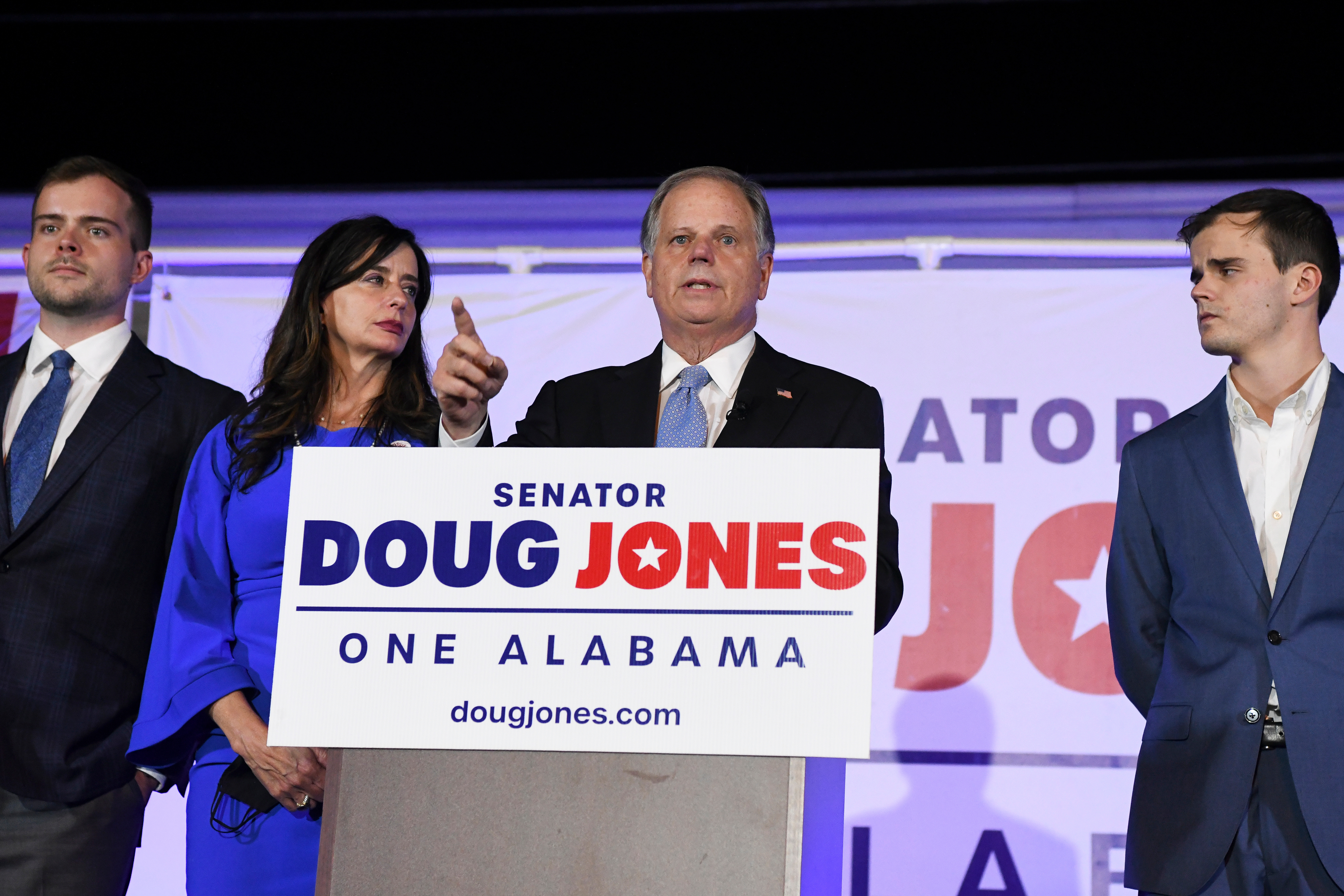
Former U.S. Sen. Doug Jones announces run for Alabama governor
Jones announced his campaign Monday afternoon, hours after filing campaign paperwork with the Secretary of State's Office. His gubernatorial bid could set up a rematch with U.S. Sen. Tommy Tuberville, the Republican who defeated Jones in 2020 and is now running for governor.

Scorching Saturdays: The rising heat threat inside football stadiums
Excessive heat and more frequent medical incidents in Southern college football stadiums could be a warning sign for universities across the country.

The Gulf States Newsroom is hiring an Audio Editor
The Gulf States Newsroom is hiring an Audio Editor to join our award-winning team covering important regional stories across Mississippi, Alabama and Louisiana.

Judge orders new Alabama Senate map after ruling found racial gerrymandering
U.S. District Judge Anna Manasco, appointed by President Donald Trump during his first term, issued the ruling Monday putting a new court-selected map in place for the 2026 and 2030 elections.