
Hermeto Pascoal, whimsical Brazilian composer nicknamed ‘The Sorcerer,’ dies at 89
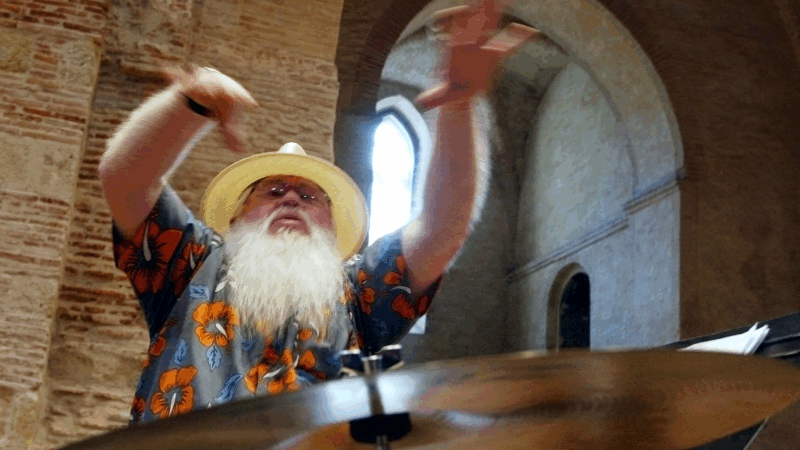
The prolific Brazilian composer Hermeto Pascoal has died. Nicknamed “the Sorcerer,” Pascoal resembled a wizard from a storybook — both in his personal style, and his ability to create magical sounds from unusual places. According to social media posts from his family, Pascoal died on Saturday. He was 89.
The bearded, frizzy-haired musician rose to prominence in the 1960s and ’70s and was known for playful, avant-garde arrangements that blended regional Brazilian folk music, jazz, psychedelia and pure whimsy. His list of collaborators ranged from Airto Moreira to Miles Davis, who referred to him as one of the most important musicians in the world.
“As he always taught us, let us not be ruled by sadness: listen to the wind, the birds, a glass of water, a waterfall — universal music keeps breathing,” reads the caption of an Instagram post from his family.
Born with albinism in 1936, Pascoal grew up in a small rural town in the Brazilian state of Alagoas. His parents worked in the fields, but the young Pascoal spent much of his time indoors due to his condition. While vision deficiencies led him to drop out of school in the fourth grade, Pascoal’s ears guided him towards music. He learned to play accordion, flute and piano.
By the 1960s, Pascoal moved to Rio de Janeiro and began playing with several trios before officially joining Quarteto Novo. The group’s self-titled album, released in 1967, received critical acclaim in Brazil and helped further push the Northeastern genre of baião into the international spotlight. In the coming years, Pascoal recorded and released several solo albums that included traditional instruments as well as everyday objects like pipes, kettles and even squealing pigs.
“I’m 100 percent intuitive,” he told NPR in 2017. “I don’t premeditate anything. I feel it. When something happens, I don’t say, ‘Now I’m going to do that.’ No. If I want to write the music, I start creating. Every piece of my music, even the one I write on a piece of paper, I consider an improvisation.”
In 1971, Pascoal collaborated with Miles Davis on the album Live-Evil, writing and performing in several compositions. Davis affectionately nicknamed Pascoal “that crazy albino.” The composer and multi-instrumentalist told NPR he got a kick out of the moniker; pianist and collaborator Jovino Santos Neto, who worked with him for over 40 years, wasn’t surprised.
“He never aged and he’s at the same time … a very complex personality,” Santos Neto told NPR in 2017. “He’s both the wise old man, because of the white hair, but he’s also the prankster, the 16-year-old who’s really crazy to play a prank on somebody and to laugh and to make jokes.”
That youthful energy was not just part of Pascoal’s personality; it was also the foundation of his art. In 1985, he appeared alongside a group of musicians in the ecological documentary Sinfonia do Alto Ribeira, performing the song “Música da Lagoa” while bathing in a river. As the water rushed around them, the men used glass bottles, flutes and the sounds of the stream to compose a gentle melody that emanated the spirit of their natural surroundings.
Pascoal wrote thousands of compositions throughout his career, and continued to perform until the end of his life. A public memorial service was held on Sept. 15 at a cultural center named after him in Rio de Janeiro.
“If you wish to honor him, let a single note ring — from an instrument, your voice, or a kettle — and offer it to the universe,” reads the post from Pascoal’s account.

Pregnant women in ERs took less Tylenol after Trump autism warning
A study in The Lancet finds that pregnant women in emergency rooms used less Tylenol after President Trump said it could raise their babies' risk of autism. Scientists say there is no proven link.
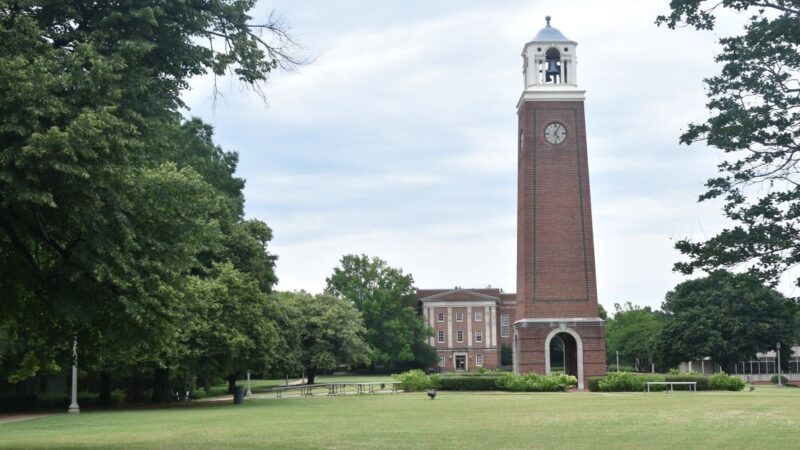
Mixed reactions, including relief, greet news the Coast Guard is buying BSC campus
The U.S. Coast Guard will take possession of the 192-acre campus in the northeast corner of Birmingham’s Bush Hills Neighborhood and will begin work to refit it as a training center for officers and enlisted personnel.

What you need to know about Sen. Markwayne Mullin, Trump’s new pick to lead DHS
President Trump announced Thursday that Sen. Markwayne Mullin, R-Okla., is his pick to replace Kristi Noem as the head of the Department of Homeland Security.

Travel industry pushes Congress to end DHS shutdown and pay federal security workers
With the busy spring break travel season looming, travel and aviation industry leaders urged Congress to end the stalemate over DHS funding before workers at TSA and ports miss a full paycheck.

Trump fires Kristi Noem as DHS chief, names Sen. Markwayne Mullin to replace her
President Trump has fired his homeland security secretary, Kristi Noem, and said Markwayne Mullin, a senator from Oklahoma, would replace her.

Can a digital tablet cut back a country’s overuse of antibiotics?
Overprescribing antibiotics breeds antibiotic resistance. A new tool aims to lower a notably high rate of such prescriptions in Rwanda.
