
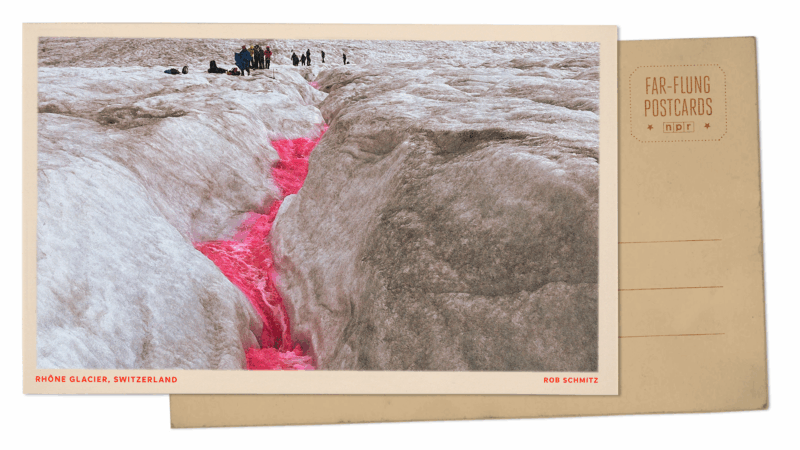
Greetings from the Rhône Glacier, where a gash of pink highlights how it’s melting
Far-Flung Postcards is a weekly series in which NPR’s international team shares moments from their lives and work around the world.
“What do you think would look better: pink or green?”
The bubblegum hue won. A scientist from the Swiss public university ETH Zurich nodded, pulling out a bottle of pink dye to release from the top of the Rhône Glacier in the Swiss Alps.
Turning the rivulet flowing down a melting glacier into a bright-pink stream was the least scientific test carried out this day. It was intended as a visual aid for journalists like me accompanying the team of scientists measuring the pace at which water flows off this glacier. The result: Faster than ever.
On the August day I joined the team, we were surrounded by a 360-degree aural landscape of running water. Some of those currents were coming from beneath the ice we gingerly trekked on, testing each step with a little weight so that we didn’t fall through one of the dozens of massive cracks. As the team took turns leaping over one, I was reminded of the packing list we were emailed before the trip — which included “Ice pick (Eispickel) in case of a slip into a crevasse.”
Fortunately, none of us had to use our Eispickel on this particular day. But we did use our cameras after the team poured the bottle of pink solution into a glacial stream — temporarily turning it into an even more unnatural display than the quickly vanishing glacier itself.
See more photos from around the world:
- Greetings from the Mediterranean, where dolphins swim alongside a migrant rescue ship
- Greetings from Kyiv, where you might stumble across Zelenskyy taking a stroll
- Greetings from Guatemala, where one person’s trash becomes another’s colorful art
- Greetings from American University of Beirut, where more than 1,000 cats roam
- Greetings from a peaceful woodland near the River Thames west of London
Russian strike on Kyiv region kills 4 and wounds 15, with peace talks stalled
The strikes comes after the United States paused ceasefire talks between Russia and Ukraine due to the war with Iran.
As the risk of measles grows, why are parents so divided on vaccines?
In South Carolina, some parents embrace vaccines, others opt out. Why do people make such different choices? A mix of politics, distrust and misinformation is pushing neighbors apart.
Brazil’s ex-President Bolsonaro is in intensive care with pneumonia, hospital says
One of Bolsonaro's doctor's described the former Brazilian president's medical condition as "serious."
Opinion: An ancient, sophisticated palate
Researchers looking at foodcrusts on the pottery shards of ancient humans say there's evidence of a wide variety of ingredients, indicating that they may have been experimenting with "recipes."
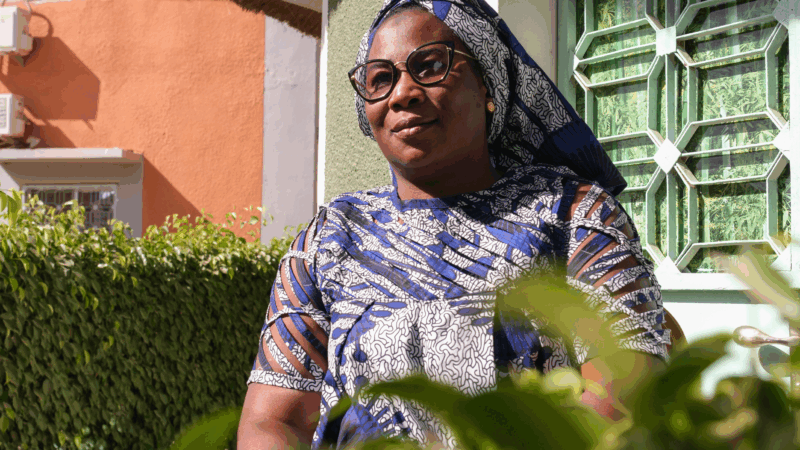
Why women have an especially tough time in Senegal’s prisons
Women charged with a crime in Senegal are at the mercy of a slow judicial process and prisons that may lack basic supplies. They also face stigma that robs them of familial and community support.
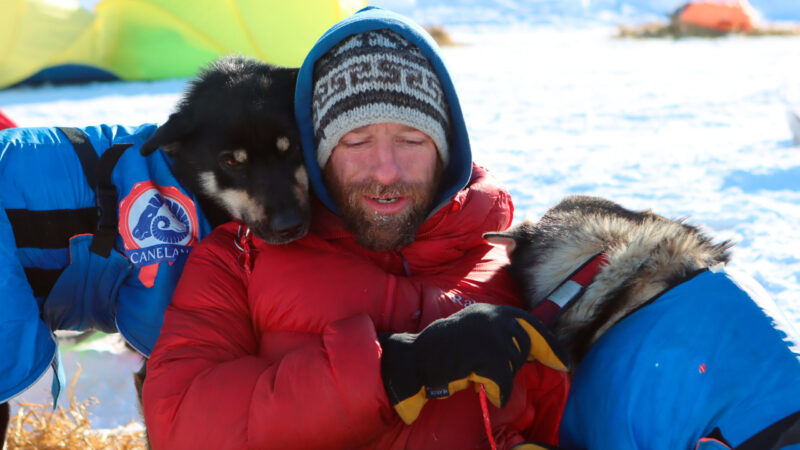
Musher from Alabama is going for back-to-back Iditarod wins
Riches and paid appearances haven’t followed Jessie Holmes since he won the world’s most famous sled dog race, the Iditarod, last year. He doesn't mind.
