
Former Japanese PM Murayama, known for apology over wartime aggression, dies at 101
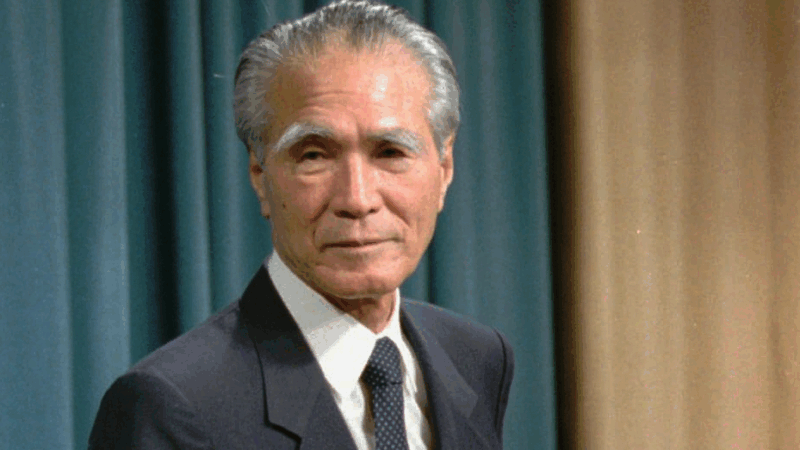
TOKYO — Japan’s former Prime Minister Tomiichi Murayama, who was known for his 1995 “Murayama statement” apologizing to Asian victims of his country’s aggression, died Friday. He was 101.
Murayama died at a hospital in his hometown Oita, southwestern Japan, according to a statement by Mizuho Fukushima, the head of Japan’s Social Democratic Party.
As head of what was then known as the Japan Socialist Party, Murayama led a coalition government from June 1994 to January 1996.
A historic apology for Japan’s actions in World War II
He is best remembered for the “Murayama statement,” an apology he issued on the 50th anniversary of Japan’s unconditional surrender ending World War II on Aug. 15, 1995. It’s seen as Japan’s main expression of remorse for its wartime and colonial past.
“During a certain period in the not too distant past, Japan, following a mistaken national policy, advanced along the road to war … and, through its colonial rule and aggression, caused tremendous damage and suffering to the people of many countries, particularly to those of Asian nations,” he said in the statement.
“In the hope that no such mistake be made in the future, I regard, in a spirit of humility, these irrefutable facts of history, and express here once again my feelings of deep remorse and state my heartfelt apology.”
A government marked by controversy
Murayama was first elected to parliament in 1972 as a socialist lawmaker after working for a labor union and serving in a local assembly.
When he became prime minister in 1994, he broke with his party’s longtime opposition to the Japan-U.S. security alliance and Japan’s Self-Defense Forces, recognizing them as constitutional in a speech given in the face of yelling by angry members of his party.
In 1995, Murayama dealt with two major disasters: a massive earthquake in the western port city of Kobe that killed more than 6,400 people, and a Tokyo subway gas attack that killed 13 and injured more than 6,000 people. He came under fire for slow responses to both.

He resigned early the following year in an unexpected announcement that came as he returned to work after the 1996 New Year holidays. Murayama said he had done what he could in a year marking the 50th anniversary of the end of World War II. He said he made the decision while looking at the blue sky in the new year.
Murayama criticized his successors for questioning Japan’s wartime guilt
Murayama was active in politics even after his retirement in 2000, frequently criticizing attempts by his more nationalist successors to back away from responsibility for Japan’s wartime action.
The Murayama statement set a standard followed by all prime ministers for nearly two decades, until nationalist Prime Minister Shinzo Abe stopped apologizing in 2013 as members of his Liberal Democratic Party said it interfered with Japan’s national pride. That included Abe protege Sanae Takaichi, who was recently elected party leader and is now poised to become prime minister next week.
Murayama also criticized the government’s reluctance to acknowledge that the Japanese government during World War II systematically forced Asian women to provide sex for Japanese soldiers at military brothels.
“A historical view saying Japan’s war was not aggression, or calling it justice or liberation from colonialism, is absolutely unacceptable not only in China, South Korea or other Asian countries but also in America and Europe,” Murayama said in a statement in 2020.
He also stressed the importance of Japan establishing a lasting friendship with China, noting the “tremendous damage” his country caused to its neighbor because of its past war of aggression. “In order to build peace and stability in Asia, we must build stable politics, economics, cultural interactions and development.”

What NPR reporters will remember most about these Winter Olympics
NPR's reporters on the ground in Italy reflect on a far-flung, jam-packed Winter Olympics.

In the shadow of the Olympics, migrants search for a welcome in Milan
As Italy cracks down on migration, Milan takes a different path — offering shelter and integration to asylum seekers even as the central government tightens borders and funds deterrence abroad.
Trump to raise global tariffs. And, most say the state of the union is weak, poll says
President Trump says he is raising global tariffs to 15%. And ahead of the president's address tomorrow, most Americans say the state of the union is not strong, according to an NPR poll.
U.S. has a quarter fewer immigration judges than it did a year ago. Here’s why
The continued drain of personnel from the already strained immigration court system has contributed to depleted staff morale, mounting case backlogs — and floundering due process.
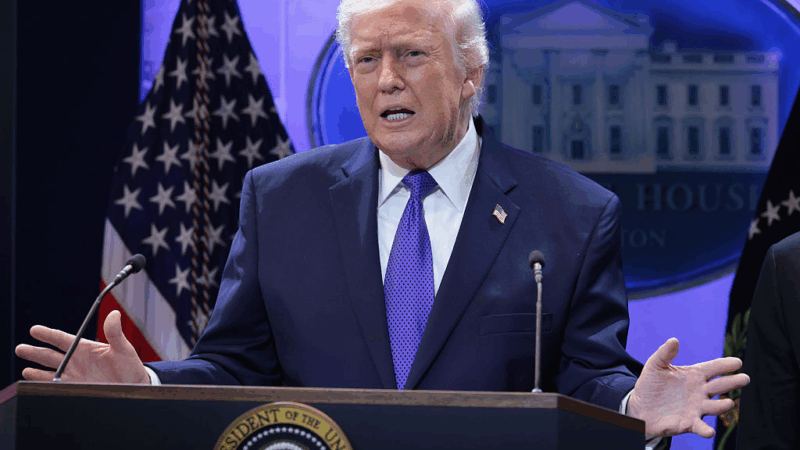
Poll: Most say the state of the union is not strong and the U.S. is worse off
Ahead of the State of the Union address on Tuesday, evidence continues to mount that President Trump is facing political headwinds.

Influencers are promoting peptides for better health. What’s the science say?
The latest wellness craze involves injecting these molecules for athletic performance, longevity and more. Scientists say the research isn't keeping pace with the health claims.
