
For the first time in nearly 6 decades, a Syrian president steps up to speak at the U.N.
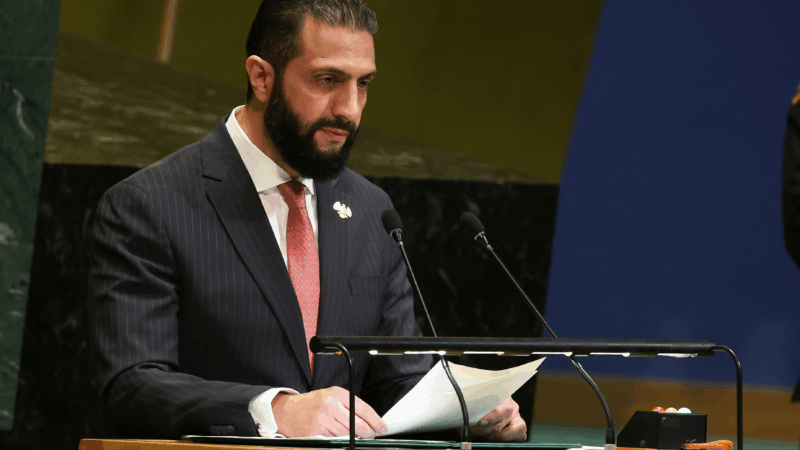
UNITED NATIONS — Turning the page on decades of distance, Syria’s president addressed the U.N. General Assembly on Wednesday, marking the first time any president from his country has done so in almost 60 years. As he spoke, hundreds of people gathered in front of giant screens in Syrian cities and towns to witness the speech while waving the country’s flags.
Ahmad al-Sharaa said Syria is returning to the international community after six decades of dictatorship that killed 1 million people and tortured hundreds of thousands. “Syria is reclaiming its rightful place among the nations of the world,” he told the assembly’s annual gathering of world leaders.
Al-Sharaa became the first Syrian head of state to speak at the United Nations since Noureddine Attasi gave a speech in 1967 shortly after the Arab-Israeli war, during which Damascus lost control of the Golan Heights that Israel later annexed in 1981.
Since the Assad family came to power in Syria in 1970 in a bloodless coup that overthrew Attasi, relations with the United States have been mostly cold as Damascus was an ally of the former Soviet Union. Over the past decades, it was foreign ministers of Syria who represented the country at the U.N. General Assembly.
An appearance after the collapse of the Assad family’s regime
The Assad family dynasty’s autocratic, repressive 54-year rule in Syria abruptly collapsed in December, when then-President Bashar Assad was ousted in a lightning insurgent offensive led by al-Sharaa. Assad’s fall marked a major shift in the 14-year civil war.
Al-Sharaa blasted Israel in his speech saying that it did not stop its threats to his country since the fall of Assad adding that its policies “contradict with the international community’s support to Syria and its people” in what endangers the region and could make enter conflicts that no one know how they could end.
Negotiations have been underway for a security deal that al-Sharaa has said he hopes will bring about a withdrawal of Israeli forces and return to a 1974 disengagement agreement. While al-Sharaa said last week that a deal could be reached in a matter of days, Israeli Prime Minister Benjamin Netanyahu in remarks Sunday appeared to downplay the odds of a breakthrough.
Later Wednesday, Netanyahu’s office said in a statement that negotiations are underway with Syria adding that their conclusion “involves ensuring Israel’s interests, which include, among other things, the demilitarization of southwestern Syria and maintaining the safety and security of the Druze in Syria.”
Since assuming power, al-Sharaa has preached coexistence and sought to reassure Syria’s minority communities, but the country has been threatened by outbreaks of sectarian violence that left hundreds dead earlier this year. Gunmen affiliated with the new government were also accused of atrocities against civilians from the Druze and Alawite religious minorities in southern Syria’s Sweida province and the coastal region.
Al-Sharaa said in his speech that the Syrian state has worked on forming fact-finding missions and gave the United Nations the right to investigate the killings that took place this year adding: “I promise to bring anyone whose hands are tainted with the blood of Syrian people to justice.”
The fight against drugs has progressed
Al-Sharaa said that the new authorities in Syria have destroyed the drugs business that Assad used to fund his government as it was under harsh Western sanctions that, along with the war, paralyzed the economy. Assad’s fall revealed industrial-scale manufacturing facilities of the amphetamine-like stimulant Captagon, also known as fenethylline, which experts say fed a $10 billion annual global trade in the highly addictive drug.
Over the past months, Syrian authorities have closed Captagon factories in different parts of Syria part of their campaign to end the illegal trade.
Al-Sharaa urged Western countries to lift the sanctions that were imposed on Assad, saying, “We call for lifting them completely so that they are not a tool to shackle the Syrian people.”
President Trump met with al-Sharaa in Saudi Arabia in May and announced that he would lift decades of sanctions imposed on Syria under the Assad’s rule. He followed through by ordering a large swath of sanctions lifted or waived.
However, the most stringent sanctions were imposed by Congress under the Caesar Syria Civilian Protection Act passed in 2019 and will require a congressional vote to permanently remove them.
Speaking to reporters outside the U.N. building after giving his speech, al-Sharaa said that he hopes that the sanctions would eventually be lifted adding that the majority of Congress members are for lifting the Congress under the Caesar Syria Civilian Protection Act.
“Syria does not wish the pain it passed through for anyone. We are among the most people who feel the suffering of war and destruction,” al-Sharaa said. “Therefore we support the people of Gaza.”
Syrian divisions manifest in New York
In Damascus, cheering crowds gathered in the central Umayyad Square to celebrate al-Sharaa’s speech. At Dag Hammarskjöld Plaza square in New York, members of the Syrian diaspora faced off in dueling demonstrations, one in support of the new authorities in Damascus and one against.
Pro-government demonstrators hoisted the three-starred “revolution flag” that has now become the official flag of Syria. On the other side, many lifted the five-color Druze flag. Some shouted and cursed at each other across the barricades.
On the Druze side, Farah Taki, originally from Sweida, said her aunts there were displaced by the recent violence and she had come from Chicago to protest al-Sharaa’s visit.
“It’s disgrace that New York is welcoming an ex-Qaida member at the U.N., and allowing him even to speak,” she said. The insurgent group that al-Sharaa formerly led was once affiliated with al-Qaida but later cut ties.
On the other side of the barricades, Dina Keenawari, a Syrian American originally from Damascus, had come from Florida to show her support for al-Sharaa.
“We’ve lived under tyranny for the past 50 years, and now we’re turning a new chapter and we’re looking forward,” she said. “And we’re proud of him.”

Want to play a Tiny Desk concert? The 2026 Contest is now open for entries
The 2026 Tiny Desk Contest, our annual search for the next great undiscovered artist, is now officially open for entries.
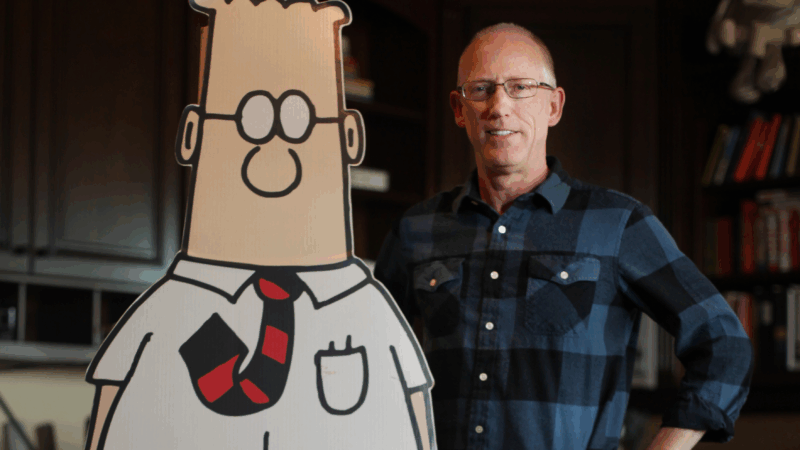
Scott Adams, the controversial cartoonist behind ‘Dilbert,’ dies at 68
Adams announced in May that he was dying of metastatic prostate cancer. Thousands of newspapers carried his strip satirizing office culture from the '90s until a controversy in 2023.
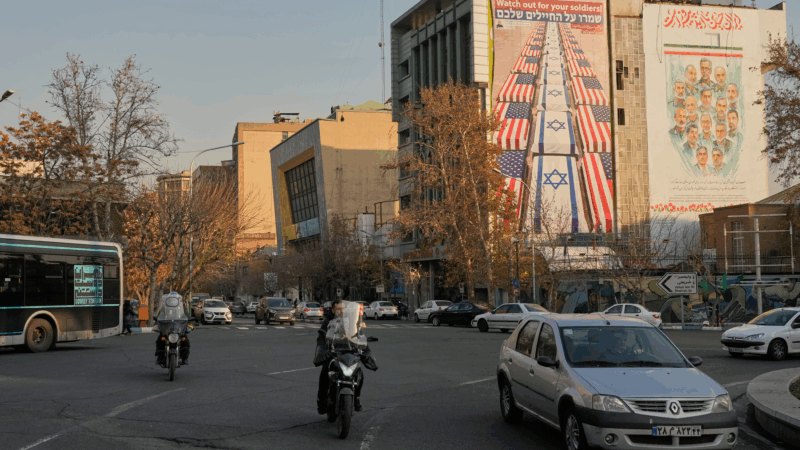
As Iran’s protests continue, Israelis and Palestinians watch closely
There is broad support for the protests among Israeli officials, but Palestinians say they hope the Iranian regime stays in place and the protests die down soon.
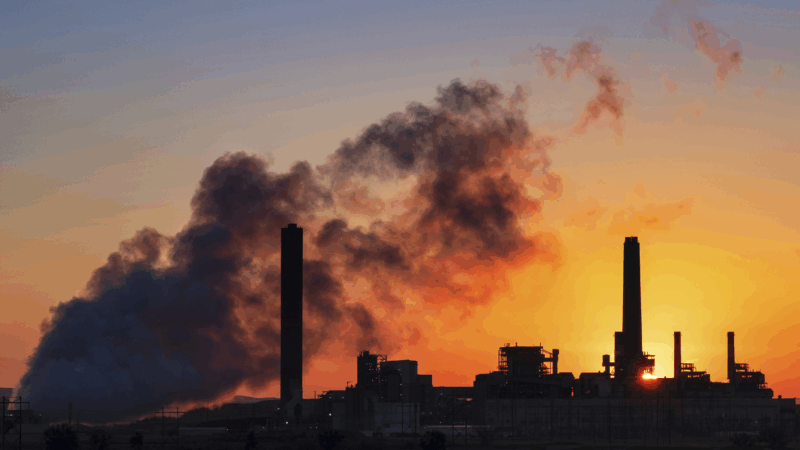
The EPA is changing how it considers the costs and benefits of air pollution rules
The EPA won't consider the economic costs of harms to human health, at least for now. Legal and health experts are concerned that the change could make it easier for the agency to roll back rules.
California fire victims say fighting with insurance companies has delayed rebuilding
Wildfires last January destroyed communities around Los Angeles. Homeowners say recovery has been slowed by fights with insurers to get their claims paid.
‘Fly, Wild Swans’ is Jung Chang’s painfully personal tribute to her mother
A historian of modern China, Jung Chang turns the lens back on herself in her newest book to understand how she sees the world and why she writes about China today.
