
Five takeaways: China’s foreign minister slams Trump’s ‘two-faced’ policies
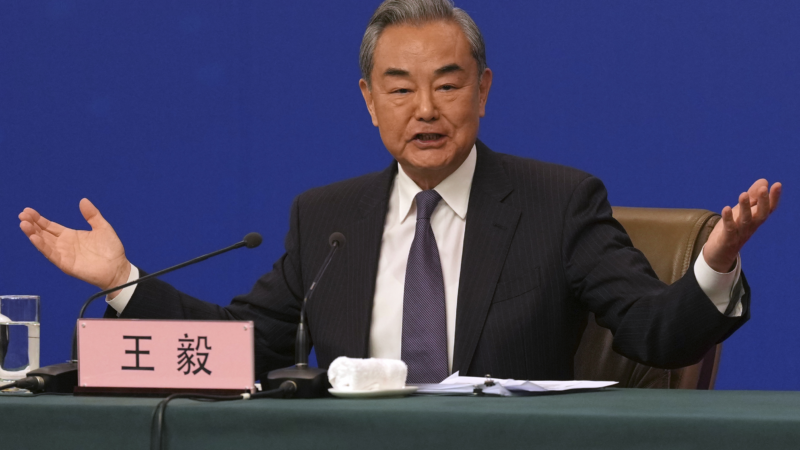
BEIJING — China’s top foreign policy official, Wang Yi, cast Beijing as a force for good and blasted the U.S. for being “two-faced” at a news conference during China’s annual session of parliament on Friday.
Last month, the Trump administration imposed a 10% tariff on all Chinese imports to the U.S., and on Tuesday added another 10%, arguing that China needs to do more to stop the flow of the deadly opioid fentanyl into the U.S.
China has accused Trump of using fentanyl as a pretext to threaten the country economically and Beijing has retaliated with counter-tariffs and other measures.
Wang addressed the escalating trade war with the U.S. and promoted China as an “anchor” on the global stage as America retreats from international involvement. Here’s what he had to say on five key issues.
China’s relationship with the U.S.
Wang, who is a member of the elite Politburo and the country’s foreign minister, had very little positive to say about China-U.S. relations, and instead offered criticisms of America’s policies and exhortations to mend its ways.
Wang said the combination of tariffs on Chinese goods and President Trump’s expressions of willingness to have good relations with Beijing were incongruous.
“No country should expect to suppress and contain China on one hand while developing a good relationship with it on the other. Such a two-faced approach not only undermines the stability of bilateral relations but also fails to build mutual trust,” he said.
On fentanyl, Wang said the problem is fundamentally the responsibility of the U.S.
“In the spirit of humanitarianism, China has provided various forms of assistance to the U.S., and the U.S. should not repay goodwill with resentment or impose unjustified tariffs. This is not the behavior of a responsible major power,” he said.
Wang said science and technology “should not be tools for building iron curtains” — a reference to a range of U.S. policies, including bans on the sale to China of the most advanced microchips.
“Wherever there is a blockade, there will be breakthroughs; wherever there is suppression, there will be innovation,” Wang said. “High walls cannot block innovative thinking; decoupling and severed links will only isolate those who impose them.”
More broadly, Wang took aim at the United States’ confrontational approach to China.
“The U.S. should review what has been gained from years of tariff and trade wars. Has the trade deficit been reduced or increased? Has the competitiveness of manufacturing risen or declined? Has inflation improved or worsened? Have the lives of the people improved or deteriorated? Sino-U.S. economic and trade relations are mutual and reciprocal. Cooperation will lead to mutual benefit and win-win results, but if one side insists on pressure, China will take resolute countermeasures,” he said.
Trump’s “America First” foreign policy
Wang was asked directly if Trump’s retreat from multilateral forums, freezing of foreign aid and strained relations with allies presented a strategic opening for China on the global stage. He demurred.
“Imagine if every country prioritized itself above all else and placed blind faith in power and status — this world would regress to the law of the jungle, where smaller and weaker nations would bear the brunt of instability, and the international order and rules-based system would face severe disruption,” Wang said.
He said major powers have a responsibility to fulfill their international obligations and act with accountability. “Pursuing self-interest at the expense of others, or wielding power to intimidate, is unacceptable,” Wang said.
China’s stability will help “anchor an uncertain world.”
China-Russia relations
President Trump’s tilt toward Russia has raised questions about him doing a possible “reverse Nixon”, i.e. cozying up to Moscow to isolate Beijing, flipping President Nixon’s script from the early 1970s when America engaged in detente with China to pressure the Soviet Union, its primary Cold War rival.
But Wang said “the historical logic” of China’s good relations with Russia was steadfast.
“I want to emphasize that regardless of changes in the international landscape, the historical logic of the China-Russia friendship remains unchanged, and the internal driving forces behind our relationship remain strong,” Wang said.
“Both sides have deeply reflected on historical experiences and have committed to long-term good-neighborly relations, comprehensive strategic coordination and mutually beneficial cooperation. This approach best serves the fundamental interests of both peoples and aligns with the broader trends of global development and progress. China and Russia have established a unique model of engagement — one that is non-aligned, non-confrontational, and not directed at any third party,” he said.
Wang said a “mature, resilient, and stable” relationship “will not change due to temporary events, nor will it be swayed by external influences. It is a constant in an uncertain world, not a variable in geopolitical competition.”
Ukraine war
China has tried to position itself as a potential mediator able to help bring the war in Ukraine to an end, but since Trump’s foreign policy shift toward Russia, Beijing has been left largely on the sidelines.
“China welcomes and supports all efforts aimed at achieving peace. However, it is also important to recognize that this crisis has deep and complex historical roots — it was not created overnight, and it cannot be resolved overnight,” Wang said.
He said China is willing to work with the international community “in line with the wishes of the relevant parties, to play a constructive role in achieving a lasting resolution.”
“The world must move toward a new security vision based on common, comprehensive, cooperative, and sustainable security. Only by doing so can we achieve lasting peace and stability — not just in Eurasia, but across the entire world,” he said.
Gaza
Wang was unequivocal when asked about Trump’s plan to boot Palestinians from Gaza and turn the territory over to the U.S. to develop.
“Gaza belongs to the Palestinian people and is an inseparable part of Palestinian territory,” Wang said.
“Any attempt to forcibly change Gaza’s status will not bring peace but will only trigger further turmoil… The will of the people must not be violated, and justice cannot be ignored. If great powers truly care about the people of Gaza, they should push for a comprehensive and lasting ceasefire, increase humanitarian aid, uphold the principle of ‘Palestinians governing Palestinians,’ and contribute to Gaza’s reconstruction,” he said.
White House says ‘all options’ are on the table for Greenland, including diplomacy
President Trump has long expressed an interest in acquiring Greenland. White House press secretary Karoline Leavitt says Trump isn't ruling out any options, but that diplomacy is his "first option."

ICE agent fatally shoots woman in Minneapolis amid immigration crackdown
The Department of Homeland Security accused the victim of being a "rioter" and that the ICE officer who pulled the trigger was "fearing for his life." Mayor Jacob Frey rejected claims of self-defense.
U.S. population growth is slowing. The immigration crackdown is a major factor
Congressional forecasters have lowered their projection for U.S. population growth over the next decade by 7 million people as a result of the Trump administration's immigration crackdown as well as falling birth rates.

Nick Reiner’s attorney removes himself from case
Defense attorney Alan Jackson said that circumstances beyond his and Reiner's control made it "impossible" to continue representation.

Béla Fleck cancels Kennedy Center appearance, says it’s become ‘charged and political’
The 18-time Grammy Award winner is the latest musician to cancel an show at the Kennedy Center. Béla Fleck says he cannot currently perform there because it "has become charged and political."
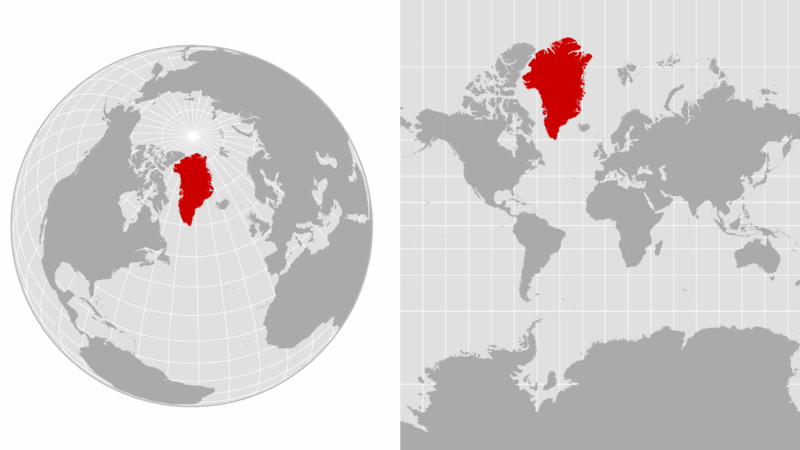
How large is Greenland, really? Your map may be deceiving you
Talk of annexation has Greenland in the news again. But due to quirks of cartography, some common maps show the territory much larger than it is.
