
Federal judge says Abrego Garcia can be released on bail. That doesn’t mean he will be

A federal judge in Nashville ruled on Sunday that Kilmar Abrego Garcia can be released on bail. But the ruling doesn’t mean that Abrego Garcia will be able to walk free.
U.S. Magistrate Judge Barbara Holmes of the U.S. District Court for Middle Tennessee ordered that Abrego Garcia be released as he awaits trial on human smuggling charges.
In her ruling, Holmes wrote that the government failed to prove that Abrego Garcia was a flight risk. Still, she acknowledged there is something the two sides in the court agree on: Abrego Garcia will likely remain in custody whether she upheld the prosecution’s motion for detention or not.
A Salvadoran native who had been living with his wife and children in Maryland, Abrego Garcia was deported in March to El Salvador’s notorious CECOT prison despite a 2019 court order barring his deportation to that country due to fear of persecution.
The 29-year-old, who only recently returned to the U.S. to face these federal charges, may go into Immigration and Customs Enforcement, or ICE, custody instead, officials say.
“That suggests the Court’s determination of the detention issues is little more than an academic exercise,” Holmes wrote in her opinion.
Still, she went on to explain, the principle of due process requires everyone accused of a federal crime to be afforded a presumption of innocence.
Prosecutors argue Abrego Garcia conspired to transport thousands of migrants without legal status from Texas across the U.S. between 2016-2025.
The defense says that the charges are to distract from the lack of due process in Abrego Garcia’s case.
Another hearing is set for Wednesday afternoon to set conditions for his release.
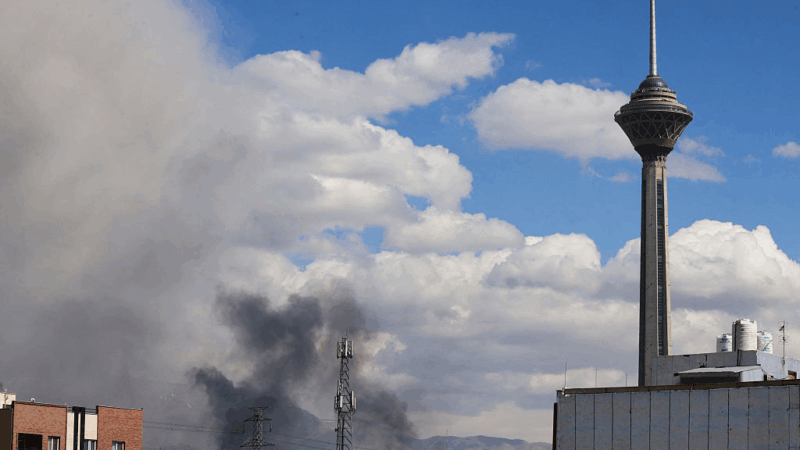
U.S.-Israeli strikes in Iran continue into 2nd day, as the region faces turmoil
Israel said on Sunday it had launched more attacks on Iran, while the Iranian government continued strikes on Israel and on U.S. targets in Gulf states, Iraq and Jordan.
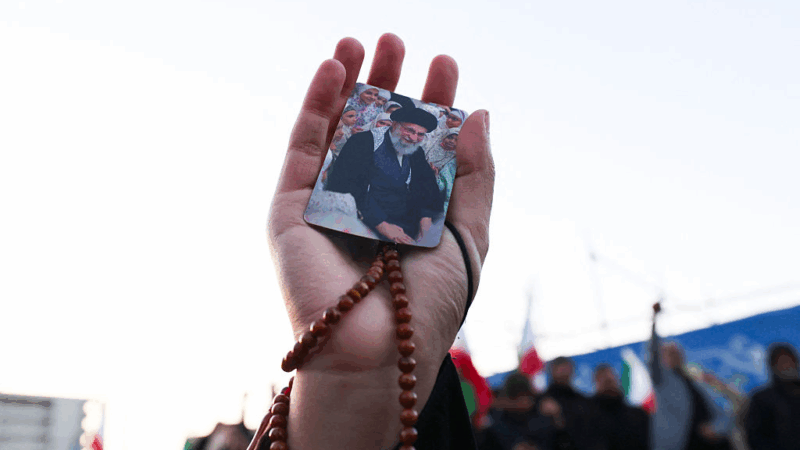
Trump warns Iran not to retaliate after Ayatollah Ali Khamenei is killed
The Iranian government has announced 40 days of mourning. The country's supreme leader was killed following an attack launched by the U.S. and Israel on Saturday against Iran.
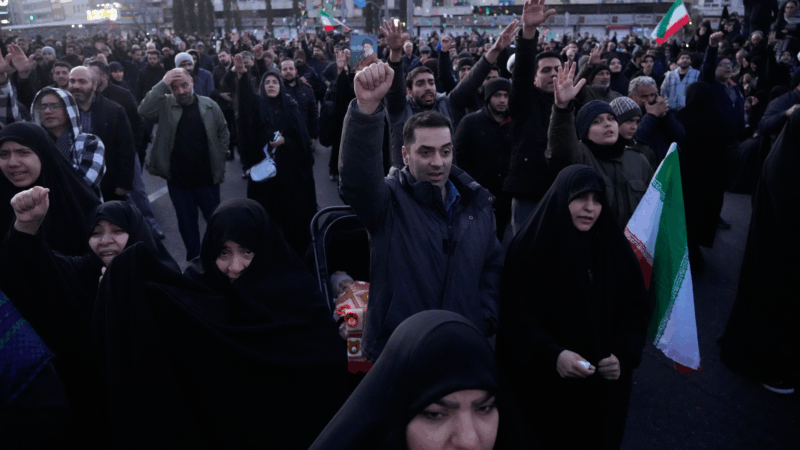
Iran fires missiles at Israel and Gulf states after U.S.-Israeli strike kills Khamenei
Iran fired missiles at targets in Israel and Gulf Arab states Sunday after vowing massive retaliation for the killing of Supreme Leader Ayatollah Ali Khamenei by the United States and Israel.
House Dem. Leader Jeffries responds to air strikes on Iran by U.S. and Israel
NPR's Emily Kwong speaks to House Minority Leader Hakeem Jeffries (D-NY), who is still calling for a vote on a war powers resolution following a wave of U.S.- and Israel-led airstrikes on Iran.
Iran’s Ayatollah Ali Khamenei is killed in Israeli strike, ending 36-year iron rule
Khamenei, the Islamic Republic's second supreme leader, has been killed. He had held power since 1989, guiding Iran through difficult times — and overseeing the violent suppression of dissent.

Found: The 19th century silent film that first captured a robot attack
A newly rediscovered 1897 short by famed French filmmaker Georges Méliès is being hailed as the first-ever depiction of a robot in cinema.
