
European trade ministers meet to forge strategy after Trump’s surprise 30% tariffs

BRUSSELS — European trade ministers are meeting in Brussels on Monday, following U.S. President Donald Trump’s surprise announcement of 30% tariffs on the European Union.
The EU is America’s biggest business partner and the world’s largest trading bloc. The U.S. decision will have repercussions for governments, companies and consumers on both sides of the Atlantic.
“We shouldn’t impose countermeasures at this stage, but we should prepare to be ready to use all the tools in the toolbox,” said Denmark’s foreign minister, Lars Løkke Rasmussen, told reporters ahead of the meeting. “So we want a deal, but there’s an old saying: ‘If you want peace, you have to prepare for war.'”
The tariffs, also imposed on Mexico, are set to start on Aug. 1 and could make everything from French cheese and Italian leather goods to German electronics and Spanish pharmaceuticals more expensive in the U.S., and destabilize economies from Portugal to Norway.
Meanwhile, Brussels decided to suspend retaliatory tariffs on U.S. goods scheduled to take effect Monday in hopes of reaching a trade deal with the Trump administration by the end of the month.
The “countermeasures” by the EU, which negotiates trade deals on behalf of its 27 member countries, will be delayed until Aug. 1.
Trump’s letter shows “that we have until the first of August” to negotiate, European Commission President Ursula von der Leyen told reporters in Brussels on Sunday.
Maroš Šefčovič, the EU’s trade representative in its talks with the U.S., said negotiations would continue.
“I’m absolutely 100% sure that a negotiated solution is much better than the tension which we might have after the 1st of August,” he told reporters in Brussels on Monday.
“I cannot imagine walking away without genuine effort. Having said that, the current uncertainty caused by unjustified tariffs cannot persist indefinitely and therefore we must prepare for all outcomes, including, if necessary, well-considered proportionate countermeasures to restore the balance in our transit static relationship.”
The letters to the EU and Mexico come in the midst of an on-and-off Trump threat to impose tariffs on countries and right an imbalance in trade.
Trump imposed tariffs in April on dozens of countries, before pausing them for 90 days to negotiate individual deals. As the three-month grace period ended this week, he began sending tariff letters to leaders, but again has pushed back the implementation day for what he says will be just a few more weeks.
If he moves forward with the tariffs, it could have ramifications for nearly every aspect of the global economy.
In the wake of the new tariffs, European leaders largely closed ranks, calling for unity but also a steady hand to not provoke further acrimony.
Just last week, Europe was cautiously optimistic.
Officials told reporters on Friday they weren’t expecting a letter like the one sent Saturday and that a trade deal was to be inked in “the coming days.” For months, the EU has broadcast that it has strong retaliatory measures ready if talks fail.
Reeling from successive rebukes from Washington, Šefčovič said Monday the EU is “doubling down on efforts to open new markets” and pointed to a new economic agreement with Indonesia as one.
The EU top brass will visit Beijing fora summit later this month while courting other Pacific nations like South Korea, Japan, Vietnam, Singapore, the Philippines, and Indonesia, whose prime minister visited Brussels over the weekend to sign a new economic partnership with the EU. It also has mega-deals in the works with Mexico and a trading bloc of South American nations known as Mercosur.
While meeting with Indonesia’s president on Sunday, Von der Leyen said that “when economic uncertainty meets geopolitical volatility, partners like us must come closer together.”
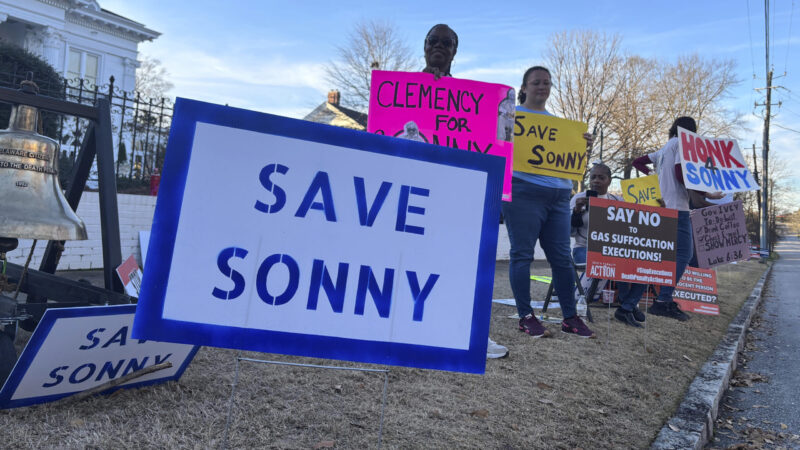
Alabama man facing execution for deadly robbery asks for clemency as he didn’t kill victim
Charles “Sonny” Burton is scheduled to be executed March 12 for his role in a 1991 robbery in which a man was fatally shot. His supporters and attorney are asking the governor for clemency, arguing that his life should be spared because Burton didn’t fire the gun or witness the killing.
One week into the Iran war, the fallout is global
The war is no longer just about the U.S., Israel and Iran. More countries are getting caught in the political crossfire or being drawn into the fighting themselves.
Iran’s president defies U.S. demands while apologizing for strikes on neighbors
President Masoud Pezeshkian said Saturday that a demand by the U.S. for an unconditional surrender is a "dream that they should take to their grave." He also apologized for Iran's attacks on regional countries.
What the Trump administration says about why it went to war with Iran
The Trump administration says it is "laser focused" and mission driven, but the messaging has been varied. The range of cited motivations for striking Iran now are sometimes at odds with each other.
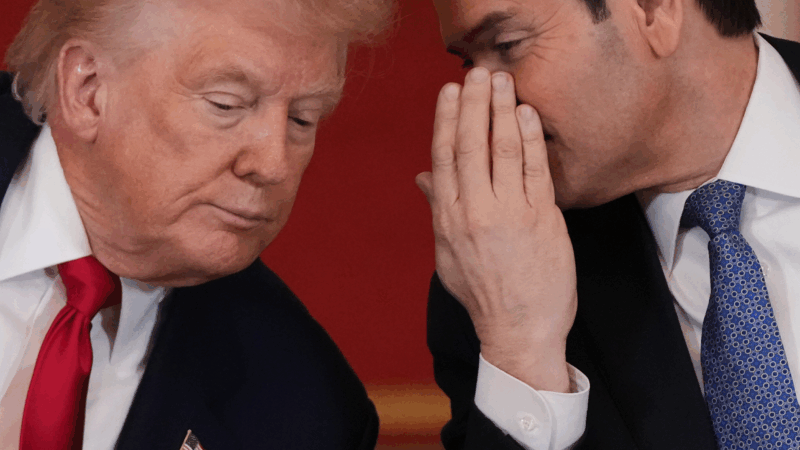
Trump looks to turn attention to Western Hemisphere at Americas summit
President Trump is set to gather with Latin American leaders on Saturday at his Miami-area golf club as his administration looks to turn attention to the Western Hemisphere, at least for a moment.
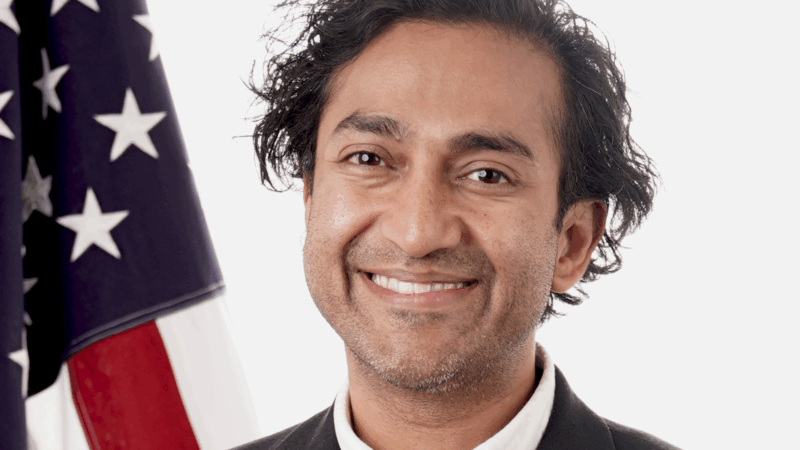
Trump administration’s embattled FDA vaccine chief is leaving for the second time
The FDA's controversial vaccine chief, Dr. Vinay Prasad, is leaving the agency. It's the second time he has abruptly departed following decisions involving the review of vaccinations and specialty drugs.
