
Elon Musk is leaving the federal government. What’s next for DOGE?
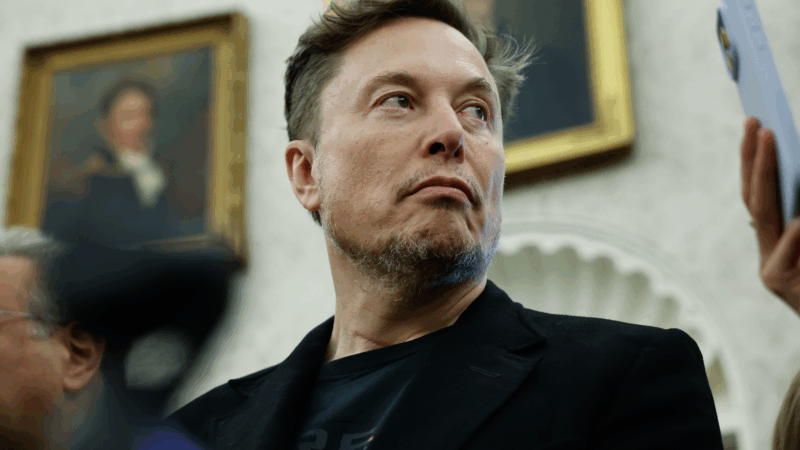
Elon Musk is leaving his role as the guiding force behind the Department of Government Efficiency initiative Friday after facing legal setbacks, clashes with Cabinet members and little evidence to support claims of savings or government efficiency.
Musk is set to join President Trump for a final press conference in the Oval Office on Friday afternoon, capping a 130-day tenure that also saw Musk face rising unfavorability numbers, financial stress on his business empire and a rift between the world’s richest man and its most powerful political leader.
Framing his departure as the end of his “scheduled time” as a special government employee, Musk’s departure from the federal government will likely do little to change DOGE’s work carrying out Trump’s vision of shrinking the federal bureaucracy and purging it of people and programs that the president disagrees with.
His role within the White House has been nebulous and confusing. While Trump and others have touted Musk as the leader of DOGE’s restructuring efforts, lawyers for the government have insisted the billionaire has no legal authority and have downplayed his efforts.
This week, a federal judge allowed a case challenging Musk and DOGE’s authority within the federal government to continue, and several others are still pending.
But many of Musk’s allies are embedded across federal agencies as full-time employees, like a group of young staffers based in the General Services Administration who have been attempting to push DOGE’s reach beyond the executive branch – in some cases trying to embed in non-governmental and non-executive branch entities.
Other lawsuits have focused on one area DOGE has seen great success in: amassing sensitive government data and combining it into massive databases. Multiple federal judges have raised concerns about DOGE’s data access and what they plan to do with it. In some cases, it appears DOGE and the Trump administration are using the data for immigration enforcement purposes.
Musk’s golden chainsaw lost its teeth
Before joining the second Trump administration, Musk had a lofty goal of slashing $2 trillion from the federal budget. Earlier this year, Musk famously took the stage at the Conservative Political Action Conference, wielding a chainsaw to illustrate his push to cut spending. But his target number was revised downward multiple times, eventually landing at around $150 billion he claimed would be saved by the end of the fiscal year in September.
NPR’s reporting has repeatedly found DOGE’s savings claims to be overstated, inaccurate and rooted in a fundamental misunderstanding of how the federal budget works.
This week, Musk expressed displeasure at President Trump’s so-called “Big, Beautiful Bill” of priorities that passed the House. In an interview with CBS, he said the measure’s projected addition to the deficit and debt “undermines the work that the DOGE team is doing.” Beyond the budget, some of the other signature DOGE efforts have been reversed or held up by the courts, like the push to fire federal workers and close agencies. Some of the lawsuits have used Musk’s public statements and social media posts to argue those changes broke the law.
Musk’s push for a mandate that federal employees should send short emails listing weekly accomplishments was overruled by some Cabinet heads and was one of several ways his Silicon Valley background clashed with the ways of Washington.
Reporting from NPR and other outlets has highlighted numerous examples of DOGE-led changes that have likely made the government less efficient. That includes things like: the elimination of a tech unit inside GSA that helped improve digital services across agencies; encouraging a return-to-office push with shortages of desks, internet access and even toilet paper; spending freezes on government payment cards that disrupted workers’ ability to buy basic supplies and more.
What’s next for Musk?
The special government employee designation gives Musk an exit from government that elected politicians do not easily have. Musk will return to his multiple companies at a time when his business empire has seen financial setbacks, especially at Tesla, his main source of wealth.
As Musk’s DOGE work ramped up, Tesla owners sold their cars, storefronts were vandalized and profits dropped as some reports suggested the automaker’s board was looking to replace Musk.
Musk has already pivoted more of his prolific posting on his social media site X to Tesla, SpaceX and Starlink – though not before announcing his departure from the federal government by promising DOGE would only grow stronger “as it becomes a way of life throughout the government.”
And after spending hundreds of millions of dollars to support Trump’s re-election, and an unsuccessful push to influence a Wisconsin state Supreme Court race, Musk announced last week that he would slow down his political spending.
“I’m going to do a lot less in the future,” he said in a video interview with Bloomberg News at the Qatar Economic Forum. “I think I’ve done enough.”
NPR’s Bobby Allyn contributed reporting.
Have information you want to share about the future of DOGE or Elon Musk? Reach out to this author through encrypted communication on Signal. Stephen Fowler is at stphnfwlr.25. Please use a nonwork device.

New York Giants hire John Harbaugh as coach after identifying him as their top choice
Harbaugh joins the Giants 11 days after he was fired by the Baltimore Ravens. The Super Bowl champion is now tasked with turning around a beleaguered franchise.
US launches new retaliatory strike in Syria, killing leader tied to deadly Islamic State ambush
A third round of retaliatory strikes by the U.S. in Syria has resulted in the death of an Al-Qaeda-affiliated leader, said U.S. Central Command.

NASA rolls out Artemis II craft ahead of crewed lunar orbit
Mission Artemis plans to send Americans to the moon for the first time since the Nixon administration.

Trump says 8 EU countries to be charged 10% tariff for opposing US control of Greenland
In a post on social media, Trump said a 10% tariff will take effect on Feb. 1, and will climb to 25% on June 1 if a deal is not in place for the United States to purchase Greenland.
‘Not for sale’: massive protest in Copenhagen against Trump’s desire to acquire Greenland
Thousands of people rallied in Copenhagen to push back on President Trump's rhetoric that the U.S. should acquire Greenland.

Uganda’s longtime leader declared winner in disputed vote
Museveni claims victory in Uganda's contested election as opposition leader Bobi Wine goes into hiding amid chaos, violence and accusations of fraud.
