
Dozens of USAID contracts were canceled last weekend. Here’s what happened
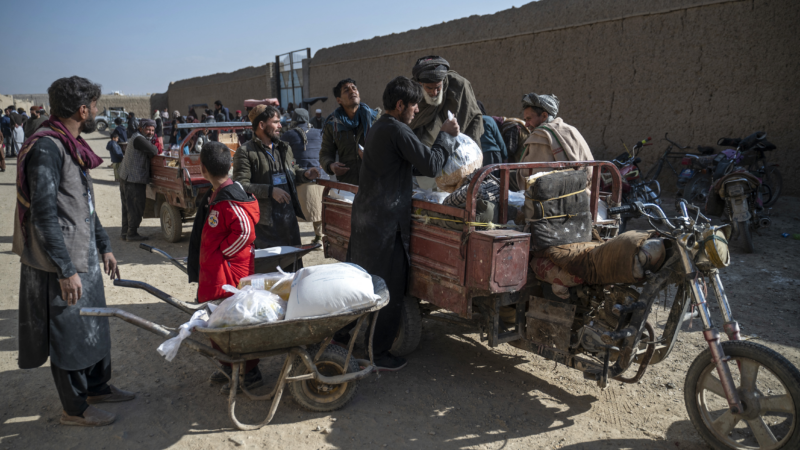
After the Trump administration’s cancellation of thousands of humanitarian aid programs last month, about 900 programs, operating across the globe, were still receiving funding from the U.S. Agency for International Development.
Over the weekend, however, at least 42 of those programs were informed that USAID had canceled their contracts, which provided funding for the delivery of aid services over a set period of time.
The State Department did not say how many contracts had been canceled. The number of canceled programs and the value of the contracts — at least $1.3 billion — comes from OneAID, a grassroots group of USAID-affiliated staff and partners who support the preservation of foreign assistance. OneAID compiled this data from firsthand accounts. NPR confirmed the cuts with sources who have direct knowledge of them and who spoke on the condition of anonymity because they were not authorized to speak to the press.
The contracts, which covered a variety of humanitarian activities, including food aid administered by the U.N.’s World Food Programme, were canceled at the direction of Jeremy Lewin, the acting deputy administrator for policy and programs at USAID. NPR obtained a copy of the form letter that was emailed to the global and local organizations informing them that their contracts were being terminated.
In a statement, the State Department said the latest round of cancellations reflects the Trump administration’s efforts to “reorient foreign assistance programming after decades of mismanagement, fraud, and misaligned priorities in the delivery of foreign assistance.” Asked about OneAID’s figures, the agency neither confirmed nor disputed the amounts.
The list of cuts, according to the information collected by OneAID, included:
- programs that had previously been exempted from the Trump administration’s suspension of foreign aid, announced on January 28, because they provided “lifesaving” services, in the words of Secretary of State Marco Rubio.
- programs that were suspended in January as part of a review of USAID grants, were told last week that they could resume work on projects like providing medical care, nutrition, safe drinking water and support for rape survivors — and then were terminated over the weekend.
- programs that were subsequently reinstated. On Tuesday, State Department spokesperson Tammy Bruce announced at a news conference that some of the weekend cancellations had been made in error and that the USAID funding for some groups would be restored. She did not say how many cancellations were being rescinded. These reversals reduced the total dollar amount of canceled programs.
“This is just total whiplash,” says Jeremy Konyndyk, president of Refugees International and a top USAID health official in the Obama administration, whose organization was not affected by the weekend cancellations.
How much was cut — and where?
The cuts do not necessarily mean a program will cease to operate. Some humanitarian programs draw funding from multiple sources and could continue their work to some degree without U.S. aid.
OneAid also compiled data on cuts in specific countries and territories, including Gaza ($12 million), Haiti ($5.9 million), Lebanon ($10.1 million), Niger ($8 million) and Syria ($126 million).
The contract terminations in Syria are especially perplexing, said a USAID official who spoke on the condition of anonymity because they were not authorized to speak to the press. One Syria program offering food to starving pregnant people and children younger than 5 was informed that its contract has not been canceled, but a separate contract for the staff who run that program was canceled, leaving no one to oversee the work, the official said.
And all U.S. humanitarian aid to Afghanistan and Yemen has been eliminated.
In Afghanistan, the canceled contracts totaled $280 million with the World Food Programme, $24 million with the United Nations Population Fund and $257 million with other nongovernmental organizations (NGOs).
The canceled contracts totaled $67 million for Yemen, which is undergoing “the largest humanitarian crisis in the world,” according to a Yemen status report prepared by the United Nations, which said that “24.1 million people — 80% of the population” need “humanitarian aid and protection.”
Contracts that provide aid to Yemen were cut “based on concern that the funding was benefiting terrorist groups, including the Houthis and the Taliban,” Bruce said at the news conference on Tuesday. The Houthis, who are backed by Iran, are the most powerful group in Yemen. They hold the capital, Sanaa. They began attacking international shipping in the Red Sea, in solidarity with the Palestinians, after the Israel-Hamas war erupted in 2023.
“Cutting aid to Yemen’s internationally recognized government — especially while it is actively fighting the Houthis — represents a significant setback for humanitarian efforts,” said Middle East analyst Mohammed Albasha in a Signal message to NPR. Albasha is the founder of the Basha Report, a publication focused on policy in Yemen and the Middle East.
Konyndyk said that ending humanitarian assistance in Afghanistan and Yemen doesn’t just affect regimes that the U.S. government sees as illegitimate: “We’re also cutting off the people who are at the mercy of those regimes.”
“What we’re saying here is, basically, we’re perfectly happy for the Afghan people to starve to death,” he said. “It leaves the Afghan people even more dependent on the Taliban, and it enables the Taliban to say ‘See? The Americans don’t care about you. We’re your only hope.'”
The State Department did not respond to a request for comment on the impact of the cuts.
Cash is not endorsed, rescindments are announced
Other U.S.-funded projects in countries besides Afghanistan and Yemen were terminated because they provided cash-based assistance — where aid groups provide people with money or vouchers to purchase food and other necessities, a type of assistance “which the administration is moving away from,” Bruce said. She cited “concerns about misuse and lack of appropriate accountability” as the reason for ending those awards.
Bruce also said that “no one was auditing” or checking where USAID money was going for “years, decades,” though the funding has been closely overseen by Congress and by the organizations administering aid.
Then there are the reversals. At the Tuesday press conference, Bruce said: “There were a few programs that were cut in other countries that were not meant to be cut that have been rolled back and put into place.” Although she did not provide examples or say in how many countries aid had been cut accidentally, she stated: “It’s just a few.”
According to OneAid’s data, the World Food Programme had at least $464 million in aid contracts cut over the weekend and then subsequently reversed for programs in Ecuador, Iraq, Jordan, Lebanon, Somalia and Syria.
Aid contracts with other humanitarian groups were also canceled and then reinstated in the Marshall Islands ($1.6 million), Micronesia ($2.1 million), Palau ($2 million) and Papua New Guinea ($6 million).
What comes next? The weekend cancellations are not the final word, according to Bruce. Aid contracts will be continuously reviewed, she said: “We are in a constant, regular audit. That will always be the case now.”
Melody Schreiber is a journalist and editor of What We Didn’t Expect: Personal Stories About Premature Birth.

New York Giants hire John Harbaugh as coach after identifying him as their top choice
Harbaugh joins the Giants 11 days after he was fired by the Baltimore Ravens. The Super Bowl champion is now tasked with turning around a beleaguered franchise.
US launches new retaliatory strike in Syria, killing leader tied to deadly Islamic State ambush
A third round of retaliatory strikes by the U.S. in Syria has resulted in the death of an Al-Qaeda-affiliated leader, said U.S. Central Command.
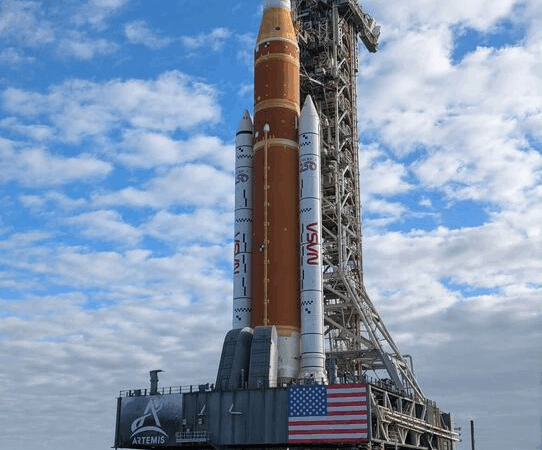
NASA rolls out Artemis II craft ahead of crewed lunar orbit
Mission Artemis plans to send Americans to the moon for the first time since the Nixon administration.
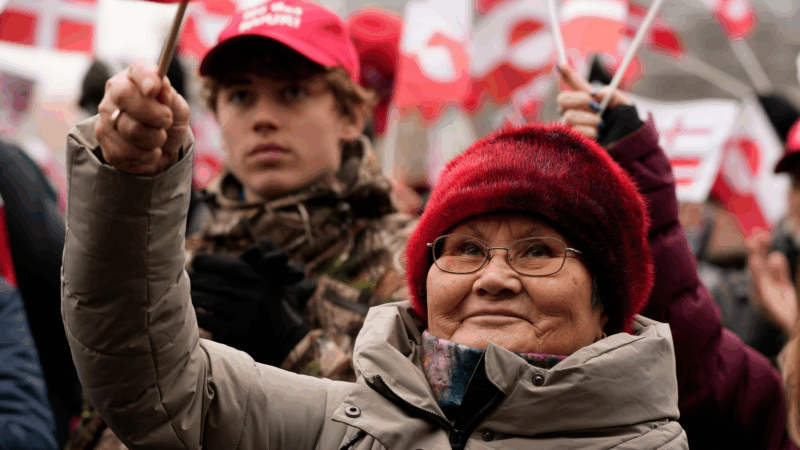
Trump says 8 EU countries to be charged 10% tariff for opposing US control of Greenland
In a post on social media, Trump said a 10% tariff will take effect on Feb. 1, and will climb to 25% on June 1 if a deal is not in place for the United States to purchase Greenland.
‘Not for sale’: massive protest in Copenhagen against Trump’s desire to acquire Greenland
Thousands of people rallied in Copenhagen to push back on President Trump's rhetoric that the U.S. should acquire Greenland.
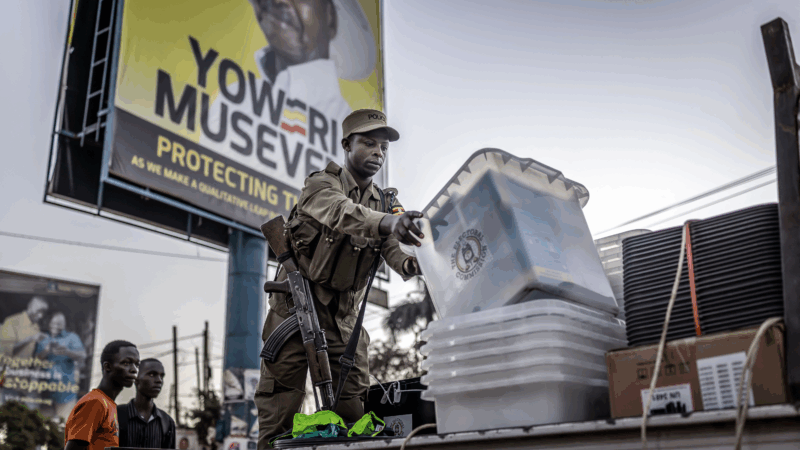
Uganda’s longtime leader declared winner in disputed vote
Museveni claims victory in Uganda's contested election as opposition leader Bobi Wine goes into hiding amid chaos, violence and accusations of fraud.
