Don’t overthink the torpedo bats
On Monday, March 31, at the Philadelphia Phillies’ home opener at Citizens Bank Park, with two outs in the bottom of the first inning, with the count at one ball and one strike, Phillies slugger Bryce Harper smacked the ball, hard. You could hear it — smack. And that home crowd (which I was in) wanted it to go over the fence. “OHHHHHHH!” went that crowd, which jumped to its feet. Back went the Colorado Rockies’ left fielder, Jordan Beck. And then, standing so close to the wall that he could have reached back and bumped the Yuengling Lager sign with his left elbow, Beck caught it. The thing traveled maybe 370-ish feet, just a few feet short of a home run. But Harper was out.
This happens all the time. Baseball is a game of big distances, but also of little ones. So something with even a modest effect on the trajectory of the ball is intriguing. And that’s why there’s been so much talk over the last week about bats.
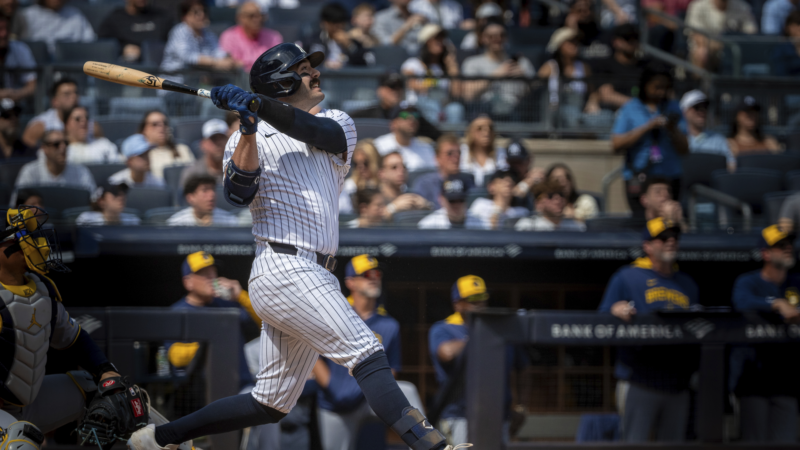
Unlike normal wooden bats, which are widest close to the end, torpedo bats are slightly fatter a few inches closer to the middle. That means that they carry more of their weight in the spot where players tend to hit the ball. They look a little like bowling pins, and they’ve been around a while. They were not invented for, or first used in, the March 29 game in which the New York Yankees beat the Milwaukee Brewers 20-9, hitting a total of nine home runs, including four in the first inning and three on the first three pitches of the game. But that freaky, freaky game, particularly because it featured such a dominant performance by one of the most talked-about teams in baseball, put the spotlight on the bats some of them were using.
Not all the Yankees who hit home runs were using torpedo bats; Aaron Judge, who hit three including a grand slam, wasn’t. But several of them were. And now a bunch more guys on a bunch more teams are considering it, although some point out that it really depends on where and how you tend to hit the ball. What “works” for another player may not help you at all. But it’s still interesting — even if they help a little, a skitch, maybe they give that ball a chance to get over that Yuengling sign.
Just to clarify: These bats are unambiguously legal, and nobody really claims otherwise. This is not cheating, and it is not a loophole. It’s just a thing to try, and maybe it matters, and maybe it doesn’t. Maybe it matters psychologically, either because it gives the batter more confidence or because it gives the pitcher less. Maybe it matters once or twice a season, for some players. There are some stats-curious people who think there’s some very early evidence that they could help some hitters against some pitchers, maybe. If they do, more players will try them, and presumably more will use them, and there will be a lot more data — enough to actually tell you something.
People do love a narrative, though. The idea that that weird game was the result of torpedo bats is a better story than: “Huh. Weird!” After all, the Yankees swept that series against the Brewers, but then they lost two out of three against the Arizona Diamondbacks. They’ve lost two games total (as of Friday), which is the same number as a lot of other teams over the first week, including the Toronto Blue Jays and the Tampa Bay Rays in the Yankees’ own division.
The Yankees are playing, at this moment, like a good and formidable baseball team, which is what the Yankees are … basically always. They are not unbeatable, and they do not hit home runs every time they come to the plate. They are hitting a lot of them, and leading the team is Aaron Judge, who has hit five home runs and who, again, does not use a torpedo bat. He’s just … he’s Aaron Judge.
Sometimes an outlier is just an outlier. After all, the Yankees made five errors in that one 20-9 game, and they haven’t made any other errors this season so far, so it was a strange game in more ways than one.
“Torpedo” is probably too aggressive a word for a differently shaped baseball bat, but “potentially incrementally advantageous design” just doesn’t roll off the tongue in the same way.
You don’t succeed just on the freak occurrences; you succeed on what happens over a long season, over a lot of at-bats, over a lot of swings that do or do not send the ball over the Yuengling sign. That’s exactly why you fight for every few inches of distance you might be able to get the ball to go, even a few times a year. “Torpedo” is probably too aggressive a word for a differently shaped baseball bat, but “potentially incrementally advantageous design” just doesn’t roll off the tongue in the same way.
If torpedo bats are an innovation that matters, it won’t be because they turn you into Aaron Judge or they make your team score 20 runs a game. What matters most is whether, without anybody necessarily even being able to tell, they help you do a little bit better over a long time. That’s baseball for you — and quite a few other things in life as well.
This piece also appeared in NPR’s Pop Culture Happy Hour newsletter. Sign up for the newsletter so you don’t miss the next one, plus get weekly recommendations about what’s making us happy.
Listen to Pop Culture Happy Hour on Apple Podcasts and Spotify.


From chess to a medical mystery: Great global reads from 2025 you may have missed
We published hundreds of stories on global health and development each year. Some are ... alas ... a bit underappreciated by readers. We've asked our staff for their favorite overlooked posts of 2025.
The U.S. offers Ukraine a 15-year security guarantee for now, Zelenskyy says
Ukrainian President Volodymyr Zelenskyy said Monday the United States is offering his country security guarantees for a period of 15 years as part of a proposed peace plan.

Genre fiction and female authors top U.S. libraries’ most-borrowed lists in 2025
All of the top 10 books borrowed through the public library app Libby were written by women. And Kristin Hannah's The Women was the top checkout in many library systems around the country.
Teens are having disturbing interactions with chatbots. Here’s how to lower the risks
Teen use of AI chat bots is growing, and psychologists worry it's affecting their social development and mental health. Here's what parents should know to help kids use the technology safely.

Why do so many people ring in the new year on Jan. 1?
Much of the world follows the Gregorian calendar, named after Pope Gregory XIII, who put the finishing touches on a Roman system that integrated ideas from other cultures.

A ‘very aesthetic person,’ President Trump says being a builder is his second job
President Trump was a builder before he took office, but he has continued it as a hobby in the White House.