Did a whale swallow a kayaker? The truth behind the viral video
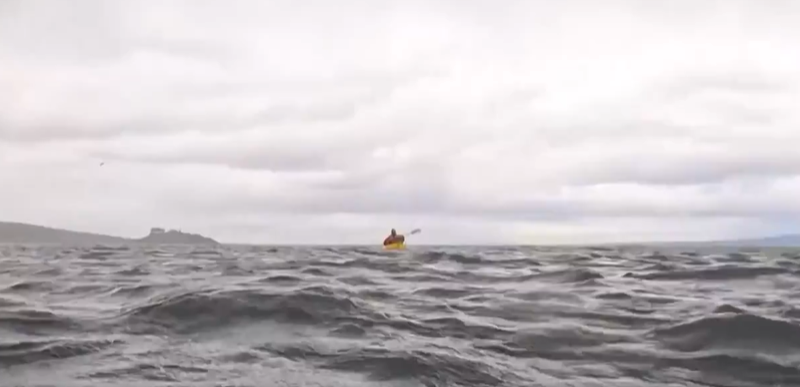
A father-son duo kayaking off the coast of Chile has made waves after sharing a video of what appears to show a humpback whale briefly scooping one of them into its mouth.
Adrián Simancas was kayaking in the Strait of Magellan in southern Chile on Saturday when the whale suddenly surfaced and engulfed him, according to the Associated Press.
“I thought it had already eaten and swallowed me,” the 24-year-old later told the AP. “At first, when I thought I had died, it was of course a lot of terror, because I thought, no, no, there was nothing I could do.”
His father, Dell, happened to be filming at the time and caught the whole incident on camera, from a safe distance. He told CNN en Español he started recording when he saw “pretty waves that seemed exciting” — but there turned out to be much more beneath the surface.
The younger Simancas told CNN that he felt a strong force hit him from behind, lifting him up.
“When I turned around, I felt a slimy texture on my face,” Simancas said. “I could see colors like dark blue and white approaching me from behind, closing around me and pulling me under.”
Dell’s video, posted by the AP, shows the whale leaping up, then disappearing underwater with Simancas and his yellow inflatable kayak.
After a few seconds, both the kayak and its life-vest-clad passenger bobbed back to the surface. But Simancas says his relief was quickly overtaken by fear that something would happen to his dad or that he would get hypothermia from being in the water.
Simancas managed to grab onto the boat and swim it over to his dad, who paddled them to safety. As he reflected on his experience, he guessed the whale didn’t mean him any harm.
“When I got out I understood that of course, it was probably out of curiosity that the whale had approached me, or maybe to communicate something,” he said.
Whale experts have another theory.
A ‘one-in-a-million’ situation
Two researchers told NPR that the most likely explanation is that Simancas happened to be in the way of a feeding whale — one that was hungry for krill and small fish, not a human.
“My guess is that the whale was just as surprised as the kayaker,” Dr. Jooke Robbins, director of the Humpback Whale Studies Program at the Center for Coastal Studies in Massachusetts, wrote in an email.
Humpback whales feed by quickly lunging through a school of fish with their mouths wide open, then straining the water out through their baleen, the fringed plates they have inside their mouths instead of teeth.
If something — or someone — else mistakenly enters their path, that can be “unintentionally (and just momentarily) engulfed,” Robbins explains.
“I’m sure it closes its eyes so it doesn’t get damaged by anything, and I think this is one of those one-in-a-million situations where the fellow seemed to be at the wrong place at the wrong time,” said Dr. Iain Kerr, the CEO of the whale conservation nonprofit Ocean Alliance.
Reports of such incidents are rare but not unheard of: In 2021, a Massachusetts lobster diver said a humpback whale had scooped him up and spit him out.
But, unlike the Old Testament’s Jonah, these men didn’t spend three days and nights in the belly of the whale — they didn’t even reach it, nor could they have.
Whales can’t swallow humans
Experts say it’s just not possible for a whale to swallow something as large as a person. While their mouths are massive — as wide as 10 feet — their throats are much smaller, roughly the size of a human fist.
Kerr says humpback whales don’t even want to try, especially considering doing so could lead to a potentially life-threatening jaw injury.
“They have no interest in eating us, hurting us,” he adds. “It’s not to their benefit. Many of these animals are living this life of energy balance — what energy does it take for me to catch my prey, et cetera.”
Still, experts encourage humans in any whale-prone areas to give the animals a wide berth — in the U.S., federal law requires at least 100 yards — for the sake of both species.
While some whale populations are rebounding, Kerr says others are “dying sort of a death of 1,000 cuts” from threats like ship strikes, line entanglement and pollution. And though Simancas’ video has made quite a splash, Kerr says it’s a lot harder to translate that attention into actually helping whales.
“The reality is the oceans are downhill from everything and gravity never sleeps,” Kerr says. “I tend to say healthy whales, healthy oceans, healthy humans. So even if you don’t like whales, there’s still value in understanding what’s going on in our oceans, and whales are barometers of ocean health.”
He hopes this whale’s turn in the spotlight will inspire viewers to get involved, whether by learning more about the dozens of different whale species or donating to a local ocean charity.
“The more you love something, the more you want to keep it, or keep it healthy,” he adds.

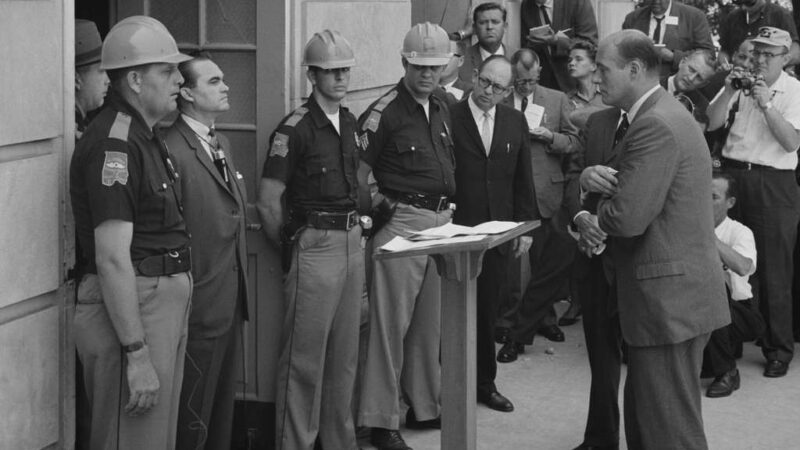
How George Wallace and Bull Connor set the stage for Alabama’s sky-high electric rates
After his notorious stand in the schoolhouse door, Wallace needed a new target. He found it in Alabama Power.
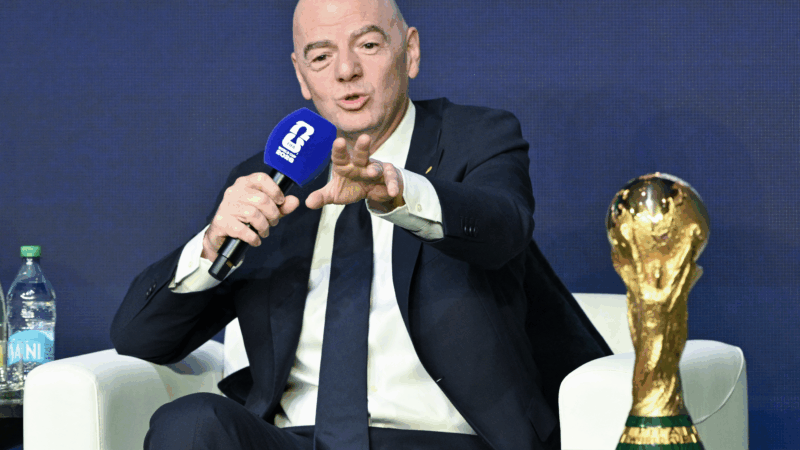
FIFA president defends World Cup ticket prices, saying demand is hitting records
The FIFA President addressed outrage over ticket prices for the World Cup by pointing to record demand and reiterating that most of the proceeds will help support soccer around the world.

From chess to a medical mystery: Great global reads from 2025 you may have missed
We published hundreds of stories on global health and development each year. Some are ... alas ... a bit underappreciated by readers. We've asked our staff for their favorite overlooked posts of 2025.
The U.S. offers Ukraine a 15-year security guarantee for now, Zelenskyy says
Ukrainian President Volodymyr Zelenskyy said Monday the United States is offering his country security guarantees for a period of 15 years as part of a proposed peace plan.

Genre fiction and female authors top U.S. libraries’ most-borrowed lists in 2025
All of the top 10 books borrowed through the public library app Libby were written by women. And Kristin Hannah's The Women was the top checkout in many library systems around the country.
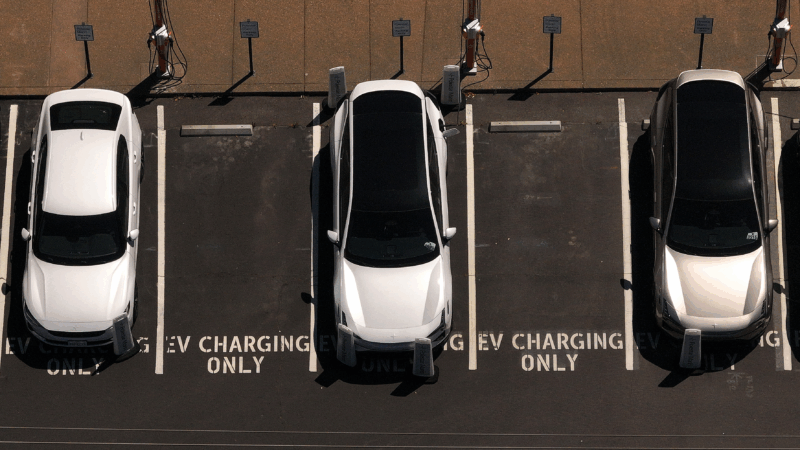
Electric vehicles had a bumpy road in 2025 — and one pleasant surprise
A suite of pro-EV federal policies have been reversed. Well-known vehicles have been discontinued. Sales plummeted. But interest is holding steady.