
Composer and pianist Jason Moran is latest departure from Kennedy Center

Composer and pianist Jason Moran is no longer the Kennedy Center’s artistic director for jazz.
Moran, an acclaimed pianist, composer, educator, bandleader, recording artist and MacArthur Fellow, posted on social media Tuesday that he has left his position at the Kennedy Center.
He wrote: “14 years of inviting thousands of artists to share their work with audiences” and expressed his gratitude “to an incredible staff that ushered artists from the negotiation to the after party.”
Moran accepted the position at the Kennedy Center in 2011, a year after his predecessor, Dr. Billy Taylor, died. He hosted numerous performances and education programs including the National Endowment for the Arts’ “NEA Jazz Masters Tribute Concert” and Betty Carter’s Jazz Ahead, a residency for emerging artists of which Moran himself is an alum.
Moran scored the films Selma and 13th. He tours the world as a performer and has collaborated with numerous institutions, artists and thinkers across disciplines.
In his social media posts, he hat-tipped his collaborators. “Thank you to the composers, comedians, choreographers, performance artists, skateboarders, filmmakers, authors, illustrators, dancers, photographers, sculptors, scientists, crews and on and on,” he wrote. “These young ones are beautifying the stage. And with that, I bowed on Juneteenth.”
The Kennedy Center declined to comment.
A number of artists have cut ties with the Kennedy Center since President Trump abruptly ousted president Deborah Rutter and board chair David Rubenstein, replaced board members appointed by former President Biden with his own, and became chair himself earlier this year.
Disclosure: The National Endowment for the Arts is a foundational supporter of NPR. The Kennedy Center and NPR co-present the annual concert A Jazz Piano Christmas.
Here’s how world leaders are reacting to the US-Israel strikes on Iran
Several leaders voiced support for the operation – but most, including those who stopped short of condemning it, called for restraint moving forward.

How could the U.S. strikes in Iran affect the world’s oil supply?
Despite sanctions, Iran is one of the world's major oil producers, with much of its crude exported to China.
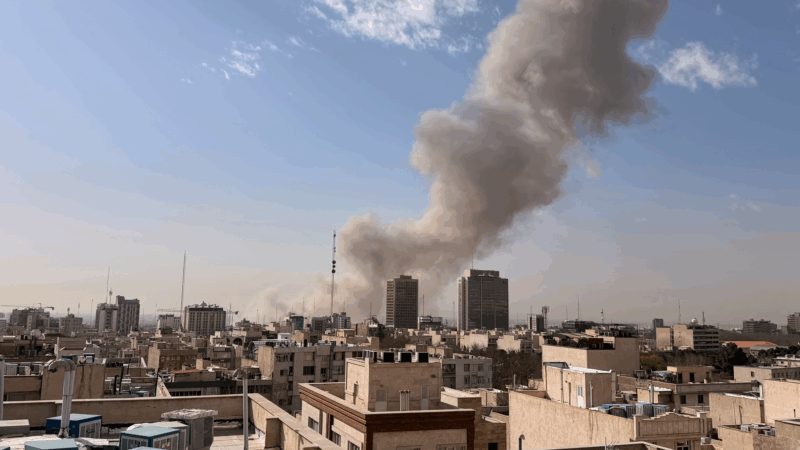
Why is the U.S. attacking Iran? Six things to know
The U.S. and Israel launched military strikes in Iran, targeting Khamenei and the Iranian president. "Operation Epic Fury" will be "massive and ongoing," President Trump said Saturday morning.
Sen. Tim Kaine calls on the Senate to vote on the war powers resolution
NPR's Scott Simon talks to Sen. Tim Kaine, D-Va., about the U.S. strikes on Iran.
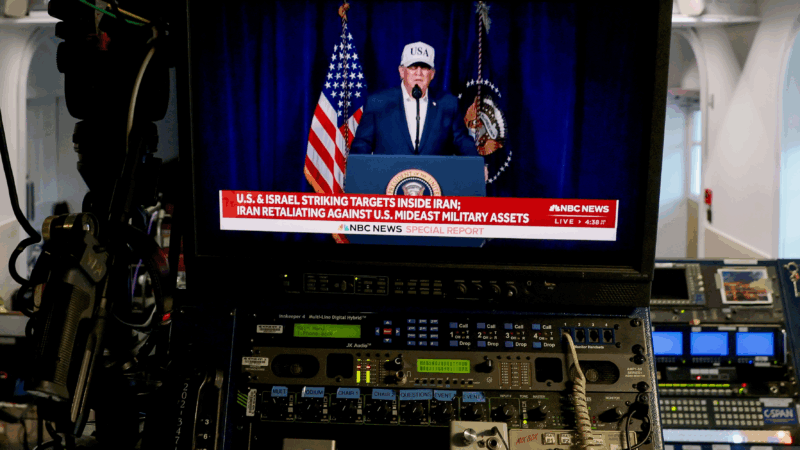
Iran strikes were launched without approval from Congress, deeply dividing lawmakers
Top lawmakers were notified about the operation shortly before it was launched, but the White House did not seek authorization from Congress to carry out the strikes.
Political science expert weighs in on Iran’s nuclear program in light of U.S. strikes
NPR's Scott Simon speaks to Ariane Tabatabai, the Public Service Fellow at Lawfare, about U.S. attacks on Iran and how President Trump's calls for regime change might be received there.
