
Colombia: The birthplace of cumbia

This is part of a special series, Cumbia Across Latin America, a visual report across six countries covering the people, places and cultures that keep this music genre alive.
All dance was seen as rebellious during colonial times. The Caribbean coast of Colombia witnessed the birth of cumbia in the river system of the Mompos Depression, an immense wetland, and in a small mountain range known as Montes de María. During the colonization of America in the 16th century, thousands of enslaved individuals arrived from the African continent at the port of Cartagena. Forced to leave their homeland, they brought their music, religious drums and spirituality. These drums were also used to send secret messages during the maroonage process.


The swamp region was home to many Indigenous cultures, now referred to as amphibious due to their proximity to water. These cultures are said to have used flutes made from bone in ceremonial rites. In the Montes de María, where additional Indigenous groups lived, small statuettes of human figures with instruments resembling gaitas (Indigenous flutes) — also known as chuanas — have been found. The clothing used in traditional dance, trova, and couple dancing, and the language of the songs exemplify European influence. The musical instruments of this region are crafted from the earth, mimicking birds that fly along the banks of rivers, the sound of rain or the beating of a heart.


Emilia Reyes Salgado, known as “la Burgos la Meya,” is one of the best bullerengue singers from San Basilio de Palenque, the first free town in America. Half an hour away, in Arjona, resides Petrona Martinez, the winner of the 2021 Latin Grammy for best folk album, with Ancestras. In María la Baja lives Pabla Flores, who comes from a lineage of singers and has established a school in honor of her mother, who taught her to sing. The African roots of cumbia are expressed not only through its percussion instruments — the tambor alegre, the llamador and the tambora — but also through the voices of ancestors reflected in the sung dances of the region. Black and Afro-descendant women in Colombia are at the heart of these songs, transmitting this legacy from generation to generation.


San Jacinto, located in the Montes de María, is the epicenter of gaita music, famous for the Gaiteros de San Jacinto and the cumbia of Andrés Landero, one of the most beloved accordionists in Latin America. Historically, this region was also the territory of the FARC (Revolutionary Armed Front of Colombia). It is said that guerrillas would allow musicians to pass if they displayed their instruments. Amid a civil war lasting over half a century, the gaita — a pre-Hispanic flute made from the heart of a cactus and a duck’s feather — became a symbol of peace. These Indigenous sounds breathe life into cumbia.
Jose Benito Barros, originally from El Banco, Magdalena, wrote “La Piragua” and “El Pescador,” iconic Colombian cumbias. Early in his career, Barros did not perform the traditional rhythms of his region. This music, rooted in the experiences of fishermen and people who recite lyrics on the banks of the Magdalena River, was not initially accepted by the middle and upper classes of that time. However, upon realizing the popularity of these rhythms, Barros shifted his musical direction. In 1970, he held the first cumbia festival in El Banco, serving both as a judge and participant. His daughters, along with local elites, continue to host this festival every year. While the main port is decorated to impress the invited authorities, just a few blocks away, the most marginalized neighborhoods continue to face extortion from small armed groups.

This coverage was made with the support of the National Geographic Explorer program.
Karla Gachet and Ivan Kashinsky are photojournalists based in Los Angeles. You can see more of Karla’s work on her website, KarlaGachet.com, or on Instagram, at @kchete77. Ivan’s work is available on his website, IvanKphoto.com, or on Instagram, at @ivankphoto.
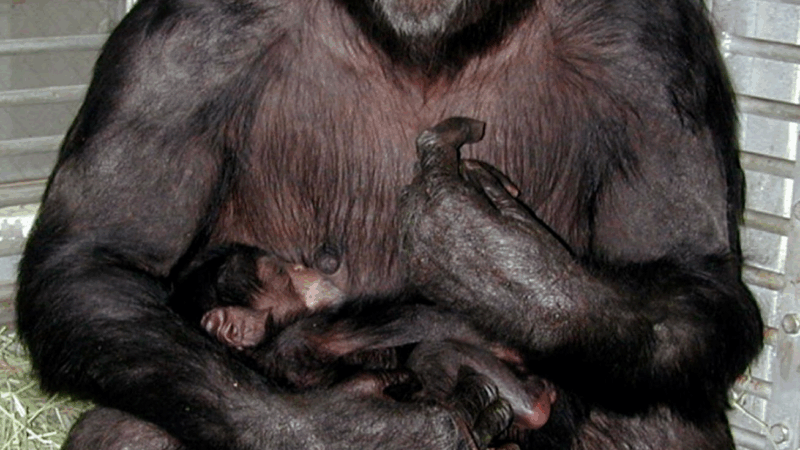
Opinion: Remembering Ai, a remarkably intelligent chimpanzee
We remember Ai, a highly intelligent chimpanzee who lived at the Primate Research Institute of Kyoto University for most of her life, except the time she escaped and walked around campus.
The near death — and last-minute reprieve — of a trial for an HIV vaccine
A trial was about to launch for a vaccine that would ward off the HIV virus. It would be an incredible breakthrough. Then it looked as if it would be over before it started.

Is RFK Jr.’s Administration for a Healthy America — AHA — in the works or not?
The Administration for a Healthy America is RFK Jr.'s plan to tackle chronic disease, addiction and other persistent problems. But so far it's not being set up like previous new agencies.

Bessemer data center developer to request rezoning for additional 900 acres
The city’s attorney informed council members of the request on Tuesday, warning that there may be media scrutiny.
They quit their day jobs to bet on current events. A look inside the prediction market mania
Prediction market apps are thriving in Trump's second term, with traders betting on migrant deportations to election outcomes. A community of young, mostly male and very online traders are driving the industry's bonanza.

Events in Minneapolis show how immigration enforcement has changed. What’s the impact?
Minneapolis is at the center of sweeping, evolving federal immigration push. It demonstrates how different immigration enforcement is under Trump's second administration - and raises questions about the lingering effects on local communities and law enforcement.
