
California considers allowing doctors to prescribe abortion drugs anonymously
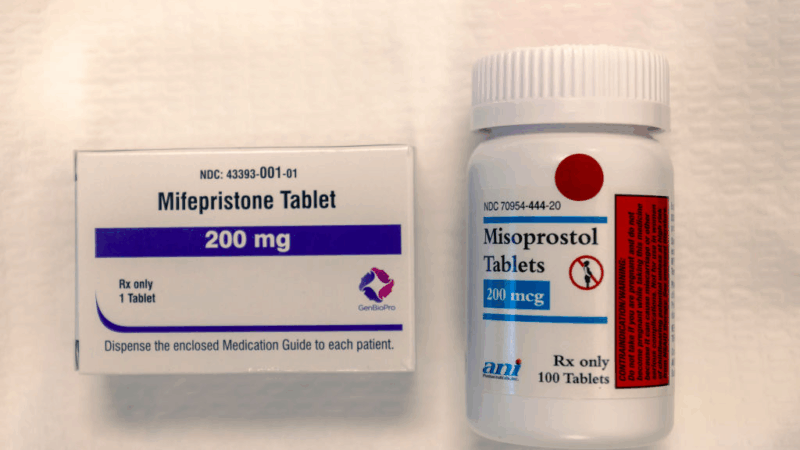
A California bill that would allow health care providers to anonymously mail abortion drugs could soon become law, marking the latest effort by a blue state to safeguard access to medication abortion.
The two-drug regimen of mifepristone and misoprostol is used in more than 60% of abortions in the U.S., and roughly a quarter of abortions are now done via telehealth, according to the Society of Family Planning.
Under the measure, which the legislature is considering this week, doctors, pharmacists and others authorized to prescribe the drugs to end a pregnancy could leave their name off the prescription label.
Abortion rights advocates say the measure adds to protections already on the books under the state’s existing shield law, one of a handful nationwide that protects doctors who mail abortion pills out of state by shielding them from extradition and other legal actions from states with abortion bans.
According to recent studies, shield laws have expanded abortion access – roughly 12,000 abortions a month are provided under the laws, the vast majority to patients living in the nearly two dozen states that ban or severely restrict the procedure.
Now, as legal attacks against telehealth providers put shield laws to the test, some states have moved to strengthen the laws by allowing providers to prescribe anonymously, reducing their risk of legal or individual harassment. To date, five states — New York, Maine, Massachusetts, Vermont, and Washington — have passed these laws, while a similar bill in Pennsylvania is currently in committee.
“We’ve now had a solid two years of shield law provision, and like a lot of things, with real-world experience, we’ve identified areas [of the law] that can be strengthened or made more explicit,” said Dr. Angel Foster, a co-founder of the Massachusetts Medication Abortion Access Project, a clinic near Boston that mails pills to patients in states with abortion bans. Massachusetts passed its bill allowing anonymous prescribing of abortion pills in early August.
Recent legal attacks against doctors in New York and California, have put shield laws to the test. So far, they’ve worked as intended, says Greer Donley, a law professor at the University of Pittsburgh who has advised legislators across the country on crafting shield laws. “But it’s clear that anti-abortion advocates are going to be looking very hard for additional cases they can bring.”
Removing the name of the provider from the label on the package adds another layer of protection, she says. “It makes it a lot harder to find the person you’re trying to target.” And protecting doctors can ensure that patients have access to abortions.
Opponents of abortion counter that shield laws have turned those states into safe havens for criminal activity.
“So-called shield laws are yet another tactic abortion activists use to exploit the FDA’s reckless mail-order abortion scheme,” said Erik Baptist, senior counsel for Alliance Defending Freedom, the Christian legal advocacy group that led the fight to overturn Roe v. Wade in 2022. “These shield laws are designed to obstruct other states from protecting unborn babies and their mothers against the dangers of abortion drugs.”
California’s key role in abortion access
If California passes this law, it could shape access to medication abortion for patients across the country, reproductive health advocates say. That’s because California-based pharmacies have come to play a pivotal role in the distribution of abortion pills nationwide.
Few shield law providers mail mifepristone themselves, with most relying instead on pharmacies in California.
“We’re really the main hub for mailing abortion pills,” said Jessica Nouhavandi, lead pharmacist and co-founder of the online pharmacy Honeybee Health, which was the first U.S.-based online pharmacy to ship abortion pills directly to patients and remains the nation’s largest distributor of mailed abortion pills. “Almost everything comes out of California, and mainly from Honeybee.”
One reason for that is the sheer amount of work required to dispense mifepristone, which is tightly regulated by the Food and Administration under special rules known as a Risk Evaluation and Mitigation Strategy, or REMS.
“The REMS really requires providers to be clinicians but also pharmacists,” said Anna Fiastro, a researcher in family medicine at the University of Washington and a co-founder of Access, Delivered, a UW-affiliated research initiative that works to advance telehealth medication abortion services across the U.S. “On top of their clinical duties, providers have to order, stock and store the medication, which are all steps they’re not taking to prescribe other medications.”
The California bill, AB 260, would remove not only the name of the prescribing clinician, but also that of the patient receiving the medication and the pharmacy that mails it, effectively extending California’s protections to providers across the country.
“We’re being asked to carry out standard-of-care medicine under the constant threat of legal harassment,” Nouhavandi said. “This bill doesn’t just protect providers legally — it’s a statement that we’re not alone. And that matters, because access to care only exists if there are people still willing to provide it.”
Legal attacks target telehealth providers
Recent legal attacks against a New York-based physician, Margaret Carpenter, have underscored the reality of those threats. In February, a Texas judge ruled against Carpenter in a civil suit brought by attorney general Ken Paxton, ordering her to stop prescribing and sending abortion pills to patients in Texas and imposing a penalty of more than $100,000.
Then, in January, Carpenter was indicted by a grand jury in Louisiana for allegedly prescribing abortion pills to a pregnant minor and charged with criminal abortion by means of abortion-inducing drugs.
The indictment, the first issued against a U.S. doctor for providing abortion pills across state lines, came just months after Louisiana’s Republican governor Jeff Landry signed a law reclassifying mifepristone and misoprostol as “controlled dangerous substances.” Data from hundreds of studies and clinical trials and 24 years of approved use has shown that the pills are safe and effective, whether dispensed in person or via telemedicine.
On Feb. 11, Landry signed an extradition warrant for Carpenter, though New York’s Democratic governor Kathy Hochul has said she won’t extradite Carpenter, citing New York’s “strict shield laws that anticipate this very situation.” Experts say both of the cases are likely to end up in front of the Supreme Court.
Still, advocates say the updates to California’s law can’t come soon enough.
“This is really, really urgent,” said a New York-based physician who spoke on the condition of anonymity due to the threat of legal actions. The physician is one of a handful of U.S. providers working on behalf of the Europe-based nonprofit Aid Access, the largest organization of shield law providers.
“We’re prescribing 12,000 pills a month to people all over the country,” they said. “We need to get our names off these labels so that we don’t have to live in fear.”
And that may be the real goal of cases like Carpenter’s, says Farah Diaz-Tello, senior counsel and legal director at reproductive health advocacy group If/When/How: to scare and intimidate people in the hope that they’ll be too afraid of possible legal action and give up.
END

New York Giants hire John Harbaugh as coach after identifying him as their top choice
Harbaugh joins the Giants 11 days after he was fired by the Baltimore Ravens. The Super Bowl champion is now tasked with turning around a beleaguered franchise.
US launches new retaliatory strike in Syria, killing leader tied to deadly Islamic State ambush
A third round of retaliatory strikes by the U.S. in Syria has resulted in the death of an Al-Qaeda-affiliated leader, said U.S. Central Command.

NASA rolls out Artemis II craft ahead of crewed lunar orbit
Mission Artemis plans to send Americans to the moon for the first time since the Nixon administration.

Trump says 8 EU countries to be charged 10% tariff for opposing US control of Greenland
In a post on social media, Trump said a 10% tariff will take effect on Feb. 1, and will climb to 25% on June 1 if a deal is not in place for the United States to purchase Greenland.
‘Not for sale’: massive protest in Copenhagen against Trump’s desire to acquire Greenland
Thousands of people rallied in Copenhagen to push back on President Trump's rhetoric that the U.S. should acquire Greenland.
Uganda’s longtime leader declared winner in disputed vote
Museveni claims victory in Uganda's contested election as opposition leader Bobi Wine goes into hiding amid chaos, violence and accusations of fraud.
