
Bobby Hart, who co-wrote ‘Last Train to Clarksville’ and other Monkees hits, dies
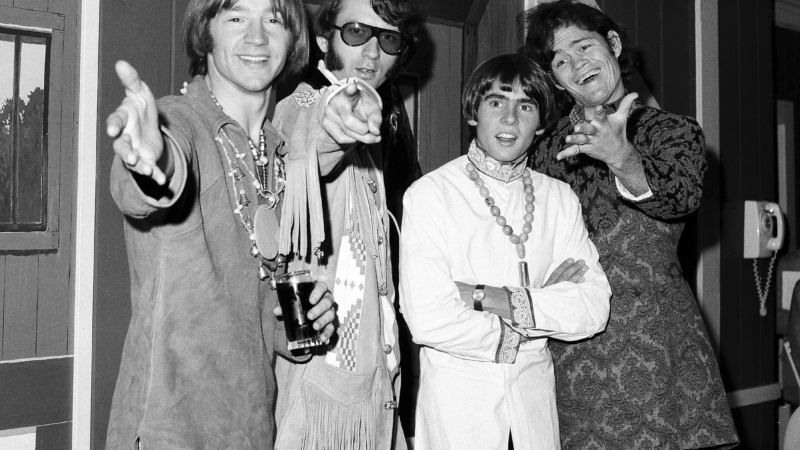
NEW YORK — Bobby Hart, a key part of the Monkees’ multimedia empire who teamed with Tommy Boyce on such hits as “Last Train to Clarksville” and “I’m Not Your Steppin’ Stone,” has died. He was 86.
Hart died at his home in Los Angeles, according to his friend and co-author, Glenn Ballantyne. He had been in poor health since breaking his hip last year.
Boyce and Hart were a prolific and successful team in the mid-1960s, especially for the Monkees, the made-for-television group promoted by Don Kirshner. They wrote the Monkees’ theme song, with its opening shot, “Here we come, walkin’ down the street,” and enduring chant, “Hey, hey, we’re the Monkees,” and their first No. 1 hit, “Last Train to Clarksville.” The Monkees’ eponymous, million-selling debut album included six songs from Boyce and Hart, who also served as producers and used their own backing musicians, the Candy Store Prophets, as session players.
“I always credit them not only with writing many of our biggest hits, but, as producers, being instrumental in creating the unique Monkee sound we all know and love,” the Monkees’ Micky Dolenz wrote in a foreword to Hart’s memoir, Psychedelic Bubblegum, published in 2015.
As Boyce and Hart grew in fame and the Monkees took more control of their work, they pursued their own careers, releasing the albums Test Patterns and I Wonder What She’s Doing Tonite and appearing on such sitcoms as I Dream of Jeannie and Bewitched. They also were politically active. They campaigned for Robert F. Kennedy when he ran for president in 1968 and wrote the brassy “L.U.V. (Let Us Vote)” in support of the 26th Amendment, which in 1971 lowered the voting age from 21 to 18. Their other songs included the Monkees’ melancholy “I Wanna Be Free” and the theme to the daytime soap opera Days of Our Lives.
They were covered by everyone from Dean Martin (“Little Lovely One”) to the Sex Pistols (“I’m Not Your Steppin’ Stone”).
In the 1970s and ’80s, Hart managed several hits with other collaborators and even contributed material to another TV act, the Partridge Family. He worked with Austin Roberts on “Over You,” an Oscar-nominated ballad performed by Betty Buckley in “Tender Mercies,” and with Dick Eastman on “My Secret (Didja Gitit Yet?)” for New Edition. He and Bryce toured with Dolenz and fellow Monkee Davy Jones in the ’70s, put out the album Dolenz, Jones, Boyce & Hart and received renewed attention when the Monkees enjoyed a comeback in the 1980s.
Boyce, who died in 1994, and Hart were the subjects of a 2014 documentary The Guys Who Wrote ‘Em. Hart was married twice, most recently to singer Mary Ann Hart, and had two children from his first marriage.
He was a minister’s son, born Robert Luke Harshman in Phoenix, Arizona. In his memoir, he remembered himself as a shy kid with a “strong desire to distinguish” himself, as he wrote in Psychedelic Bubblegum. Music was the answer. By high school, he had learned piano, guitar and the Hammond B-3 organ. He also started his own amateur radio station, eventually adding a console, turntables and microphones. After graduating from high school and serving in the Army reserves, he settled in Los Angeles in the late 1950s, hoping first to become a disc jockey, but soon working as a songwriter and session musician. His name shortened to Bobby Hart, he toured as a member of Teddy Randazzo and the Dazzlers, and with Randazzo and Bobby Weinstein wrote “Hurt So Bad,” a hit for Little Anthony and the Imperials later covered by Linda Ronstadt.
He also befriended Boyce, a singer and songwriter from Charlottesville, Virginia, with a “very unusual personality, spontaneous and extroverted, yet very cool at the same time.” Boyce and Hart helped write the top 10 hit “Come a Little Bit Closer” for Jay and the Americans and were a strong enough combination that Kirshner recruited them for his Screen Gems songwriting factory: They were assigned to the Monkees. Asked to come up with songs for a quartet openly modeled on the Beatles, they devised a twangy guitar line similar to the one for “Paperback Writer” and wrote “Last Train to Clarksville,” a chart topper in 1966. When Kirshner suggested a song with a girl’s name in the title, they turned out “Valleri” and reached the top 5.
For the show’s theme song, a stroll outside was enough.
“Boyce began strumming his guitar and I joined in by snapping my fingers & making noises with my mouth that simulated an open & closed hi-hat cymbal,” Hart wrote in his memoir. “We had created the perfect recipe for inspiration and started singing about just what we were doing: ‘Walkin’ down the street.'”
Justice Department publishes some missing Epstein files related to Trump
The Justice Department has published additional Epstein files related to allegations that President Trump sexually abused a minor after an NPR investigation found dozens of pages were withheld.
Pregnant women in ERs took less Tylenol after Trump autism warning
A study in The Lancet finds that pregnant women in emergency rooms used less Tylenol after President Trump said it could raise their babies' risk of autism. Scientists say there is no proven link.
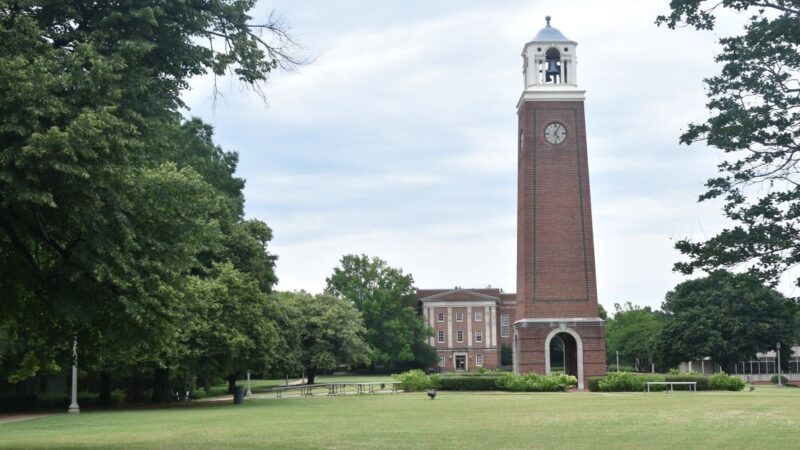
Mixed reactions, including relief, greet news the Coast Guard is buying BSC campus
The U.S. Coast Guard will take possession of the 192-acre campus in the northeast corner of Birmingham’s Bush Hills Neighborhood and will begin work to refit it as a training center for officers and enlisted personnel.
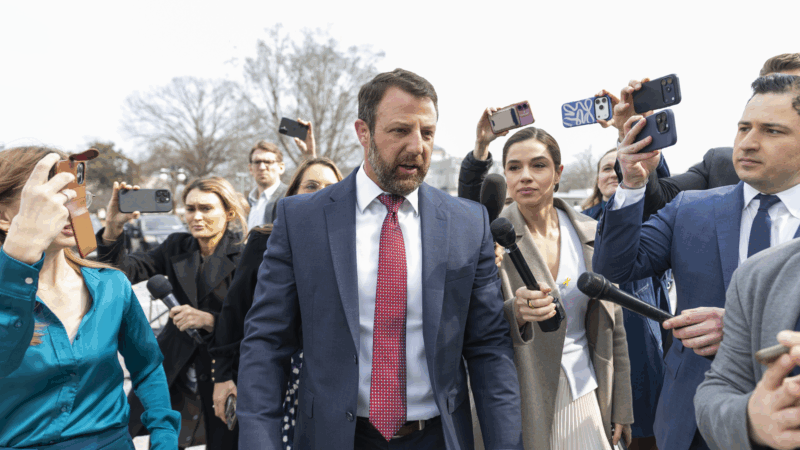
What you need to know about Sen. Markwayne Mullin, Trump’s new pick to lead DHS
President Trump announced Thursday that Sen. Markwayne Mullin, R-Okla., is his pick to replace Kristi Noem as the head of the Department of Homeland Security.
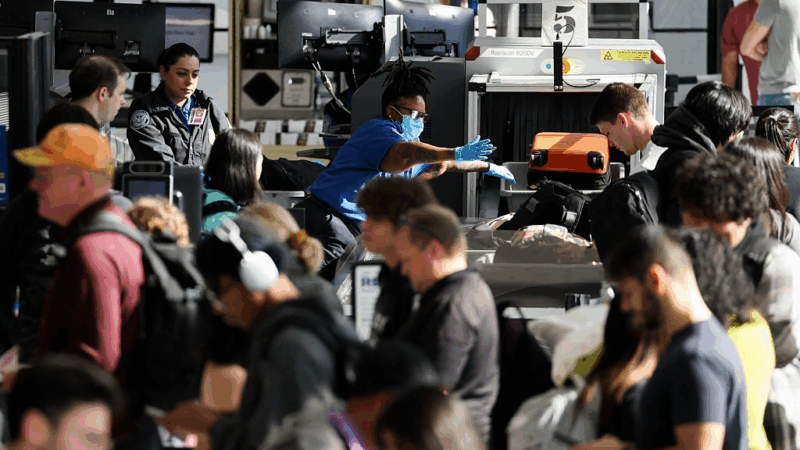
Travel industry pushes Congress to end DHS shutdown and pay federal security workers
With the busy spring break travel season looming, travel and aviation industry leaders urged Congress to end the stalemate over DHS funding before workers at TSA and ports miss a full paycheck.
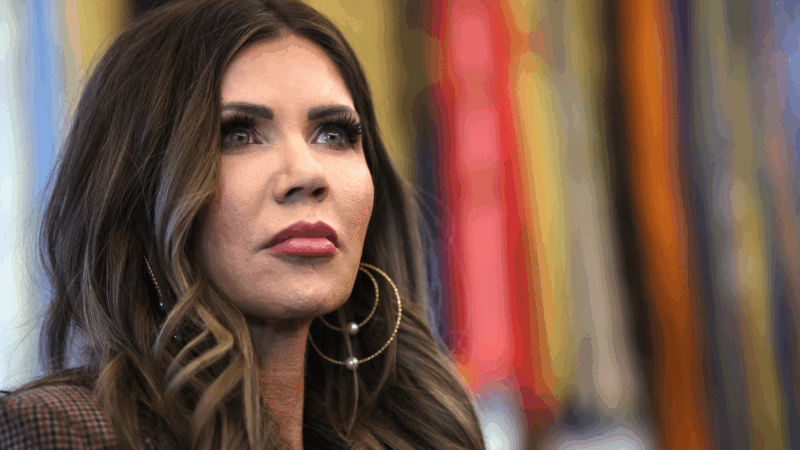
Trump fires Kristi Noem as DHS chief, names Sen. Markwayne Mullin to replace her
President Trump has fired his homeland security secretary, Kristi Noem, and said Markwayne Mullin, a senator from Oklahoma, would replace her.
