
At the Supreme Court, justices are skeptical of Mexico’s arguments against gunmakers
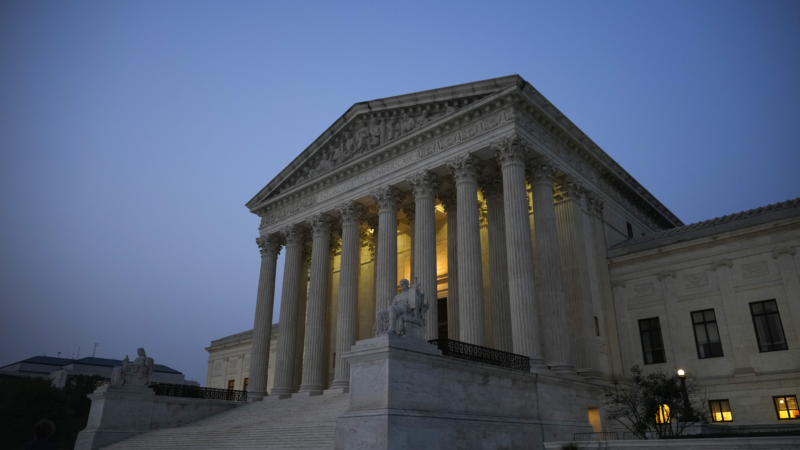
At the U.S. Supreme Court Tuesday, the justices seemed poised to throw out Mexico’s lawsuit against U.S. gun manufacturers for allegedly aiding and abetting the gushing pipeline of weapons from the U.S. to Mexican cartels.
Mexico is suing Smith and Wesson, Colt, and other gunmakers for $10 billion in damages, claiming that they are deliberately turning a blind eye to the sale of hundreds of thousands of high powered weapons made in the U.S. and trafficked illegally into the hands of Mexican cartels. The gunmakers contend that they are immune from such suits under a federal law enacted in 2005 that protects the gun industry from most, but not all, lawsuits.
Representing the industry in the Supreme Court on Tuesday, lawyer Noel Francisco told the justices that Mexico’s claim is both unique and wrong, and that it is foreclosed by the 2005 law.
“No case in American history supports that theory,” he said. “If Mexico is right…then Budweiser is liable for every accident caused by underage drinkers since it knows that teenagers will buy beer, drive drunk, and crash.”
Justice Elena Kagan posed a series of questions about guns that are designed to appeal to Mexican cartels, such as weapons made so it is easier to scrape off serial numbers rom them. “Those allegations are in this complaint,” she observed, noting that the “manufacturers have basically designed and manufactured a set of weapons with a set of characteristics that are peculiarly useful for criminal activity.”
Francisco replied that as long as gun manufacturers are treating everyone the same way, the manufacturers can’t be sued, prompting Kagan to observe, “That’s the problem—that they’re treating this rogue dealer the same as the good dealer?”
Representing Mexico, lawyer Cate Stetson stressed that the lawsuit is still at an early stage, and that a lower appellate court correctly allowed the case to proceed. She urged the justices to let Mexico have the chance to prove its allegations in court.
Justice Samuel Alito pressed her for specifics, asking whether gunmakers knowingly sell to specific red flag dealers. “Yes,” replied Stetson, and reading from Mexico’s complaint in the case, she said that the gun manufacturers “supply dealers with all the guns they can pay for, without any public safety conditions, even if a gun dealer has been repeatedly found to have violated gun laws, been indicted … or has repeatedly supplied cartels in suspicious and obvious sales … including bulk sales.”
As an example, she said that Colt produces three gun models that are specifically targeted at the Mexican market: the Super El Jefe, the Super El Grito, and the Emiliano Zapata 1911.
Justice Brett Kavanaugh asked about the potential effect on the economy if the court were to allow this case to go forward. He noted that “lots of sellers and manufacturers of ordinary products know that they’re going to be misused by some subset of people, ” including the pharmaceutical and automobile industries, and that, he said, is “a real concern.”
Stetson countered with her own version of Francisco’s Budweiser example, noting that if Budweiser was alleged to have a practice of selling bulk quantities of Bud Light to stores located near high schools, and if Bud Light “put out a new can that says ‘Best Prom Ever’ and sold it right into the high school, that is the allegation in this case.”
Despite Stetson’s skilled advocacy, she had a tough time selling her argument, with conservatives and liberals alike indicating significant doubts. A decision in the case is expected by summer.

DHS restricts congressional visits to ICE facilities in Minneapolis with new policy
A memo from Homeland Security Secretary Kristi Noem, obtained by NPR, instructs her staff that visits should be requested at least seven days in advance.

Historic upset in English soccer’s FA Cup as Macclesfield beat holders Crystal Palace
The result marks the first time in 117 years that a side from outside the major national leagues has eliminated the reigning FA Cup holders.

Sunday Puzzle: Pet theory
NPR's Sacha Pfeiffer plays the puzzle with KAMW listener Daniel Abramson of Albuquerque, N.M, and Weekend Edition Puzzlemaster Will Shortz.
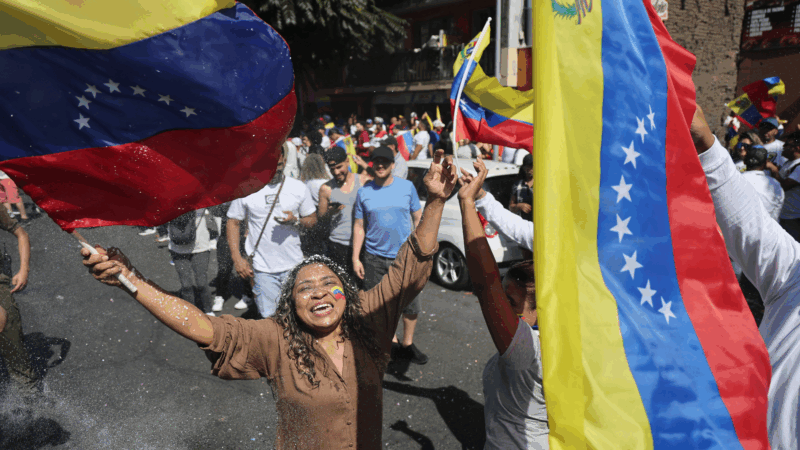
Venezuela’s exiles in Chile caught between hope and uncertainty
Initial joy among Venezuela's diaspora in Chile has given way to caution, as questions grow over what Maduro's capture means for the country — and for those who fled it.
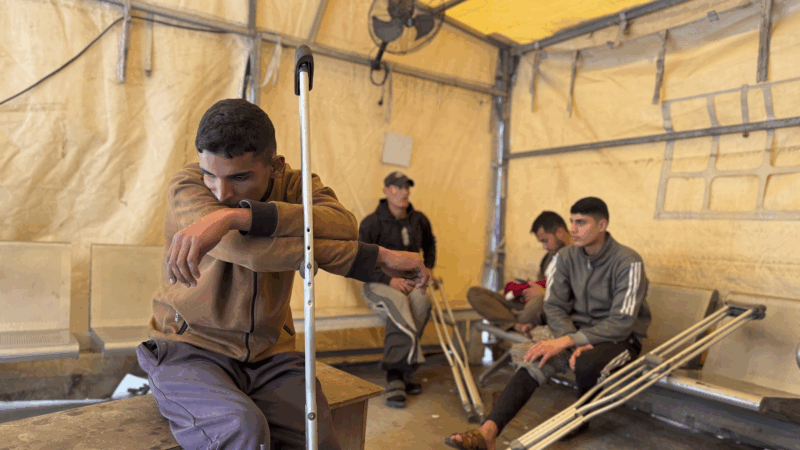
Inside a Gaza medical clinic at risk of shutting down after an Israeli ban
A recent Israeli decision to bar Doctors Without Borders and other aid groups means international staff and aid can no longer enter Gaza or the West Bank. Local staff must rely on dwindling supplies and no international expertise.

Iran warns US troops and Israel will be targets if America strikes over protests as death toll rises
Iran's parliament speaker warned the U.S. military and Israel would be "legitimate targets" if America strikes the Islamic Republic, as threatened by President Donald Trump.
