
Another sign of Syria’s rebuilding: The Damascus stock exchange opens again

DAMASCUS — Trading resumed on the Damascus Securities Exchange on Monday after a six-month closure, as Syria ‘s new leaders attempt to shore up the country’s battered economy and begin rebuilding after nearly 14 years of civil war.
The stock exchange had closed during the chaotic days leading up to the ouster of former President Bashar Assad in a lightning rebel offensive.
Syrian Finance Minister Mohammed Yisr Barnieh, who attended the reopening, said it signals that the country’s economy is beginning to recover and that the stock exchange “will operate as a private company and serve as a genuine hub for Syria’s economic development, with a strong focus on digital,” state-run news agency SANA reported.
He said the country’s new leaders plan to “facilitate business operations and open doors to promising investment opportunities.”
The move to reopen comes as international restrictions on Syria’s financial systems begin to ease. The United States and Europe both last month announced the lifting of a wide raft of sanctions that had been slapped on Syria under the Assad dynasty’s rule.
Last week, Syria inked a power deal worth $7 billion with a consortium of Qatari, Turkish and U.S. companies for development of a 5,000-megawatt energy project to revitalize much of Syria’s war-battered electricity grid.
The consortium led by Qatar’s UCC Concession Investments — along with Power International USA and Turkey’s Kalyon GES Enerji Yatirimlari, Cengiz Enerji — will develop four combined-cycle gas turbines with a total generating capacity estimated at approximately 4,000 megawatts and a 1,000-megawatt solar power plant.
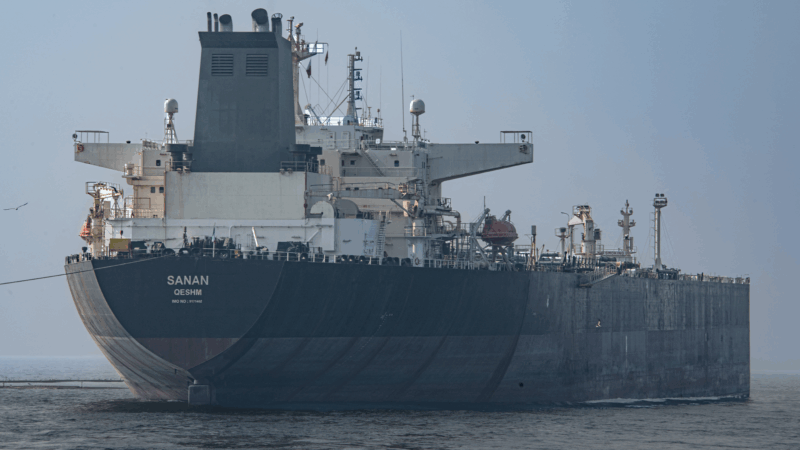
How could the U.S. strikes in Iran affect the world’s oil supply?
Despite sanctions, Iran is one of the world's major oil producers, with much of its crude exported to China.
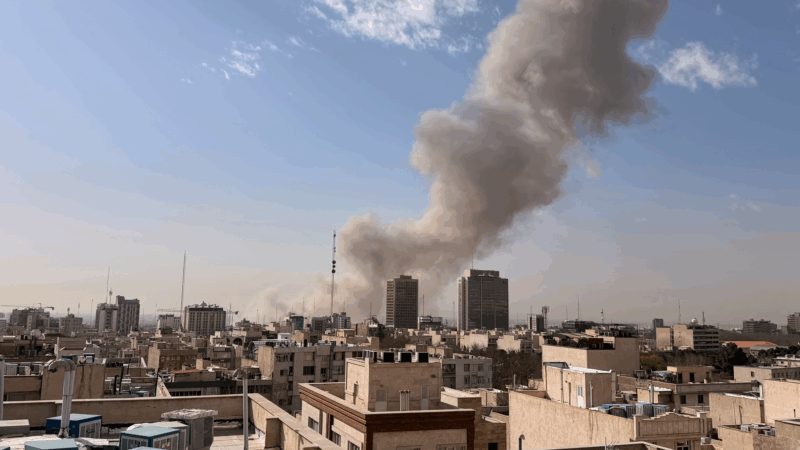
Why is the U.S. attacking Iran? Six things to know
The U.S. and Israel launched military strikes in Iran, targeting Khamenei and the Iranian president. "Operation Epic Fury" will be "massive and ongoing," President Trump said Saturday morning.
Sen. Tim Kaine calls on the Senate to vote on the war powers resolution
NPR's Scott Simon talks to Sen. Tim Kaine, D-Va., about the U.S. strikes on Iran.
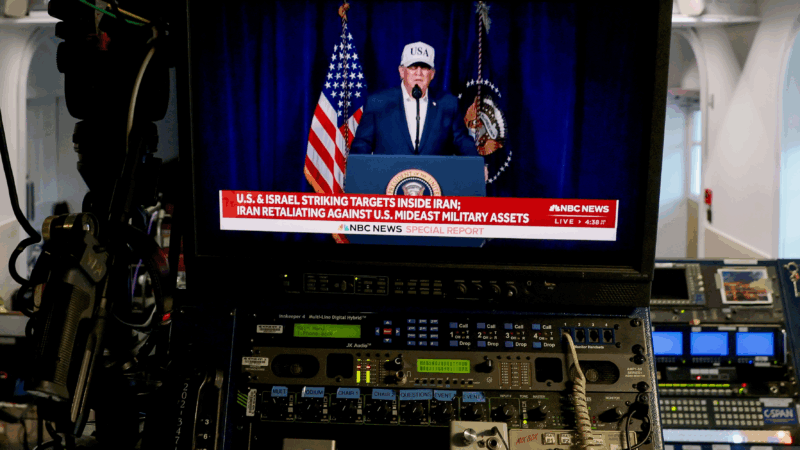
Iran strikes were launched without approval from Congress, deeply dividing lawmakers
Top lawmakers were notified about the operation shortly before it was launched, but the White House did not seek authorization from Congress to carry out the strikes.
Political science expert weighs in on Iran’s nuclear program in light of U.S. strikes
NPR's Scott Simon speaks to Ariane Tabatabai, the Public Service Fellow at Lawfare, about U.S. attacks on Iran and how President Trump's calls for regime change might be received there.
Week in Politics: Does Trump have political support for his actions in Iran?
We look at what President Trump's decision to attack Iran means, what kind of support he has in Iran and what this moment means for his administration.
