Amid deep mistrust, U.S. and Iran try to work out a nuclear deal
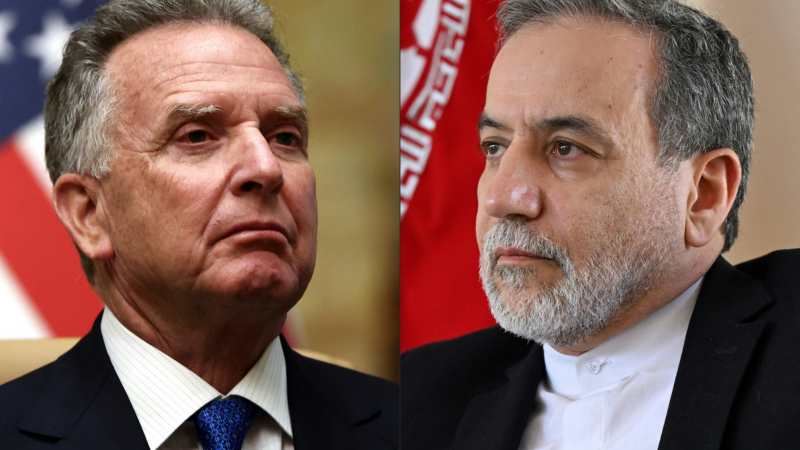
President Trump pulled out of a nuclear deal with Iran during his first term. On Saturday, his administration launches negotiations in search of a new agreement that would prevent Iran from acquiring a nuclear weapon.
The talks in Oman are between two countries divided by decades of hostility and deep skepticism about the motives of the other side.
“We face a significant wall of mistrust and harbor serious doubts about the sincerity of intentions,” Iran’s Foreign Minister Abbas Araghchi wrote in an op-ed in The Washington Post this week.
Araghchi is expected to lead the Iranian delegation while Steve Witkoff, Trump’s special envoy to the Middle East, is set to head the U.S. team. The high-level representation suggests both sides are serious, yet there’s already a disagreement on the nature of the talks.
The Trump administration is calling them direct negotiations, while the Iranians say they are indirect talks that will be carried out through a mediator. However they interact, the differences run deep.
From the U.S. perspective, Iran’s nuclear program has been advancing and the country is believed to be capable of developing a nuclear weapon on short notice if it so chooses. In Iran’s view, Trump abandoned the previous nuclear accord in 2018, raising concerns about his willingness to agree to a deal and stick to it.
Still, both sides also have motivations to reach an agreement.
Trump says he wants to avoid endless conflict in the Middle East, and a deal with Iran would ease tensions.
Iran is looking for relief at a moment when it appears increasingly vulnerable. The economy has been crippled by decades of sanctions. Iran’s air defenses were substantially weakened in missile exchanges last year with Israel. And Iran’s regional proxies suffered major setbacks in wars with Israel, including Hamas in Gaza and Hezbollah in Lebanon.
“I think there is an opportunity as long as you can get the optics of this right,” said Alex Vatanka, an Iran expert at the Middle East Institute in Washington. “President Trump can declare victory and Iran can get serious sanctions relief.”
Regional tensions abound
The talks come as the Middle East is roiling with several conflicts. They include a U.S. bombing campaign against the Houthis in Yemen, a group backed by Iran. The U.S. has been striking Yemen daily for the past month, and has moved considerable firepower into the region.
The presence of an American aircraft carrier and powerful B-2 bombers is also seen as a warning to nearby Iran. Most analysts believe Trump is unlikely to resort to force against Iran at this juncture, pointing to his decision to launch negotiations. But he seems to be leaving that option open.
“I think everybody agrees that doing a deal would be preferable to doing the obvious. And the obvious is not something that I want to be involved with,” Trump said this week. He added: “Iran cannot have a nuclear weapon, and if the talks aren’t successful, I actually think it’ll be a very bad day for Iran.”
Araghchi, Iran’s foreign minister, warned against any attack. “To move forward today, we first need to agree that there can be no ‘military option,’ let alone a ‘military solution,'” he wrote.
Trump’s withdrawal from the 2015 deal
The U.S. and Iran, along with several European nations, reached a nuclear deal in 2015, known as the Joint Comprehensive Plan of Action (JCPOA). Iran was allowed to enrich uranium to low levels that could be used for civilian nuclear power, but not to high levels that could be used to make a nuclear bomb.
Iran also agreed to international inspections and pledged never to build a weapon. In return, Iran received limited sanctions relief.
But Trump argued that then-President Barak Obama negotiated a bad deal for the U.S. Trump unilaterally pulled the U.S. out of the agreement in 2018 despite a broad international consensus that Iran was abiding by the terms.
Iran has since enriched uranium to a much higher level — 60 percent purity — which it could ramp up to weapons grade — 90 percent purity — likely in a matter of weeks, according to nuclear experts.
Trump’s “maximum pressure” campaign during his first term hobbled Iran’s economy and further isolated it internationally. Yet Iran’s Islamic leaders remained in power and steadily moved ahead with the nuclear program.
Scope of the deal
One key question is how narrow or broad a proposed deal would be.
Iran is looking to keep the talks limited to nuclear issues. However, Trump aides have talked about a much wider arrangement that would include completely dismantling Iran’s nuclear program, addressing Iran’s arsenal of missiles and ending Iran’s support of proxy forces in the region.
The wider the scope, the harder it will be to reach an agreement, said Vatanka.
“There is a fear in the mind of [Iranian leader Ayatollah] Ali Khamenei that when the Americans start negotiating, they’ll start with one issue, but then they will introduce a lot of other issues,” he said. “So by the time you’re done, you’ve actually given the whole store away, as opposed to just putting some brakes on your nuclear program.”
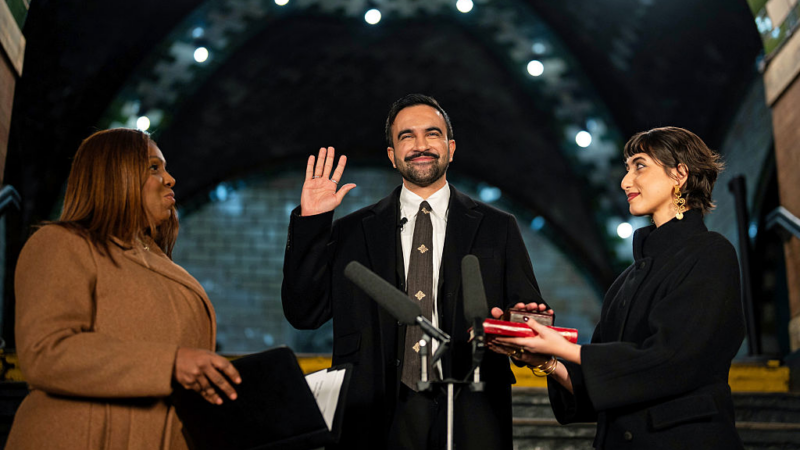
Zohran Mamdani sworn in as New York City mayor, capping historic rise
Mayor Zohran Mamdani took the oath of office in New York City after midnight Thursday. The city's first Muslim mayor, a member of the Democratic Socialists of America, has promised to focus on affordability and fairness.
Rising from the ashes, a symbol of hope at the Rose Parade
Survivors of the Eaton and Palisades Fires find healing and community working on a Rose Parade float to honor the lives and communities lost in last year's wildfires.
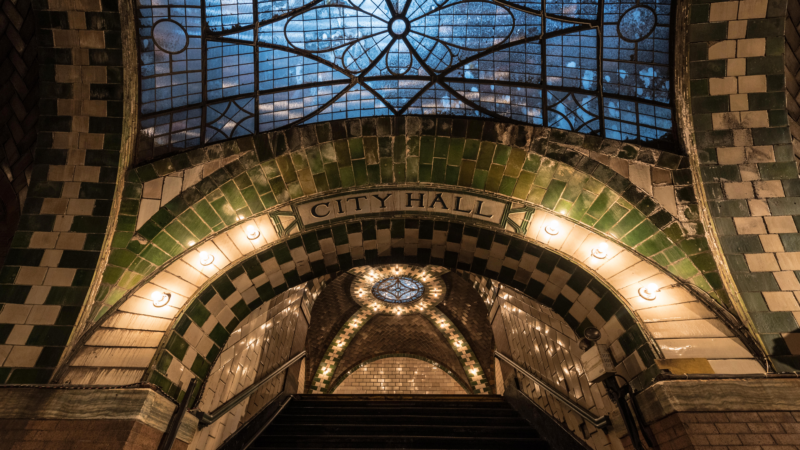
The history behind the NYC subway station chosen for Mamdani’s swearing-in
The city shut down the station in 1945 on New Year's Eve. Eighty years later, it's a symbolic venue choice for the incoming mayor's private swearing-in ceremony.
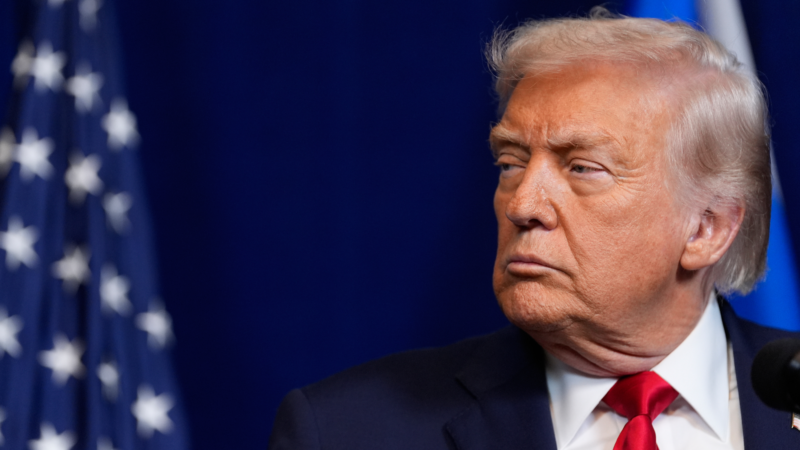
U.S. military strikes 5 more alleged drug boats, killing 8
The U.S. military says it struck five alleged drug-smuggling boats over two days. The attacks killed eight people, while others jumped overboard and may have survived. U.S. Southern Command did not reveal where the attacks occurred.
Capitol riot ‘does not happen’ without Trump, Jack Smith told Congress
Former special counsel Jack Smith also described President Trump as the "most culpable and most responsible person" in the criminal conspiracy to overturn the 2020 election results, according to a transcript of Smith's closed-door interview with the House Judiciary Committee.
Trump will drop push for National Guard deployments in Chicago, LA and Portland, Ore.
Courts blocked troops from deploying in Chicago and Portland, Ore., and the Los Angeles deployment effectively ended after a judge blocked it earlier this month.